
HEAS Workshop at the NHM on Mind over matter – The Materiality of Anthropomorphic Figurines
Dezember 1 @ 9:00 - Dezember 2 @ 18:00
This workshop examines the materiality, production, and cultural significance of prehistoric human figurines, with particular attention to the Upper Palaeolithic „Venus“ figures. Among the earliest known depictions of the human body, these objects were crafted from diverse materials including stone, bone, antler, mammoth ivory, and early ceramics.
Anthropomorphic figurines from later periods likewise display a wide range of materials and styles. How do different substances influence the figurines‘ morphology and manufacturing techniques?
What does material choice reveal about the intentions, skills, lifetimes, and possibly worldviews and lived realities of their creators? And how do these figurines continue to inspire artists today?
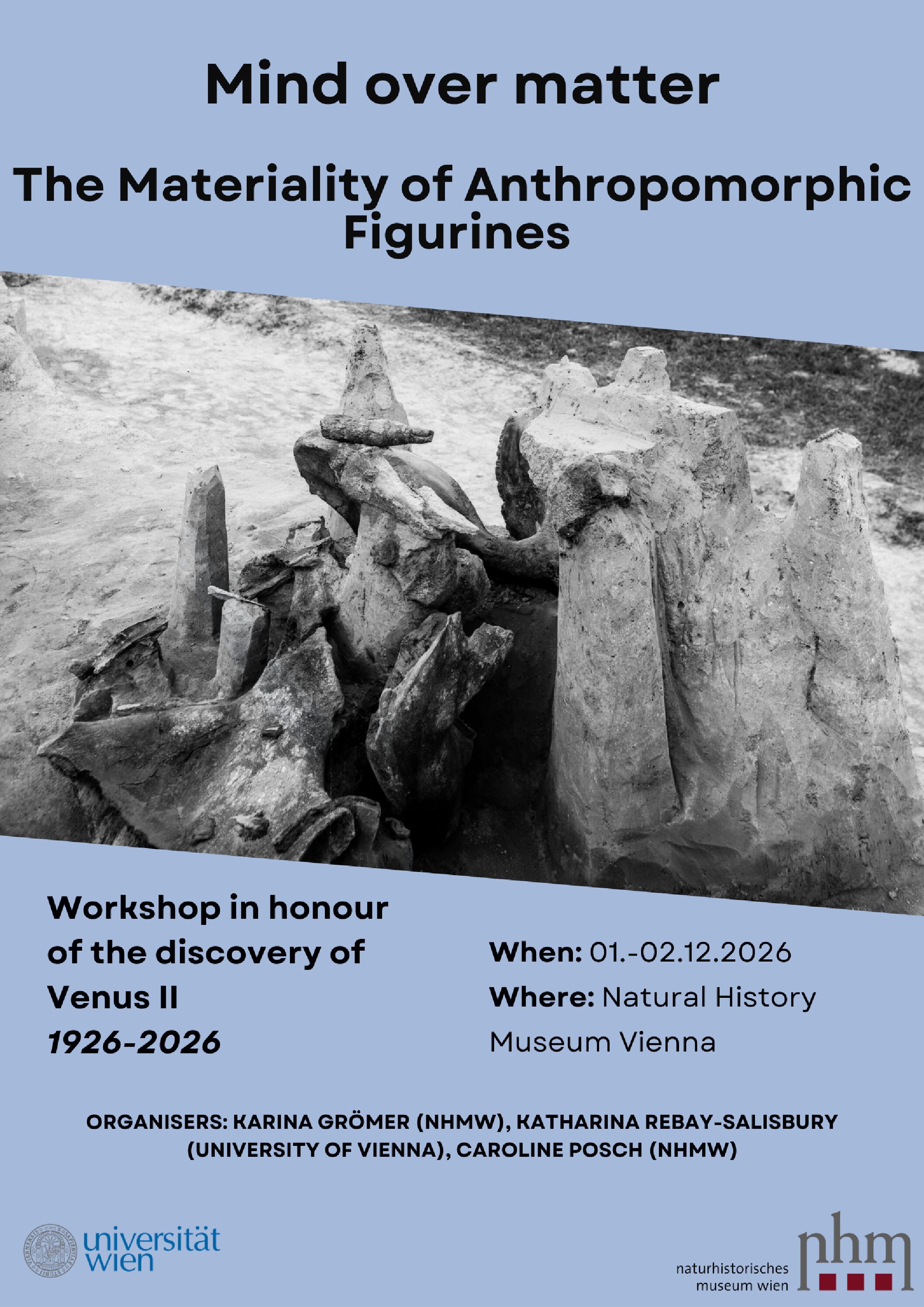
Marking the centenary of the Venus II figurine’s discovery at Willendorf in 1926, this workshop explores how materials shape the form, meaning, and cultural and museological biographies of figurative art objects. By bringing together archaeologists, artists, and artisans, we seek fresh insights into how material choice shaped these figurines‘ forms, meanings, and cultural trajectories.
We aim to
– Foster cross-disciplinary exchange between researchers and artisans.
– Investigate figurines as both archaeological artefacts and as products of imagination.
– Reflect on how prehistoric body depictions evolved over time and continue to inform contemporary understandings of humanity, gender, and ancestry.
– Generate new artistic and scholarly perspectives through discussion, hands-on exploration, and creative collaboration.