New Chronology Sheds Light on Human Occupation just before the onset of the Last Glacial Maximum
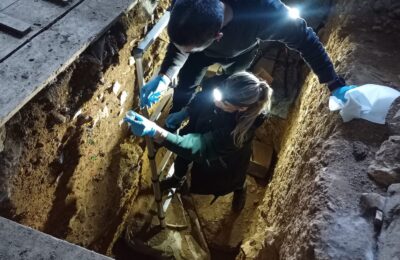
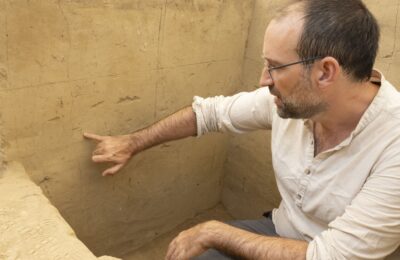
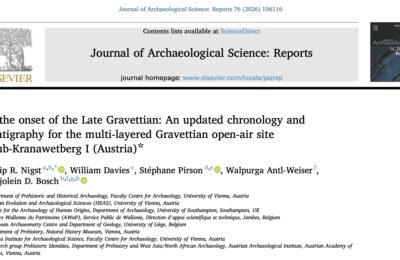
New paper published by HEAS Team Leaders Philip R. Nigst and Marjolein D. Bosch in the Journal of Archaeological Science: Reports. In a new study in the Journal of Archaeological Science: Reports the team presents a new stratigraphy and chronology for the multi-layered Upper Palaeolithic open-air site of Grub-Kranawetberg I in Lower Austria based on fieldwork and 12 new radiocarbon dates on conifer charcoals. The results show that layers AH 4 and AH 3 date between roughly 30,000 and 27,700 cal BP, sitting precisely at the boundary between the Middle and Late Gravettian. Meanwhile, the upper horizon AH 2 dates to approximately 26,350–25,850 cal BP and, therefore, falls at the start of the Last Glacial Maximum, the coldest and most arid phase of the last glacial cycle. The study also observes a stark behavioural contrast: the lower horizons like AH 4 and AH 3 show heavy occupation intensity (including structured hearths, anthrosols, as well as lithic tool and ivory bead productions), whereas AH 2 represents a much more ephemeral presence. This shift supports a regional model where modern humans adjusted their mobility patterns and settlement strategies to cope with increasingly unpredictable, harsh Ice Age environments. https://www.heas.at/research/publications/at-the-onset-of-the-late-gravettian-an-updated-chronology-and-stratigraphy-for-the-multi-layered-gravettian-open-air-site-grub-kranawetberg-i-austria/ https://doi.org/10.1016/j.jasrep.2026.106116