
- Diese Veranstaltung hat bereits stattgefunden.
HEAS Workshop: New Methodologies and Perspectives in Palaeolithic Archaeofauna
September 25 @ 9:00 - 17:00
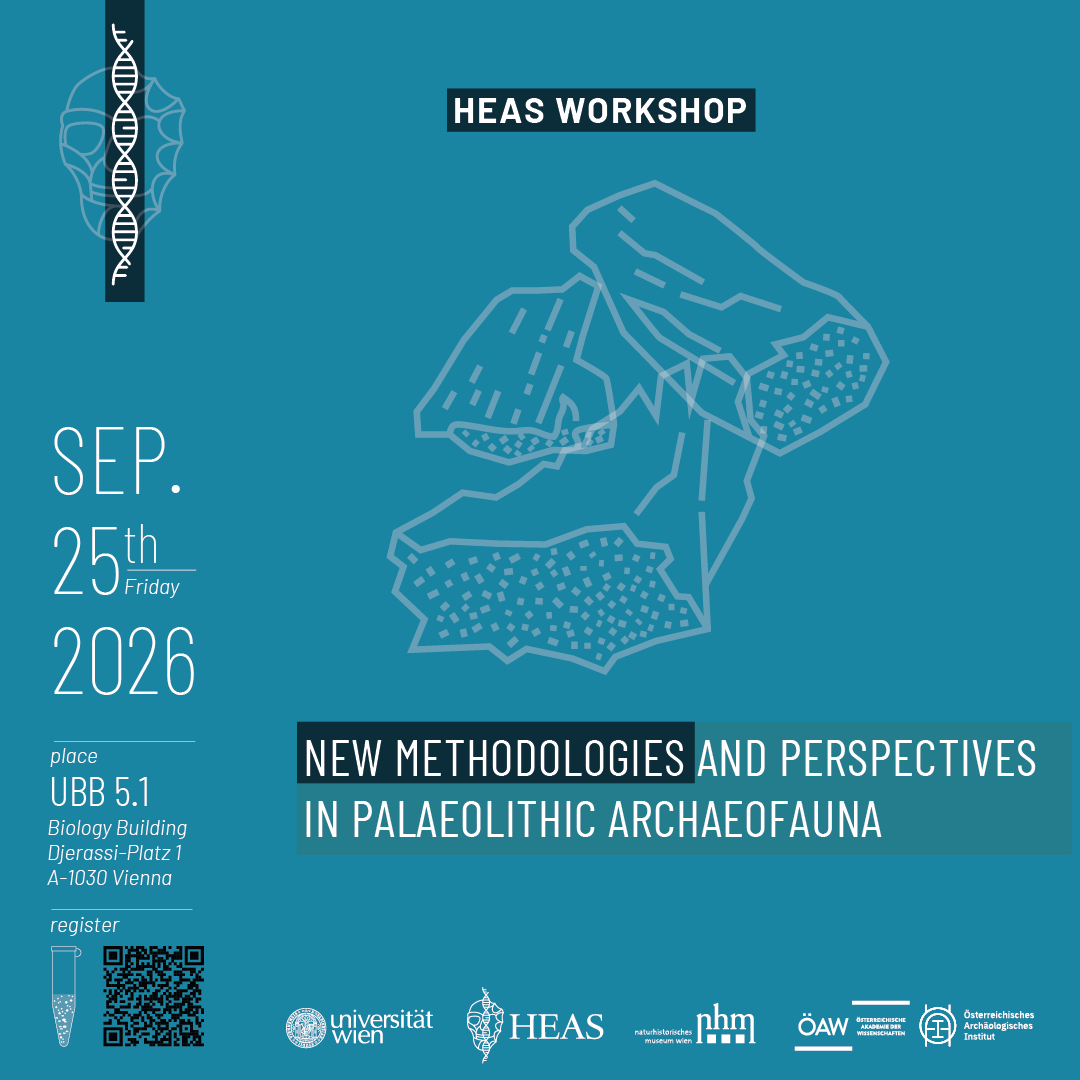
Archaeofaunal analysis is one of the most relevant and dynamic fields in Palaeolithic research. Over the last decades, the discipline has undergone profound transformations driven by methodological innovations and the integration of biomolecular approaches. These advances have expanded archaeofaunal studies beyond traditional taxonomic and taphonomic analyses, enabling researchers to address broader questions related to subsistence strategies, mobility, symbolism, culinary practices, and human–animal relationships. This workshop aims to bring together researchers working at the interface of archaeology, biology, and the humanities to explore how emerging methods are reshaping the study of archaeological fauna. A central goal of the symposium is to promote interdisciplinary dialogue and methodological integration, fostering collaboration across different analytical traditions and career stages. The workshop will consist of a full-day session combining invited lectures and a hands-on exercise. The morning will feature five thematic lectures highlighting interdisciplinary approaches to archaeofaunal research. In the afternoon, participants will engage in a practical exercise designed to encourage methodological cross-fertilization and critical discussion.
Speakers:
- Olivia Rivero: University of Salamanca
- Ana Belén Marin Arroyo: University of Cantabria
- Shevan Wilkin: University of Basel
- Alex Pryor: University of Exeter
- Anna Wagner: University of Reading
- Pere Gelabert: University of Vienna
- Marjolein D. Bosch: University of Vienna