News

Seascapes project announced in the European Archaeologist’s Newsletter

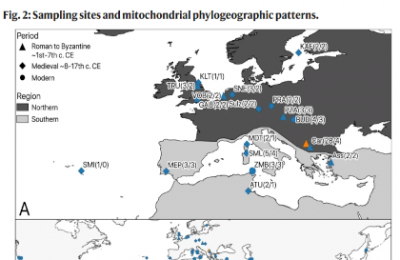
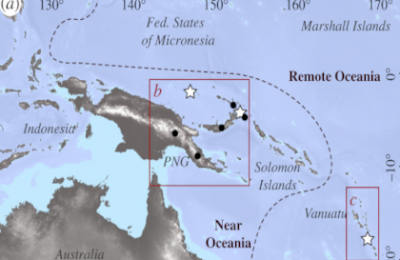
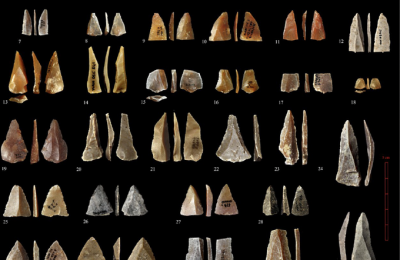
Seascapes, a project being undertaken by HEAS Members Eve Derenne and Maria Ivanova-Bieg along with their colleague Lucy Cramp (University of Bristol), has been announced in the European Archaeologist's Newsletter. Seascapes: tracing the emergence and spread of maritime networks in the Mediterranean in the 3rd millennium bce was developed with the specific aim to refine the absolute chronological framework in the western Mediterranean and investigate the spatio-temporal dynamics of the Bell Beaker complex from a maritime perspective. Seascapes received a 3-year grant from the Austrian Science Fund (FWF) and the UK’s Arts and Humanities Research Council (AHRC)   Read full article here

Research Areas:
Read More
News

The creative millennia: transition to the Neolithic in the central Zagros

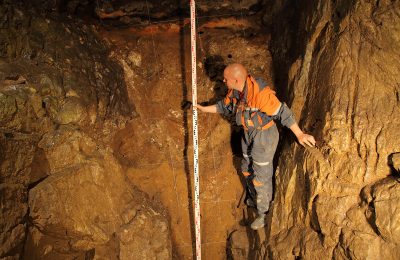
»The creative millennia: transition to the Neolithic in the central Zagros« Hojjat Darabi | Austrian Archaeological Institute, Austrian Academy of Sciences; Department of Archaeology, Razi University The central Zagros received pioneering research on the emergence of early agricultural and village life by R. Braidwood in 1959-60. However, later shift of research toward the Levant put it in shadow for several decades until recent investigations have once again highlighted its key place in the Neolithization processes in west Asia. Unlike the Levant, where a protracted change from Epipaleolithic to Neolithic is seen, the border line between these two periods is evidently sharp in the central Zagros suggesting unprecedent features appeared in the first two millennia of the Holocene, a pivotal transitional time severely known in the region. Current evidence gained from the sites of Chogha Golan, Sheikhi Abad, Asiab, Ganj Dareh and a few others suggests that, following an environmental improvement at the end of the Younger Dryas, local communities engaged in short-term inhabitations, collective or communal ceremonies, and an increasing reliance on wild progenitors of early domestic plant and animal species. It is assumed that subsequent longer occupation towards sedentary life not only increased population numbers but also resulted in an environmental depression. This seems to have caused people to widen their diet toward low-level food production and subsequently agricultural village…

Read More
Read More
Blog Posts

The first ‚Geoarchaeology in Vienna‘ Workshop

Authors: Thomas Beard, Valentina Laaha, Doris Jetzinger   At the beginning of this year, from the 11th to the 12th of January 2024, the first ‘Geoarchaeology in Vienna’ workshop took place at the University of Vienna, generously funded by HEAS. Born out of the wish to connect and create a nexus between geoarchaeologists based in Vienna, the workshop was conceived and organised by Valentina Laaha, Doris Jetzinger and Thomas Beard, all students within the University of Vienna. The vision for this kickoff-event was to get to know each other, establish connections, and lay the foundation for a network of geoarchaeologists in Vienna. Concerning Geoarchaeology It may have been noticed that, while there are a multitude of institutes of archaeological studies all over Vienna, there is no “Geoarchaeology” department per se. So, what is geoarchaeology then? Every geoarchaeologist has most likely been confronted with this question at some point - by members of the public, colleagues from other disciplines, colleagues from within geoarchaeology, or even by themselves. This may be closely tied to the inherently great diversity within the discipline, including many different specialisations that may, or may not decide to carry the label of 'geoarchaeology'. This often leads to 'missing out on each other' by attending vastly different conferences and different sessions within those conferences, but also being housed in quite diverse…

Read More
Read More
News

Tom Higham new Head of HEAS.

As planned from the beginning, the HEAS leadership is now handed over from Gerhard Weber to Tom Higham from the 1st September 2023. Since its foundation two years ago, the Vienna research network HEAS has developed into a well-known player in the scientific landscape of human evolution and archaeological science.  The University of Vienna, Austrian Academy of Science and the Natural History Museum Vienna have joint forces to study the biological and cultural evolution of humankind in a common framework. Our activities such as Seminar Series, Key Lectures, Seed Grants, Pecha Kucha, Workshops, YouTube channel and others will of course continue to bring together scientists from different disciplines and institutions for joint research efforts.   More information on our YouTube channel here

Research Areas:
Read More
Read More
Archive News

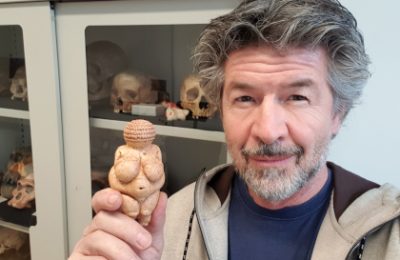
Venus from Willendorf is from Northern Italy!

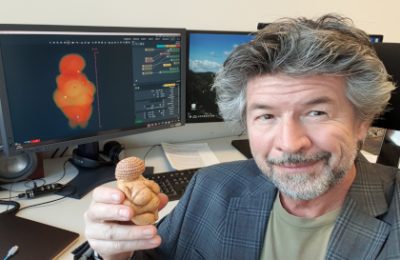
Mystery solved about the origin of the 30,000-year-old Venus of Willendorf as new research method shows that the material likely comes from northern Italy The almost 11 cm high figurine from Willendorf is one of the most important examples of early art in Europe. It is made of a rock called "oolite" which is not found in or around Willendorf. A research team led by the anthropologist Gerhard Weber from the University of Vienna and the two geologists Alexander Lukeneder and Mathias Harzhauser...   Read More                            

Read More
Read More
News Allgemein

Women in Prehistory talk by HEAS Members

Katharina Rebay-Salisbury and Barbara Horejs are organizing the opening of the Archaeo-Sexism exhibition on the 6th March with a talk on “Women in Prehistory” (in German) The exhibition will be on for two weeks: https://uha.univie.ac.at/news-events/ausstellung-archaeo-sexismus/ More information: https://uha.univie.ac.at/news-events/einzelseite/news/weltfrauentag-frauen-in-der-urgeschichte/        

Research Areas:
Read More
Blog Posts

You, Robot: Experiencing Robotics First-Hand at General Laser

By: Dominik Hagmann As part of the University of Vienna's course “AI and Interdisciplinary Research” held at the Department of Evolutionary Anthropology in the summer term of 2025, students from diverse academic fields participated in a hands-on robotics workshop and explored cutting-edge robotics at General Laser in Vienna. From humanoid robotic agents to agile robot dogs, the hands-on workshop illustrated vividly how artificial intelligence (AI) and automation shape both tomorrow’s industry and future research. Setting the Scene: From Myth to Machine Long before AI emerged as a formal scientific discipline, the idea of creating artificial beings fascinated the human imagination. For instance, Greek mythology introduced automata—self-moving devices—already during the first half of the 1st millennium BCE. According to some myths, the smithing god Hephaistos, for example, provided King Alcinoos with “robotic watchdogs” crafted from gold and silver. Furthermore, the deity created Talos, a humanoid “lethal autonomous weapon system” made from bronze, for King Midas to guard the island of Crete. Aside from several further examples, these two cases already comprehensively illustrate how deeply rooted complex visions of intelligent, artificial beings are in human thought. The term robot itself originates from the Czech word robota ("forced labor"), first coined in Karel Čapek’s 1920 play R.U.R. (Rossum’s Universal Robots), foreseeing a world where artificial workers ultimately rise against their human creators. Today,…

Read More