HEAS Labs
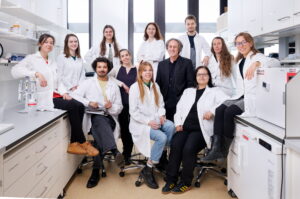
The Higham Lab is based in the Department of Evolutionary Anthropology in the Faculty of Life Sciences at the University of Vienna.
We undertake rigorous radiocarbon pretreatment chemistry, to build robust chronologies from archaeological sites around the world and radiocarbon dating of organic remains from archaeological sites (with stable isotopes of C and N). We welcome collaborations from researchers. Contact us!
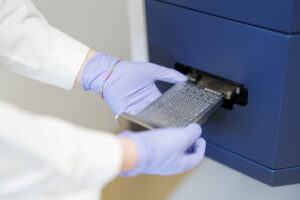
The Douka Lab is the first specialised palaeoproteomics facility in Austria, based at the Faculty of Life Sciences of the University of Vienna.
We investigate major questions linked to human evolution through the development and application of new biomolecular techniques. We focus on the taxonomic identification of collagenous and other organic materials and we routinely work on ancient bones, whether unidentifiable osteological remains or worked osseous artefacts.
With a new state-of-the-art MALDI-ToF Mass Spectrometer we perform in-house collagen fingerprinting (ZooMS) and continue work towards expanding the reference ZooMS library through addition of new taxa in it from less researched parts of the world. Contact us!
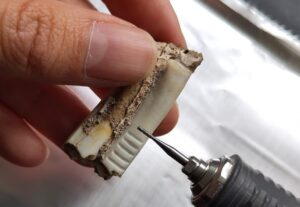
The Bioarchaeology Laboratory for Stable Isotope Analysis is based at the Vienna Institute for Archaeological Science (VIAS) at the University of Vienna. We study bioarchaeological finds (mostly human and animal bones, teeth and plant remains) to reconstruct past food consumption, animal husbandry practices and environments. Contact us!
NHM Archaeological Textile Tab
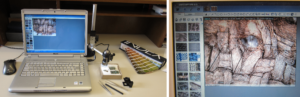
The Archaeological Textile Research Laboratory, based at the Natural History Museum Vienna, is dedicated to the interdisciplinary study of prehistoric textile technology, material culture, and ancient garment evolution. It conducts comprehensive analyses of organic material remains to reconstruct the economic, social, and technological frameworks of early European societies.
Our work revolves around the world-famous textile treasure from the Hallstatt Salt Mine. Preserved perfectly by the salt for millennia, these 3,000-year-old organic finds offer an unparalleled window into the Bronze and Iron Ages. The focus of our research are also textile finds from graves and settlements, mostly from Austria, but also diverse European countries and Iran.
The NHM ArchTexLab utilises a wide range of analytical and methodological tools in close cooperation with the Central Research Labs of the Natural History Museum Vienna:
• Microscopic Analysis: Identifying fiber origins (wool, flax, nettle) and quality using scanning electron microscopy (SEM).
• MicroCT imaging for understanding different organic layours on composite artefacts
• Experimental Archaeology: Hand-weaving accurate replicas to test production times, comfort, and durability.
• Citizen Science & Community approach: Through our Citizen Science projects (listed at “Österreich Forscht” platform, we collaborate with craft enthusiasts and weavers worldwide to reconstruct complex ancient techniques, such as tablet weaving.
HEAS Members active at the NHM ArchTexLab: Karina Grömer (head), Kayleigh Saunderson