Department of Evolutionary Anthropology (DEA) Members

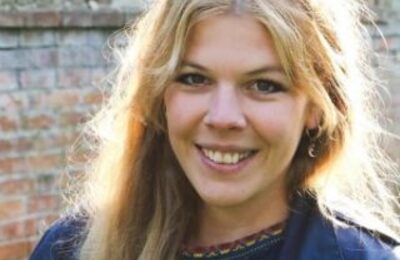
Francesc MARGINEDAS MIRÓ

I am an anthropologist and archaeologist specialising in the study of human remains from archaeological contexts. I am currently a postdoctoral researcher at the University of Vienna, in the Department of Evolutionary Anthropology. I hold a PhD in Quaternary and Prehistory from Rovira and Virgili University (Tarragona, Spain), as well as a Master’s degree in Quaternary Archaeology jointly awarded by the same institution and the Muséum national d’Histoire naturelle (Paris, France). My research focuses on mortuary practices involving the manipulation of human remains, alongside evidence for interpersonal violence and cannibalism in past societies. I work across a broad range of chrono-cultural contexts, from the Upper Palaeolithic to the Bronze Age. This includes the analysis of human bone assemblages from sites such as Maszycka Cave (Kraków, Poland), Txispiri Cave (Gipuzkoa, Spain) and El Mirador Cave (Atapuerca, Spain), among others. I am also an active member of the Atapuerca Project, contributing both in the field and in the laboratory. My work combines a range of taphonomic and analytical approaches, including classical osteological methods, residue analysis, and detailed studies of bone surface modifications.  
Read More
Department of Evolutionary Anthropology (DEA) Members

Carla GÓMEZ MONTES

I am a PhD candidate jointly enrolled in the Department of Evolutionary Anthropology at the University of Vienna and the History and Geography PhD program at the University of Cantabria. My supervisors are Pere Gelabert (University of Vienna) and Ana B. Marín Arroyo (University of Cantabria). I hold a Bachelor’s degree in History and a Master’s degree in Prehistory and Archaeology, both from the University of Cantabria. My master’s thesis aimed to try refine the chronology of the Gravettian occupation at Altamira and to investigate the subsistence strategies of the earliest human groups in the site through the study of bioarchaeological remains. I am currently part of the BEAM Lab and the ERC project SHADOWS. Specifically, my field of research during the development of this project will be archaeozoology, a discipline in which I will focus mainly on two aspects: the taphonomic study of bone remains and the application of the ZooMS technique for proteomic analysis in bioarchaeological materials from sites in northern Spain and South-East France. I am also part of the EvoAdapta research group at the University of Cantabria. By combining proteomic approaches (ZooMS) with archaeozoological and taphonomic analyses, the project improves taxonomic identification of non-diagnostic faunal remains. This integrative framework enables a refined reconstruction of human-animal relationship seeking to widen the knowledge about human–carnivore dynamics, offering new…

Read More
Members

Emese VÉGH

Emese Végh is a FWF ESPRIT Principal Investigator on the project titled ‘Human Evolution Beyond Collagen (HUMEVCOL)’ at the Department of Evolutionary Anthropology, University of Vienna. Mentored by Tom Higham, Emese aims to pioneer single amino acid radiocarbon dating techniques targeting γ-carboxyglutamic acids (Gla)-containing proteins in bones that do not preserve collagen, which is often the case for fossil bones recovered from (sub-)tropical areas. This innovative approach is set to revolutionise the analysis and dating of key archaic hominin remains. Previously, Emese led the ‘Hidden by Fire’ project as an FWO Postdoctoral Research Fellow at the Vrije Universiteit Brussel (VUB), under the guidance of Christophe Snoeck and Steven Goderis. Her research there centred on the consistency, contamination, and diagenetic potential of elemental concentrations in bone burnt at various temperatures, their interaction, as well as the efficacy of pretreatment methods on cremated bone before stable isotopic analysis and radiocarbon dating. Before that, she was also a Postdoctoral Researcher in Palaeoproteomics on Katerina Douka’s ERC FINDER project at the Department of Evolutionary Anthropology, University of Vienna, analysing and identifying faunal and hominin remains from Pleistocene Eurasia and developed the SpecieScan algorithm for semi-automated species identification of bone fragments from MALDI-ToF-MS spectra. Emese completed her DPhil in Archaeological Science at the University of Oxford, focusing on the diagenesis and thermal stability of bioapatite,…

Read More
Read More