
HEAS members So Jung Han and Martin Kuhlwilm publish study of the evolutionary history of bonobos
More On Article
- Demographic history and management practices shape the genomic landscape of New Zealand’s feral Kaimanawa Horses.
- HEAS Congratulates Dr Michelle Hämmerle
- A refined phylochronology of the second plague pandemic in Western Eurasia.
- Creating a brand. Genesis, transformation and diffusion of Qurayyah Painted Ware
- From Hair to Hearing: Genomes Reveal How Great Apes Adapted
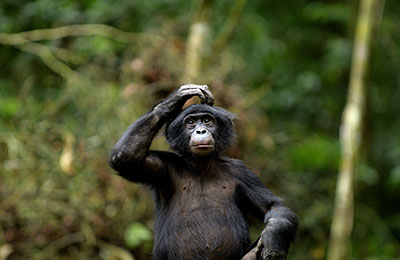
In a new study in Current Biology, HEAS members So Jung Han and Martin Kuhlwilm together with an international team, improve our understanding of bonobos. Bonobos are, together with chimpanzees, our closest living relatives, but the genetic structure of their population was so far not well understood. They show that three genetically distinct bonobo groups of inferred Central, Western and Far-Western geographic origin exist within the bonobo range. Their split times are up to ~145,000 years ago, which similar to that of some chimpanzee subspecies. This highlights the need of attention to bonobo substructure, which is fundamental both to understand their evolutionary past and preserve their future.