HEAS Members Interviewed for Nature
More On Article
- HEAS Workshop on "The Long History of Inequality: Resources, Control, and Social Power", to be held in Vienna on 7–8 May.
- Tracing Seaweed as Food and Fodder in Archaeology: A Review of Current Methods
- HEAS Congratulates Dr Emily Pigott
- Dip Your Finger in the Sea... Geoarchaeological View on Coastal Setting and Maritime Accessibility of the Coastal Town of Osor, Northern Adriatic.
- HEAS Seed Grants for February 2026 Announced.
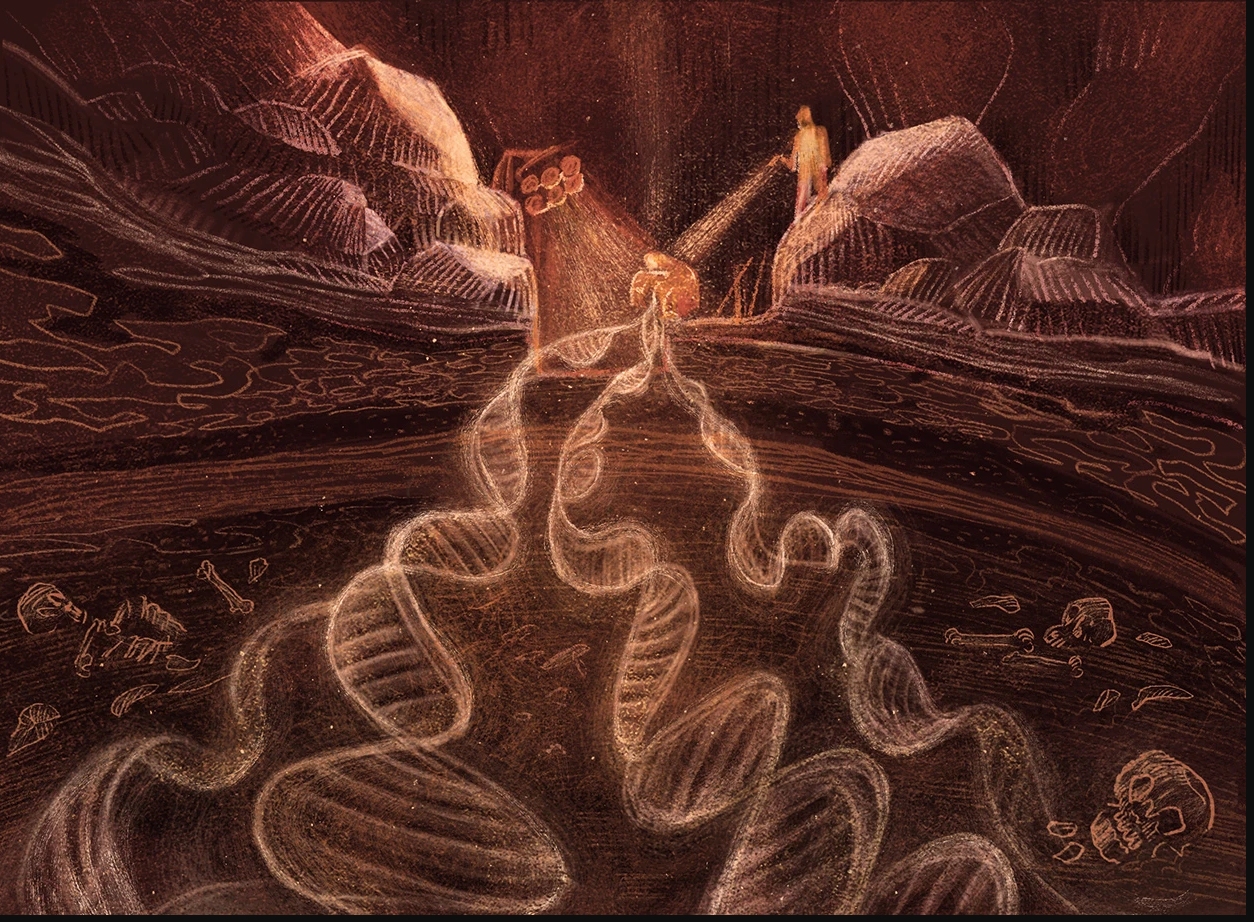
HEAS Team Leaders Pere Gelabert and Benjamin Vernot were recently interviewed for Nature Magazine for their work in sediment DNA.
The two researchers are pushing the boundaries of what we can learn from ancient dirt. Benjamin Vernot built a 1.6‑million‑probe capture panel to fish nuclear DNA out of sediments—targeting Neanderthals, Denisovans, early modern humans, and even unknown archaic lineages . He also devised new computational methods and applied them to cave sediments like Galería de las Estatuas, teasing out from mtDNA two distinct Neanderthal populations—with one replacing the other about 100,000 years ago—and using nuclear fragments to tell whether a sample came from a single male or female, or a mix of individuals . On the other side, Pere Gelabert showed you can brute‑force nuclear DNA from cave dirt with shotgun sequencing, but in a head‑to‑head test, targeted capture pulled about 32× more informative reads—so shotgun is often a slog for population genetics, while capture is best saved for sediment‑rich cases and mtDNA often does the job for lineages and population differences . As Gelabert puts it, without sediment DNA, many of these human‑history clues would be impossible to uncover .