Facial attractiveness is only weakly linked to genome–wide heterozygosity
Fieder, M., Huber, S., 2023. Facial attractiveness is only weakly linked to genome–wide heterozygosity. Frontiers in Psychology 14. read more
Butovskaya, M.L., Mezentseva, A., Mabulla, A., Shackelford, T.K., Schaefer, K., Fink, B., Windhager, S., 2022. Facial cues to physical strength increase attractiveness but decrease aggressiveness assessments in male Maasai of Northern Tanzania. Evolution and Human Behavior 43, 115-121. read more
Fieder, M., , Huber, S., 2021. Fertility Outcomes, Heritability and Genomic Associations of In-Group Preference and In-Group Marriage. Twin Research and Human Genetics 24, 264-272. read more
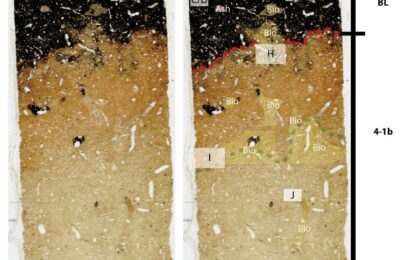
Murphree, W.C., Ferro-Vázquez, C., Kulakovska, L., Usyk, V.I., Kononenko, O., Bosch, M.D., Haesaerts, P., Damblon, F., Pirson, S., Nigst, P.R., Aldeias, V., 2025. Fire Use During the Last Glacial Maximum: Evidence From the Epigravettian at Korman' 9, Middle Dniester Valley, Ukraine. Geoarchaeology 40, e70006. read more
Gelabert P., Pinhasi R., 2025. First farmers of Central Europe do not show family-related inequality. Nature Human Behaviour. read more
Windhager, S., Schaefer, K., Fink, B., 2025. From Calibrated Morphs to Facial Stimuli: The Beauty of a Statistically Informed Picture. American Journal of Human Biology 37, e70048. read more
Skov, L., Peyrégne, S., Popli, D., Iasi, L.N.M., Devièse, T., Slon, V., Zavala, E.I., Hajdinjak, M., Sümer, A.P., Grote, S., Bossoms Mesa, A., López Herráez, D., Nickel, B., Nagel, S., Richter, J., Essel, E., Gansauge, M., Schmidt, A., Korlević, P., Comeskey, D., Derevianko, A.P., Kharevich, A., Markin, S.V., Talamo, S., Douka, K., Krajcarz, M.T., Roberts, R.G., Higham, T., Viola, B., Krivoshapkin, A.I., Kolobova, K.A., Kelso, J., Meyer, M., Pääbo, S., Peter, B.M., 2022. Genetic insights into the social organization of Neanderthals. Nature 610, 519-525. read more
Sørensen, E.F., Harris, R.A., Zhang, L., Raveendran, M., Kuderna, L.F.K., Walker, J.A., Storer, J.M., Kuhlwilm, M., Fontsere, C., Seshadri, L., Bergey, C.M., Burrell, A.S., Bergman, J., Phillips-Conroy, J.E., Shiferaw, F., Chiou, K.L., Chuma, I.S., Keyyu, J.D., Fischer, J., Gingras, M.-C., Salvi, S., Doddapaneni, H., Schierup, M.H., Batzer, M.A., Jolly, C.J., Knauf, S., Zinner, D., Farh, K.K.-H., Marques-Bonet, T., Munch, K., Roos, C., Rogers, J., 2023. Genome-wide coancestry reveals details of ancient and recent male-driven reticulation in baboons. Science 380, eabn8153. read more
Gelabert, P., Schmidt, R.W., Fernandes, D.M., Karsten, J.K., Harper, T.K., Madden, G.D., Ledogar, S.H., Sokhatsky, M., Oota, H., Pinhasi, R., 2021. Genomes From Verteba Cave Suggest Diversity Within The Trypillians In Ukraine. Scientific Reports 12, 7242. read more
Pawar, H., Rymbekova, A., Cuadros-Espinoza, S., Huang, X., de Manuel, M., van der Valk, T., Lobon, I., Alvarez-Estape, M., Haber, M., Dolgova, O., Han, S., Esteller-Cucala, P., Juan, D., Ayub, Q., Bautista, R., Kelley, J.L., Cornejo, O.E., Lao, O., Andrés, A.M., Guschanski, K., Ssebide, B., Cranfield, M., Tyler-Smith, C., Xue, Y., Prado-Martinez, J., Marques-Bonet, T., Kuhlwilm, M., 2023. Ghost admixture in eastern gorillas. Nature Ecology & Evolution. read more
Webb, N.M., Fornai, C., Krenn, V.A., Watson, L.M., Herbst, E.C., Haeusler, M., 2024. Gradual exacerbation of obstetric constraints during hominoid evolution implied by re-evaluation of cephalopelvic fit in chimpanzees. Nature Ecology & Evolution. read more
Bergström, A., Stanton, D.W.G., Taron, U.H., Frantz, L., Sinding, M.-H.S., Ersmark, E., Pfrengle, S., Cassatt-Johnstone, M., Lebrasseur, O., Girdland-Flink, L., Fernandes, D.M., Ollivier, M., Speidel, L., Gopalakrishnan, S., Westbury, M.V., Ramos-Madrigal, J., Feuerborn, T.R., Reiter, E., Gretzinger, J., Münzel, S.C., Swali, P., Conard, N.J., Carøe, C., Haile, J., Linderholm, A., Androsov, S., Barnes, I., Baumann, C., Benecke, N., Bocherens, H., Brace, S., Carden, R.F., Drucker, D.G., Fedorov, S., Gasparik, M., Germonpré, M., Grigoriev, S., Groves, P., Hertwig, S.T., Ivanova, V.V., Janssens, L., Jennings, R.P., Kasparov, A.K., Kirillova, I.V., Kurmaniyazov, I., Kuzmin, Y.V., Kosintsev, P.A., Lázničková-Galetová, M., Leduc, C., Nikolskiy, P., Nussbaumer, M., O’Drisceoil, C., Orlando, L., Outram, A., Pavlova, E.Y., Perri, A.R., Pilot, M., Pitulko, V.V., Plotnikov, V.V., Protopopov, A.V., Rehazek, A., Sablin, M., Seguin-Orlando, A., Storå, J., Verjux, C., Zaibert, V.F., Zazula, G., Crombé, P., Hansen, A.J., Willerslev, E., Leonard, J.A., Götherström, A., Pinhasi, R., Schuenemann, V.J., Hofreiter, M., Gilbert, M.T.P., Shapiro, B., Larson, G., Krause, J., Dalén, L., Skoglund, P., 2022. Grey wolf genomic history reveals a dual ancestry of dogs. Nature. read more
Bäck, N., Schaefer, K., Windhager, S., 2021. Handgrip strength and 2D: 4D in women: homogeneous samples challenge the (apparent) gender paradox. Proceedings of the Royal Society B 288, 20212328. read more
Huang, X., Rymbekova, A., Dolgova, O., Lao, O., Kuhlwilm, M., 2023. Harnessing deep learning for population genetic inference. Nature Reviews Genetics. read more
The prestigious excavations of the Austrian Archaeological Institute in Ephesos/Türkiye will be led by Martin Steskal from this year. For many years, Steskal has been committed to interdisciplinary research approaches and the establishment of archaeology as an interface between the humanities and sciences. His planned research includes questions on circular economy, resource management, human-environment relationships, production and consumption. He deals with the key question of how the living conditions of an ancient populations can be reconstructed.
A new article has been published on the massive, neolithic pit structure recently discovered during geophysical survey around the Durrington Walls Henge, Wiltshire. Following their original discovery of what may be the largest Neolithic structure in Britain, archaeologists have since returned to confirm the details of the pit circle and to provide new dating and environmental information. This work has confirmed that Durrington Walls henge, itself one of the largest prehistoric enclosures in Britain, was ringed by a large structure of at least 16 massive pits, many of which measured 10 m in diameter and up to 5 m in depth. None of the very large features investigated, have yet to provide evidence that they were formed naturally by chalk solution. Recent work confirms that these features were likely dug and filled during the later Neolithic, with optically stimulated luminescence studies indicating a date of c. 2480 BC. The application of new sedimentary DNA studies has also provided new evidence for the plants and animals associated with the chalk landscape surrounding these features. Even within a landscape as exceptional as that surrounding nearby Stonehenge, the results of this work emphasis that these pits are a cohesive structure, which represent an elaboration of the Durrington Walls monument complex at a massive, and completely unexpected, scale. Research on the pits at…
HEAS deputy head Barbara Horejs has developed a temporary focus on archaeology with the bookshop musette shop (Neubaugasse 72, 1070 Vienna), which will run for several months from the 29th April 2025. For three months, the acclaimed bookshop will have a focus on Archaeology for their book and object selection. More information on their website https://www.musetteshop.com/
The Svinjarička Čuka archaeological site, situated on a flat river terrace in southern Serbia, has been under investigation by an international research team since 2018 as part of an interdisciplinary Austrian-Serbian collaborative project. The prehistoric settlement history of the terrace dates back to the early Neolithic period and extends through the Copper and Bronze Ages to the Iron Age. The most important scientific findings on the Neolithic process in Serbia and a representative selection of the most significant finds from the first excavation campaigns are presented for the first time in this bilingual (English and Serbian) companion volume to the permanent exhibition at the National Museum of Leskovac. Evidence of permanent, fixed architecture of the Neolithic Starčevo culture from around 6000 BC and the rich array of finds provide insights into the material culture of the first agricultural, sedentary societies in a region that, along major river corridors, connects the cultures of the Mediterranean with those of the Danube region. The individual chapters not only provide an overview of the excavation results and finds, but also of the Leskovac plain and the discovery of the site using systematic surveys and geophysical prospection methods. Furthermore, they offer insights into the diverse application of multidisciplinary methods in the analysis of the finds (such as microarchaeology, wear and tear and residue analysis, and…
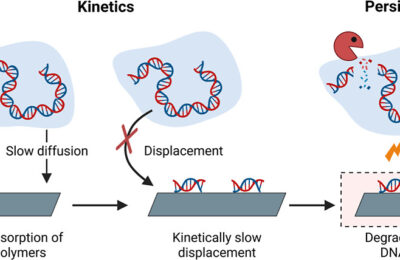
HEAS Deputy Head Ron Pinhasi along with the Minerva team have recently published a paper on 'Polymer Length Governs DNA Adsorption Dynamics on Mineral Surfaces'. This paper also included HEAS Members Veer Vikram Singh, Richard Kimber and Stephan M. Kraemer. https://pubs.acs.org/doi/full/10.1021/acs.est.5c08180
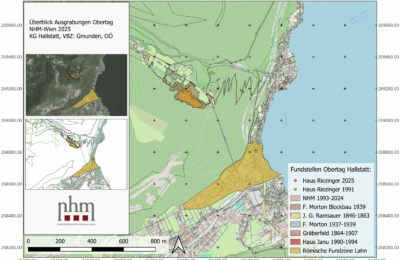
On Friday, October 4th, 2024, 17 members of the Human Evolution and Archaeological Science (HEAS) research network from the University of Vienna set off for a remarkable two-day excursion to Hallstatt, a UNESCO World Heritage Site famous for its prehistoric salt mines. The group, split into two rented vans, arrived in Hallstatt in the afternoon, where they were warmly welcomed by Dr. Georg Tiefengraber and Daniel Brandner, along with Bernd Paulowitz, the UNESCO Site Manager, and the head of the Hallstatt Museum. The first day unfolded with a guided tour through the museum, where the group marveled at exceptional archaeological finds from the Hallstatt prehistoric cemetery and the salt mines. The artifacts, meticulously preserved, offered a window into the life and practices of the region’s ancient inhabitants. Following the museum tour, the group visited the iconic photographic viewpoint of Hallstatt, capturing views of the beautiful village, before continuing to the church Mariä Himmelfahrt and the famous ossuary, known for its collection of painted skulls. After a joint dinner, the group embarked on an evening hike, led by Daniel Brandner, up the mountain to the research center. Along the way, they encountered numerous fire salamanders, which added an extra touch to the excursion. The second day began with the remaining members of the group, who had stayed in Obertraun, joining via…
The EVAN Toolbox (ET) is a software package developed by the European Virtual Anthropology Network – EVAN (www.evan.at) and the EVAN-Society to facilitate 3D form and shape analysis of objects featuring a complex geometry. It uses Geometric Morphometrics (GM) which includes methods such as General Procrustes Analysis, Principal Component Analysis, Thin-Plate Spline Warping or Partial Least Squares Analysis. The software supports also data acquisition, particularly locating landmarks and sliding semilandmarks on curves and surfaces. The version ET 1.75 is now freely accessible for everybody https://www.evan-society.org/support/download-evan-toolbox/. Manuals explaining how to use ET Core and ET Templand as well as test data and predefined Visual Programming Networks (VPNs) can be downloaded under https://www.evan-society.org/support/et-open-space/. Please acknowledge the EVAN-Society if you use ET for your research. [video width="1864" height="1150" mp4="https://www.heas.at/wp-content/uploads/2023/02/PC_Warp_Humans-1.mp4"][/video]
Gerhard Weber's article on 'The microstructure and the origin of the Venus from Willendorf ' is in the Top 100 Scientific Reports papers published in 2022. The almost 11 cm high figurine from Willendorf is one of the most important examples of early art in Europe. It is made of a rock called "oolite" which is not found in or around Willendorf. A research team led by the anthropologist Gerhard Weber from the University of Vienna and the two geologists Alexander Lukeneder and Mathias Harzhauser as well as the prehistorian Walpurga Antl-Weiser from the Natural History Museum Vienna have now found out with the help of high-resolution tomographic images that the material from which the Venus was carved likely comes from northern Italy. This sheds new light on the remarkable mobility of the first modern humans south and north of the Alps. Link to full article
Rapa Nui (Easter Island) with its gigantic statues and treeless landscape has fascinated researchers for centuries. A new genetic study published in this week’s Nature disproves the popular theory that the Rapanui population collapsed as a result of an “ecocide”—a human-caused environmental suicide—and shows that the Rapanui admixed with Indigenous Americans centuries before Europeans arrived on the island. https://www.heas.at/research/publications/ancient-rapanui-genomes-reveal-resilience-and-pre-european-contact-with-the-americas/ Press Release Media Coverage ORF
On the 6th February 2024 HEAS hosted a group of children from children from around Vienna for a workshop on 'Archaeology for Kids' at the HEAS partner the Natural History Museum. The children learnt about the main prehistoric and historical eras with interactive examples of representative sites, monuments, and objects. We hope this hands on experience sparked an interest for the children in ancient cultures and the modern scientific methods used to study them. To learn more about the workshop and other work by Dr. Alexandra Dolea please see her blog post below: https://www.ilovearchaeology.com/post/archaeology-for-kids-workshop
Within the framework of an interdisciplinary analysis of the Early Bronze Age burials from Drasenhofen, evidence was found for what are currently the oldest plague victims in Austria. The male individuals, who died at the age of 23–30 and 22–27 years, respectively, were buried not far from each other in the north-easternmost and south-easternmost grave of the row cemetery comprising a total of 22 graves. Despite the spatial and temporal proximity, the genetic pathogen analyses detected two different strains of plague bacteria (Yersinia pestis). Thus, it was not one infection that was transmitted within the Bronze Age group, but two independent infection events. In this article, we present the phylogenetic positions of these two Yersinia pestis strains together with other prehistoric, historic and modern plague genomes known so far, discuss biological basics of transmission and possible transmission routes, and attempt a cultural-historical interpretation in comparison with similar anthropological and archaeological contexts. https://austriaca.at/bronzezeit-pest-in-drasenhofen Read media coverage below: https://science.orf.at/stories/3219896/ https://www.derstandard.at/story/3000000175379/aelteste-pesttote-oesterreichs-gefunden
New publication of Philip R. Nigst and colleagues in the Journal of Paleolithic Archaeology on the results of the new excavations at Korolevo II in Ukraine. The site of Korolevo II in western Ukraine - located in the border area between central and eastern Europe - is mainly known for its Early Upper Palaeolithic assemblage, argued in the past to represent an assemblage at the transition from the Middle to the Upper Palaeolithic. Hence, the site holds a potential for a better understanding of the Middle to the Upper Palaeolithic transition and the replacement of Neanderthals by modern humans. In this paper we report on our new fieldwork between 2015 and 2017, which provided a new view on the stratigraphy, chronology and archaeological sequence of the site. Read more here Link to article
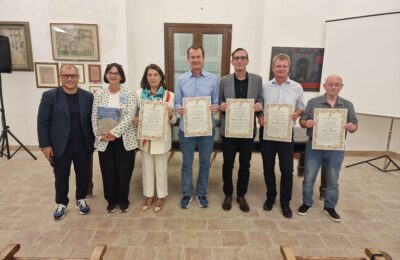
HEAS Head Gerhard Weber was honored with the Niederösterreich Wissenschaftspreis (Science Prize from Lower Austria) for his research and in particular his research into the origin of the "Venus von Willendorf", a female fugure which was found in 1908 in Willendorf in the Wachau. Weber and his team examined the figurine's material and their research suggests that Venus may have come from a location near Lake Garda in Italy. The ceremony took place on the 18th October 2022. Read the press reports (in German) https://www.ots.at/presseaussendung/OTS_20221019_OTS0035/wissenschaftspreise-2022-hoehepunkt-im-forschungsherbst https://www.noen.at/niederoesterreich/wirtschaft/top-wissenschaft-aus-niederoesterreich-wurde-ausgezeichnet-niederoesterreich-redaktionsfeed-wissenschaftsgala-wissenschaft-johanna-mikl-leitner-redaktion-340206811 More about Gerhard Weber's research here: https://www.heas.at/research/publications/the-microstructure-and-the-origin-of-the-venus-from-willendorf/
Congratulations to HEAS member Verena Schünemann on being awarded the ERC Consolidator Grant for "Revealing evolutionary systems behind epidemic reservoirs of infectious, reemerging diseases'. More information here
HEAS Deputy Head Tom Higham was interviewed by the Austrian state broadcaster ORF about his recent Nature paper on 'A symbolic Neanderthal accumulation of large herbivore crania'. Read full article (in German) here Link to paper
Thomas Einwögerer, HEAS PI and leader of the The Quaternary archeology research group of the Austrian Archaeological Institute (ÖAI) of the Academy of Sciences (ÖAW), spoke to the Austrian newspaper Der Standard about the attempts to interpret Stone Age symbols in Cave Art. Read full article (In German) here
An interview with HEAS Head Gerhard Weber has been featured in numerous Austrian publications. Read full articles (in German) here https://www.wienerzeitung.at/nachrichten/wissen/forschung/2165361-Forschungsverbund-der-Uni-Wien-widmet-sich-Evolutionsfragen.html https://www.studium.at/evolution-des-menschen-wie-wien-zum-forschungs-schwergewicht-wurde
The HEAS Keynote with Eszter Bánffy took place on Friday the 28th June in the beautiful Theatersaal in the HEAS Partner Institution The Austrian Academy of Sciences. We welcomed almost 100 people online and in-person for her talk on 'New strategies and coping practices of early farmers taking the Danubian route (6000-5350 cal BC)'. The recording from this event will be available on our YouTube channel later this week.
The HEAS Keynote with Necmi Karul took place on the 26th June 2025 at the ÖAW Theatersaal in the first district of Vienna. The talk, titled 'The Land of Great Transformation. Karahantepe and The Last Hunter-Gatherers of The Şanliurfa Plateau' was delivered to a hybrid audience and was followed by the HEAS Summer Party. Press Coverage (in German) https://www.derstandard.at/story/3000000275682/oesterreichische-archaeologieteams-werden-an-monumentaler-grabungsstaette-goebekli-tepe-mitarbeiten
HEAS Member, Bernhard Fink was recently awarded Fellow status at the recent 35th Annual Meeting of the Human Behaviour and Evolution Society (HBES). Fellow status is conferred to members of the Society for sustained outstanding contributions to the study/teaching of evolution and human behaviour, and to the service of the Society. There are currently 7 fellows (2 from Europe). https://www.hbes.com/awards/#toggle-id-3
Congratulations to HEAS Member Elmira Mohandesan on being awarded a standalone FWF grant for her project titled "Genome-wide Genetic Diversity, Ancestry and Inbreeding in New Zealand Feral Kaimanawa Horses". This grant will also support a PhD Candidate. More information and application details here
HEAS Member Doris Jetzinger has recently been awarded a grant by the Austrian Academy of Sciences. I have been awarded a GO.INVESTIGATIO fellowship by the Austrian Academy of Sciences for a 6 months research stay at CERSA luminescence, the luminescence laboratories within the School of Earth and Environmental Sciences at the University of St Andrews, Scotland, for my research project “How old are these sediments? Promoting the use of pOSL profiling for archaeological features with unclear chronological contexts in Austria”. My aim is to study chronostratigraphic contexts, construction histories and (post-) depositional and formation processes of Austrian archaeological sites and features via portable optically stimulated luminescence profiling (pOSL profiling) and OSL dating of sediment samples. pOSL profiling generates relative chronostratigraphic data through stratigraphies as well as proxy data to interpret geomorphic contexts, formation processes, and variations in mineralogy. My project acts as a case study that will lay the groundwork for a larger research project and helps underline the potential of pOSL profiling and the benefits of further establishing this approach for archaeological applications in Austria.
HEAS deputy head Barbara Horejs was recently interviewed on Austrian National Radio on Archaeogenetics. Show description: Genetics is becoming an important tool for archaeologists and historians, especially when looking far back into history. In recent years, science has frequently generated interest with new news about prehistory and early history. For example, the history of the spread of agriculture to Europe 8,000 years ago had to be rewritten. This was made possible by the introduction of genetics into archaeology. Archaeogenetics has repeatedly produced new methods in recent years: Today, DNA can be extracted from bone surfaces without drilling into the bones, or DNA can be analyzed from sediments – without bones at all. History has also recently begun using genetics, gaining new insights, for example, into the migration of peoples in the middle of the first millennium AD. Listen Here (in German): https://oe1.orf.at/player/20250311/788102
Mareike Stahlschmidt, Susanna Sawyer and Omaima Zaki from the working group microarchaeology visited the Tischoferhöhle to sample for ancient sedaDNA analysis. SedaDNA could shed new light on homo sapiens and Neanderthal occupations of the cave. Recent excavation revealed lithics typically associated with homo sapiens, but also Neanderthals while no human fossil remains were discovered so far. A news sections by the ORF reports on these sensational new finds, including an interview with Sawyer on the potential of sedaDNA for identifying the makers of the lithic industries. Interview (in German) https://on.orf.at/video/14285067/15919671/tischofer-hoehle-sensationsf
We are pleased to announce that Dr. Elmira Mohandesan has been awarded an FWF stand-alone research grant (PAT 3594624). She and her international team will explore the genetic diversity and cultural interactions of Late Bronze to Middle Iron Age human communities in the Carpathian Basin. Their multidisciplinary study will investigate how eastern population influxes and horses influenced these societies, providing a comprehensive understanding of their socio-cultural transformations." More information
HEAS Member Gerhard Weber was recently interviewed for a popular german language podcast on, among other things, the origin of the human species and the development of the human brain over the course of evolution. Is our brain getting bigger? Are we on the verge of a leap in our biological evolution? You can listen to the podcast on the following links: www.dguz.at Podigee-Blog: https://dguz.podigee.io/ Spotify https://open.spotify.com/episode/0fn6MzZ9RdGWK8HOH8UaSj?si=0c55549b32094eee Apple podcasts: https://podcasts.apple.com/at/podcast/die-geschichte-unserer-zukunft/id1800278307?i=1000703155950