Where Physics, Chemistry and Archaeology Meet: Applications and Case Studies in (p)XRF
More On Article
- At the onset of the Late Gravettian: An updated chronology and stratigraphy for the multi-layered Gravettian open-air site Grub-Kranawetberg I (Austria).
- New Chronology Sheds Light on Human Occupation just before the onset of the Last Glacial Maximum
- Fire, temperature control, and silcrete heat treatment at Diepkloof and Mertenhof Rock Shelters, West Coast, South Africa
- Gerhard Weber and Harald Wilfing Retire
- HEAS Workshop in New Methodologies and Perspectives in Palaeolithic Archaeofauna takes place in Vienna.
By Tabea Truntschnig
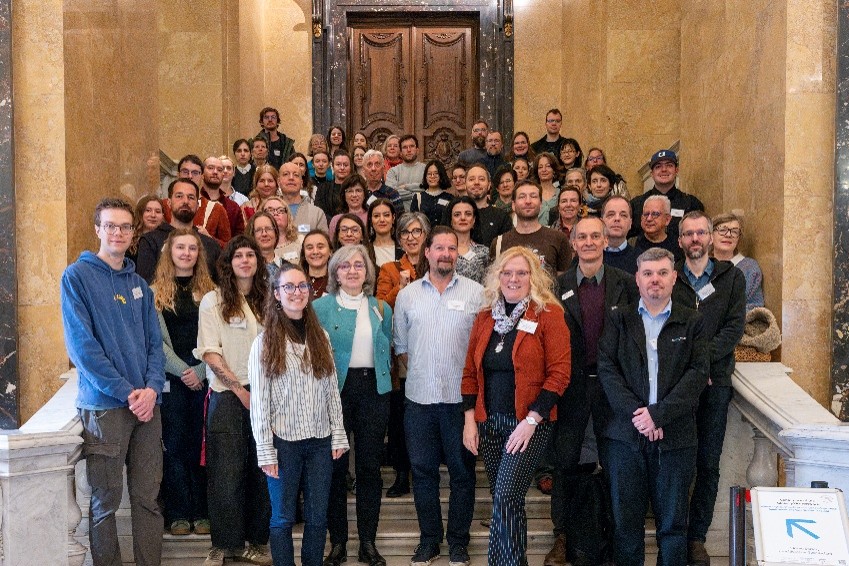
On the 30th of March 2026, researchers from across the World gathered in Vienna for the second international pXRF conference, Where Physics, Chemistry and Archaeology Meet: Applications and Case Studies in (p)XRF. The conference was organized as a collaborative effort between the Global pXRF Network, the Vienna Institute for Archaeological Science, the Natural History Museum Vienna, the Austrian Archaeological Institute and the Human Evolution and Archaeological Sciences Network (HEAS).
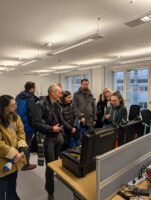
One day earlier on the 29th of March 2026, the conference participants had the opportunity to come together for an icebreaker event, offering an early opportunity for informal exchange and networking. The programme began with a guided tour of the laboratory facilities at the Austrian Archaeological Institute on Georg-Coch-Platz, where Michael Brandl provided insights into ongoing research and analytical practices.
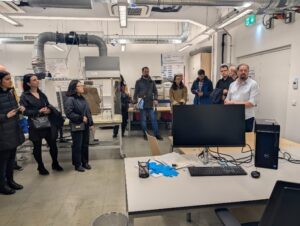
In the late afternoon, participants continued with an exclusive guided visit to the historic spaces of St. Stephen’s Cathedral, including its catacombs and rooftop, offering both a cultural and panoramic perspective on Vienna. The day concluded with a self-funded group dinner at Kaffee Alt Wien, which further fostered informal discussion and community building ahead of the main conference sessions.
The Conference
Portable X-ray fluorescence (pXRF) has become an important tool in archaeometry, conservation, and heritage research, helping researchers investigate past technologies, material origins, and exchange networks. As analytical methods and standards continue to evolve, high-quality pXRF data are increasingly valuable for collaborative research and large-scale archaeological databases.
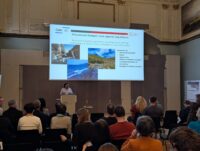
Reflecting these developments, the conference focused on meaningful and methodologically sound applications of pXRF. The six selected lightning talks addressed some of the most pressing challenges currently facing the pXRF community, including analytical accuracy, calibration strategies, data processing, and provenance studies. Case studies explored topics such as analytical protocols for lead-glazed ceramics, the reliability of measurements on small obsidian artefacts, and the development of matrix-matched calibrations for archaeological materials. Other contributions highlighted transparent data-processing workflows beyond proprietary software, presented a combined pXRF–FTIR approach for the non-destructive provenancing of rare lithic materials, and examined the potential of mobile artificial intelligence tools for archaeological fieldwork. Together, the presentations demonstrated that reliable pXRF results depend not only on the instrument itself but also on carefully designed analytical strategies and transparent data workflows.
A distinctive feature of the conference was its highly interactive format. Following the lightning talks, presenters hosted thematic discussion tables in a World Café session, allowing participants to rotate between topics and engage in focused conversations on methodological challenges, practical solutions, and future directions for pXRF research. This format encouraged interdisciplinary exchange and provided ample opportunities for networking and collaboration.
Short poster pitches and a subsequent poster session offered additional insights into ongoing projects and emerging research, further highlighting the diversity of applications and approaches currently shaping the field.
We would like to sincerely thank all participants for their active engagement, insightful contributions, and the highly constructive discussions throughout the conference. The willingness to openly share methodological challenges and practical experiences greatly enriched the exchange and was central to the success of the event. We are especially grateful for the positive feedback, which highlights the importance of continued dialogue within the pXRF community and encourages future collaborative efforts. We also gratefully acknowledge the support of our sponsors, whose contributions made the conference possible.
You can read about the first conference here.
Links:
Conference website: https://vias.univie.ac.at/projekte/standardising-portable-x-ray-fluorescence-for-archaeometry/pxrf-conference-march-2026/