
Ancient Kyrgyzstan Burial Reveals How Iron Age Nomads Built Their Communities
More On Article
- At the onset of the Late Gravettian: An updated chronology and stratigraphy for the multi-layered Gravettian open-air site Grub-Kranawetberg I (Austria).
- New Chronology Sheds Light on Human Occupation just before the onset of the Last Glacial Maximum
- Fire, temperature control, and silcrete heat treatment at Diepkloof and Mertenhof Rock Shelters, West Coast, South Africa
- Gerhard Weber and Harald Wilfing Retire
- HEAS Workshop in New Methodologies and Perspectives in Palaeolithic Archaeofauna takes place in Vienna.
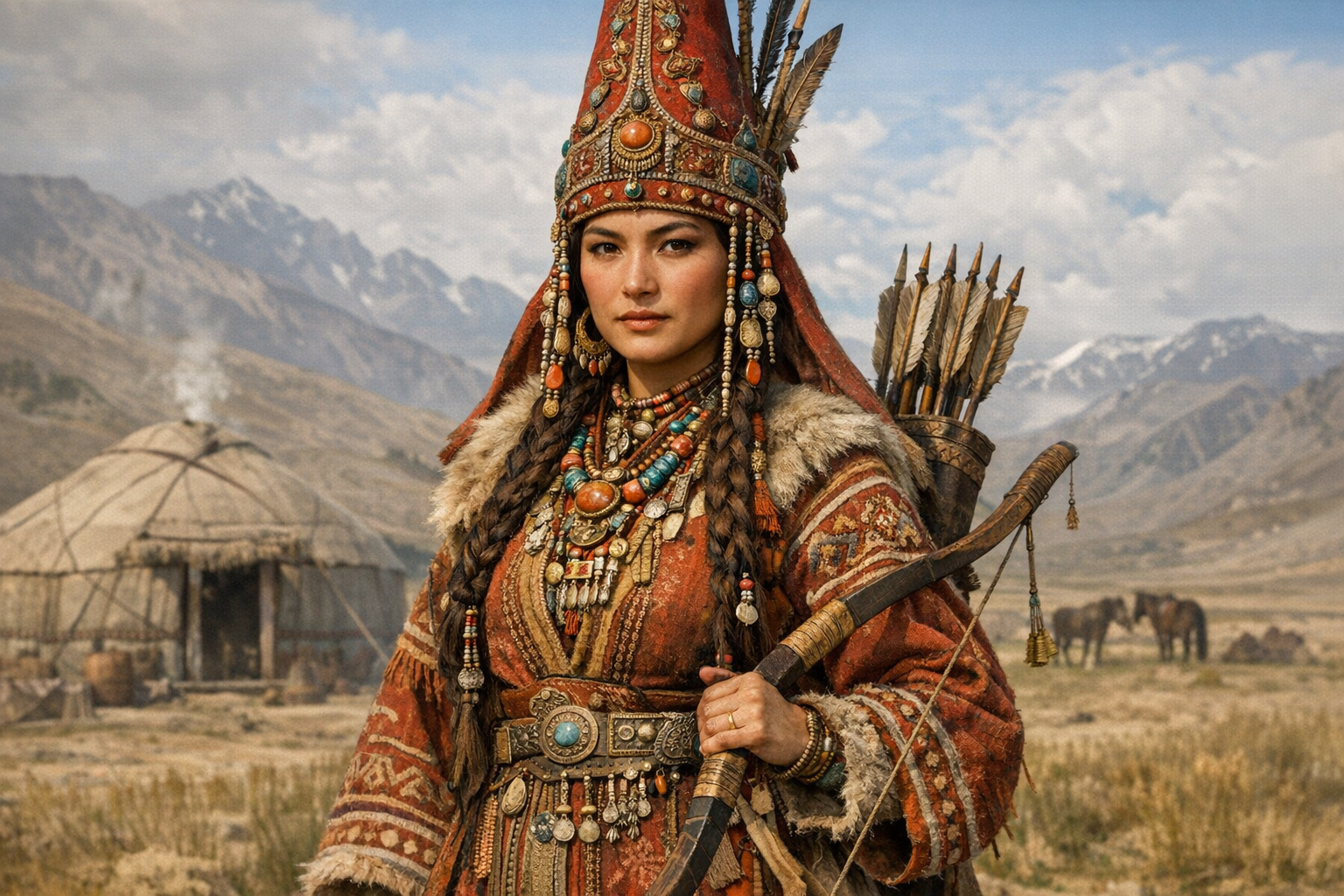
A new ancient DNA study from a Saka-era burial site in Kyrgyzstan led by HEAS researchers offers a rare glimpse into the family structures of Iron Age nomads. Researchers analyzed genetic material from 12 people buried at Boz-Barmak, dating to the 4th–2nd centuries BCE. The individuals fit within the genetic range of ancient and modern groups from Central Eurasia and Siberia. While the team found no immediate family pairs (such as parent-child or siblings), they detected several second- and third-degree connections, suggesting a broader web of kin across the community.
Strikingly, all the men shared the same Y chromosome lineage, which is also common in present-day Kyrgyz populations, while mitochondrial DNA, inherited from mothers, was notably diverse. This pattern supports a patrilocal social system, where men remained in their home group and women moved in from elsewhere, boosting genetic diversity. Despite the modest amount of recoverable DNA, the findings add to our understanding of how kinship, mobility, and social organization shaped the population history of Central Eurasia’s nomadic societies.
Funding: Vienna Science and Technology Fund (WWTF) grant 10.47379/VRG20001 (Martin Kuhlwilm); European Research Council (ERC) SHADOWS project (101163057) and Austrian Science Fund (FWF) 10.55776/P36433 (Pere Gelabert); Austrian Science Fund (FWF) 10.55776/ESP546 (Sojung Han).
Genomic insights into the Iron Age Saka of Boz-Barmak, Kyrgyzstan