HEAS Member Pere Gelabert receives a ERC Starting Grant for studying human-carnivore interactions through the Paleolithic
More On Article
- FWF funding for open-access publication Methodological Innovations in pXRF Studies
- Up and down the hill: Hillforts and dry stone wall enclosures on the Kvarner Islands of Cres and Lošinj in remote sensing data
- A microcontextual investigation of Later Stone Age ash deposits and associated interment of human remains at Faraoskop Rock Shelter, South Africa
- 35 Jahre “Archäologie Österreichs”. Ein Rück-und Ausblick auf die Wissensvermittlung durch Printmedien der ÖGUF.
- HEAS Members Publish GENOVIS: a Python package for the visualization of population genetic analyses
Caves have long served as critical habitats for both humans and carnivores during the Pleistocene. Traditionally, research has focused primarily on humans, often overlooking the role of carnivores in these ecosystems. Additionally, carnivores are frequently absent from the archaeological record as their activities may not leave behind remains indicating they perished in caves. Pere Gelabert’s SHADOWS project aims to broaden our understanding of how these carnivores coexisted with humans, competed for resources, and ultimately faced extinction. The project will utilize advanced techniques such as high spatiotemporal precision sampling for sediment DNA and paleoproteomics. This research will enhance our knowledge of the biological processes leading to extinction and offer crucial insights for the protection of critically endangered species today. The team will generate comprehensive data on these species, particularly focusing on their later occurrences, to detail the process of genetic erosion. Additionally, the team will develop models to better explain carnivore-human interactions and co-evolutionary patterns, aspects that are essential for understanding Paleolithic societies
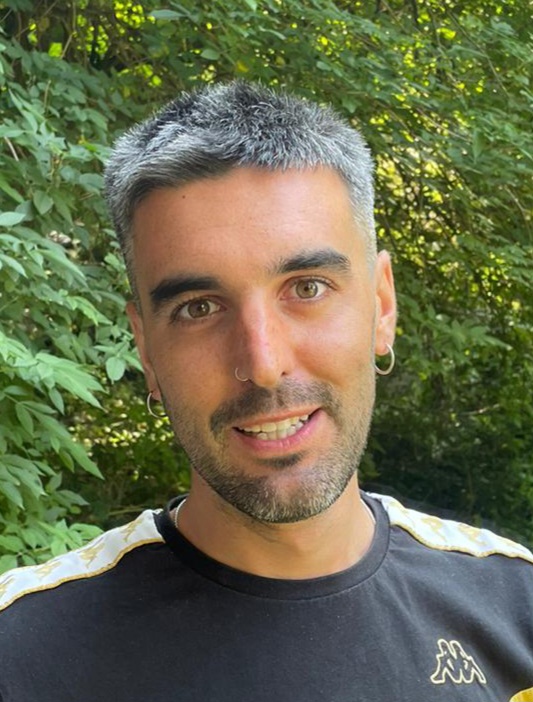
Pere Gelabert is a biologist who earned his PhD in Biomedicine from Pompeu Fabra University in Barcelona, Spain, in 2018. Since 2019, he has been conducting research as a postdoctoral fellow at the Department of Evolutionary Anthropology of the University of Vienna. He has established himself as an author of several publications in the field of paleogenomics. In 2023, Dr Gelabert received an FWF Stand-Alone Project to investigate the complex relationship between social status and health in ancient populations, with a particular focus on the microbiome during the early medieval period. His research sheds light on how microbiomes and environmental samples can reveal insights into the health of past societies and their interactions with the environment. Additionally, Dr. Gelabert is dedicated to studying the living conditions of Paleolithic groups, utilising cutting-edge technologies such as sedaDNA analysis and zooarchaeology to gain a deeper understanding of prehistoric lifestyles.