HEAS Members Awarded FWF Grant for a Project on “Beyond the Burial”
More On Article
- Tracing Seaweed as Food and Fodder in Archaeology: A Review of Current Methods
- HEAS Congratulates Dr Emily Pigott
- Dip Your Finger in the Sea... Geoarchaeological View on Coastal Setting and Maritime Accessibility of the Coastal Town of Osor, Northern Adriatic.
- HEAS Seed Grants for February 2026 Announced.
- Alejandra Sánchez-Polo Awarded Prestigious Marie Skłodowska-Curie Postdoctoral Fellowship (MSCA)
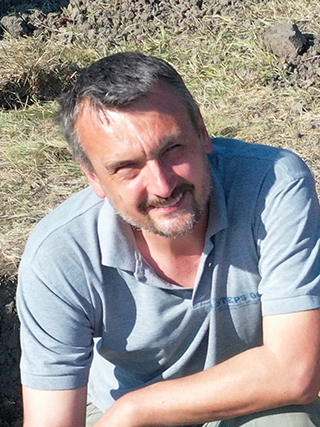
HEAS Team Leader Mario Gavranović was recently awarded an FWF grant for his project on Beyond the Burial where he will work with other HEAS Team Leaders Ron Pinhasi and Mathias Mehofer.
Beyond the burial: Contextualizing the first Late Bronze and Iron Age graves in central Bosnia
Research context
This project focuses on the intensive evaluation of the recently uncovered inhumation graves in a mountain region of the Balkans in the central part of Bosnia. In contrast to investigated settlements that indicate a dense occupation in the Late Bronze and Iron Age (1200–200 BC), intact burials were never documented in the area. Hence, our knowledge was based on sporadic, destroyed finds with no information about interred individuals, mortuary practices or graves. The situation fundamentally changed with our work in the Zenica Basin of the Bosna River and, in particular, with the excavation of the Kopilo cemetery that offers data for this interdisciplinary project.
Research questions
For the first time, there is an exceptional opportunity to gain a profound insight into the funerary customs of the prehistoric population in this part of the Balkans. Particularly, the fact that the local communities did not practice prevailing cremation at that time in Europe raises questions about their role in the framework of the transition from the Bronze to Iron Age between Central Europe and the Mediterranean. The site Kopilo indicates complex practices with multiple burials and manipulation of skeletons. The variety of the metal finds bears witness to communication networks, while the grave architecture hints at different social or family groups. The main objective of this study is to contextualize these fascinating new findings with a multidisciplinary approach.
Methods
The combination of anthropological and genetic data will create the much-needed basis for questions of age, sex, pathologies, and mutual relations between the buried. The strontium, oxygen, carbon, and nitrogen isotope analyses will tackle possible mobility patterns and dietary practices. The chemical analysis of metal artefacts provides an additional layer for the research on exchange relations. The residue analyses from vessels could offer information about their content and a more detailed understanding of burial rituals. The wide range of methods will be complemented with radiocarbon dates. Finally, the obtained analytic data will be merged with the archaeological assessment, creating a comprehensive picture.
Originality
The exploration of the first accurately documented Bronze and Iron Age burials in the area, along with the large set of new, primary data, underscores the originality of the project. The results of this study will increase our understanding of the past and elucidate social interactions both on local and regional scales and dealing with the deceased.
Researches involved
The project team’s expertise in Balkan archaeology (PI M. Gavranović), anthropology (L. Waltenberger), metallurgy (M. Mehofer), and radiocarbon data (L. Webster), combined with the collaboration of specialists in isotope ratios and genetics, ensures the highest standards and full implementation.