Read More
News

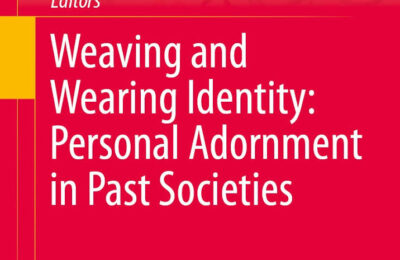
Recent publication – the Edited volume „Weaving and Wearing Identity – Personal Adornment in Past Societies. Springer-Series Interdisciplinary Contributions to Archaeology. Springer: Cham 2025“ (edited by Gabriella Longhitano, Karina Grömer, Alistair Dickey, Giulia Muti, Sarah Hitchens).

  The book with contributions from many HEAS members examines questions about body adornments and its link to identity in archaeology, looking at theoretical and interpretive frameworks that are relevant to the study of different categories of personal ornaments. Identity is a crucial topic in archaeology where its concept is investigated through the study of many categories of material culture. As self-representation, identity constitutes a choice through which an individual or a group want to be seen by others. The volume covers a wide geographical and chronological frame from the Upper Paleolithic era to Medieval times, examining North, Central, and Southern Europe as well as regions in Southwest Asia and North Africa.   Contributions by Marjolein Bosch, Karina Grömer, Birgit Bühler, Mathias Harzhauser, Philip Nigst, Kayleigh Saunderson

Research Areas:
Read More
News

HEAS member Mathias Mehofer awarded a 3-year project grant on medieval metallurgy

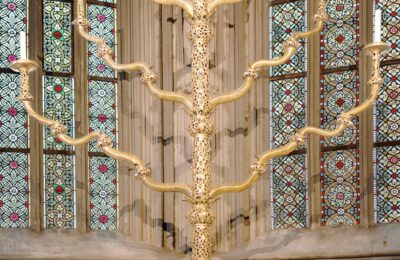
Congratulations to VIAS-HEAS Member Mathias MEHOFER on being awarded a standalone project titled “Bronze metallurgy during the Babenberg period, A – Medieval bronze casting in a Natural Science Context”. Within this 3-year research project, an international, transdisciplinary team investigates the famous seven-branched medieval “Agnes” candelabrum from Klosterneuburg Abbey, donated around 1130 AD by Duke Leopold III of Babenberg and his wife Agnes. Standing 4.3 m high and composed of 57 decorated copper-alloy elements, the candelabrum is studied to reconstruct its object biography, including production techniques, material provenance, later modifications, and use within its ecclesiastical context. Combining humanities-based research with scientific methods such as pXRF, SEM-EDS, photogrammetry, X-ray tomography and isotope studies, the project examines alloy compositions, identifies modern restorations, and explores medieval exchange networks. Archival studies and comparative analyses with related objects further contextualize this exceptional work of medieval bronze art. Funding: The project is funded by the Province of Lower Austria (Land NÖ). Project Homepage: Medieval Bronzes Project -          MMag. W. C. Huber, Custos, Klosterneuburg Abbey, Austria –        M. Haltrich, Forschungsstelle, Klosterneuburg Abbey, Austria –        Dipl.-Restaurator C. Tinzl, DI Dr. techn. R. Linke, Dept. of conservation and restoration, Federal Monuments Authority Austria –        Prof. Dr. E. Pernicka, Curt Engelhorn Centre f. Archaeometry Mannheim –        PD Dr. Andreas Zajic, IMAFO, Austrian Academy of…

Research Areas:
Read More
Publications

The dispersal of domestic cats from North Africa to Europe around 2000 years ago.

De Martino, M., De Cupere, B., Rovelli, V., Serventi, P., Mouraud, B., Baldoni, M., Di Corcia, T., Geiger, S., Alhaique, F., Alves, P.C., Buitenhuis, H., Ceccaroni, E., Cerilli, E., De Grossi Mazzorin, J., Detry, C., Dowd, M., Fiore, I., Gourichon, L., Grau-Sologestoa, I., Küchelmann, H.C., Kunst, G.K., McCarthy, M., Miccichè, R., Minniti, C., Moreno, M., Mrđić, N., Onar, V., Oueslati, T., Parrag, M., Pino Uria, B., Romagnoli, G., Rugge, M., Salari, L., Saliari, K., Santos, A.B., Schmölcke, U., Sforzi, A., Soranna, G., Spassov, N., Tagliacozzo, A., Tinè, V., Trixl, S., Vuković, S., Wierer, U., Wilkens, B., Doherty, S., Sykes, N., Frantz, L., Mattucci, F., Caniglia, R., Larson, G., Peters, J., Van Neer, W., Ottoni, C., 2025. The dispersal of domestic cats from North Africa to Europe around 2000 years ago. Science 390, eadt2642. read more
Research Areas:
Read More
Natural History Museum Vienna (NHM) Members

Caroline POSCH

Caroline Posch is a post-doctoral researcher and curator of the Stone Age Collection at the Prehistoric Department of the Natural History Museum Vienna (NHMW). She is specialised on the material culture and settlement strategies of the Alpine Mesolithic, with focus on landscape usage, raw material procurement strategies and lithic technology. Since 2022 she is a staff member of the NHMW. In her work, she focusses on the one hand on the curational practice as well as the scientific evaluation and study of various artefact types from the Palaeolithic, Mesolithic and Early Neolithic, including objects such as the Venus of Willendorf. One the other hand she is involved in several research projects centred on the first use and settlement of the Austrian Alps during the Late Pleistocene and Early Holocene.    

Read More
Natural History Museum Vienna (NHM) Members

Kayleigh SAUNDERSON

I am a textile archaeologist primarily conducting research at the Archaeological Textiles Lab at the Natural History Museum Vienna from a wide variety of periods and regions. My focus ranges from fibres to reconstructions, meaning that I investigate raw materials of fibres and using scanning electron microscopy as well as possible trace elements of mordants for dyes. By researching thousands of textiles up to now in the Lab, we have been able to create massive datasets on the technological data of textiles, which allow for relevant statistical analyses. Furthermore, I work with experimental and public archaeology, reconstructing textiles/clothing and presenting our research and our knowledge of past identities to the public, whereby communicating current topics of the textile industry with its environmental and social impacts are of importance.

Read More
Natural History Museum Vienna (NHM) Members

Nicole GRUNSTRA

I am an evolutionary anthropologist and morphometrician. I obtained a PhD in Biological Anthropology from the University of Cambridge and am currently based at the Department of Evolutionary Biology at the University of Vienna as an ESPRIT fellow. I am interested in which sense the human lineage is unique and in which sense we are “just another unique species.” Central to my research, therefore, is placing human evolution in a wider comparative and theoretical biology context. I study complex traits such as the pelvis, cranium, inner ear, and the entire dentition. Currently, my main research focus is on the study of evolutionary trade-offs in the human and non-human placental mammalian pelvis in pursuit of understanding what constrains human pelvic canal size and flexibility, leading to a tight fit and difficult childbirth (an "obstetrical dilemma"). I lead an FWF-funded project devoted to this question, in which I aim to disentangle the relative contributions of reproduction, locomotion, posture, body mass support, and phylogenetic heritage in hard and soft tissue anatomy of the mammalian, including human, pelvis.  

Read More
Natural History Museum Vienna (NHM) Members

Konstantina SALIARI

Konstantina Saliari is the curator of the Archeological Zoological Collection at the Natural History Museum Vienna. She took her Master´s degree in archaeology with the specialization in archaeozoology from the National and Kapodistrian University of Athens in 2012 and her PhD in archaeozoology from the University of Vienna in 2017. Konstantina Saliari has carried out archaeozoological analysis of animal remains from the Palaeolithic, Neolithic, Bronze and Iron Ages, as well as from the Roman, Early Medieval and Medieval periods. Her main research topics include husbandry strategies, socio-economic and environmental aspects, aiming at connecting different research fields and the dissemination of archaeozoological methods and results to academic and public audience.

Read More
Natural History Museum Vienna (NHM) Team Leaders

Katrin VOHLAND

Management Board

Dr. Katrin Vohland is Director General of the Naturhistorisches Museum Wien (NHM Vienna), Austria. Her main research interest is in the interface between science and different public audiences including policy. She develops Open Science strategically for the museum and beyond, including Citizen Science where she is active to employ integrative and reflective approaches.

Read More
Natural History Museum Vienna (NHM) Team Leaders

Mathias HARZHAUSER

I’m the head of the Geological-Paleontological Department of the Natural History Museum Vienna. My research deals with the paleogeography and the biotic development of the circum-Mediterranean Region and the early Indo-Pacific during the Cenozoic Era with strong focus on integrated stratigraphy. My main taxonomic tool to tackle these questions are marine and terrestrial molluscs. In addition, I’m very active in the popularization of science.  

Read More
Natural History Museum Vienna (NHM) Team Leaders

Karina GRÖMER

I am the  head of the Department of Prehistory, Natural History Museum Vienna. As an archaeologist, I study the material culture of the Neolithic, Bronze and Iron Age in Central Europe, including theoretical aspects like identity, innovation and creativity, functional design theory, visual coding, design concepts, sociological and semiotic studies.  My focus research is on technological, economic and social aspects of  textiles with interdisciplinary research on artefacts from graves, settlements and saltmines, covering a timespan from 2500 BC till 1000 AD and a geographical area from Central Europe to Iran.. I have also the aim  to bridge gaps between research institutions (Universities, Academies) and cultural heritage institutions and am active in various dissemination activities.

Read More