Primate diversity studies with a contribution of HEAS member Martin Kuhlwilm
More On Article
- Fire, temperature control, and silcrete heat treatment at Diepkloof and Mertenhof Rock Shelters, West Coast, South Africa
- Gerhard Weber and Harald Wilfing Retire
- HEAS Workshop in New Methodologies and Perspectives in Palaeolithic Archaeofauna takes place in Vienna.
- The gene-regulatory evolution of the human skeleton
- Demographic history and management practices shape the genomic landscape of New Zealand’s feral Kaimanawa Horses.
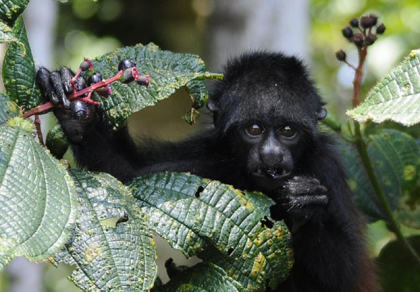
Several studies on primate genomic variation have now been published in the journal Science. An international consortium of researchers generated and studied high-quality genomes from 233 primate species to gain insights into their evolution, and open new perspectives in conservation biology and human variation related to health. HEAS member Martin Kuhlwilm contributed to these studies, refining a catalog of human-specific changes in the genome. Many recent genetic changes in humans turn out not to be unique to us, but shared with other species. Genetic changes that might make us human seem to be more rare. Studying our living relatives improves how we understand our own species.
The publications can be found here:
https://doi.org/10.1126/science.abn7829
https://doi.org/10.1126/science.abn8197
https://doi.org/10.1126/science.abn8153
University of Vienna Press Release
FINAL Embargoed INTERNATIONAL Press Release Primates IBE_UPF
https://www.diepresse.com/6295230/affen-erbgut-zeigt-was-uns-krank-macht
https://www.vbio.de/aktuelles/details/erbgut-von-primaten-als-schluessel-zur-menschlichen-gesundheit
https://biermann-medizin.de/erbgut-von-primaten-als-schluessel-zur-menschlichen-gesundheit/