HEAS Members Interviewed for Nature
More On Article
- At the onset of the Late Gravettian: An updated chronology and stratigraphy for the multi-layered Gravettian open-air site Grub-Kranawetberg I (Austria).
- New Chronology Sheds Light on Human Occupation just before the onset of the Last Glacial Maximum
- Fire, temperature control, and silcrete heat treatment at Diepkloof and Mertenhof Rock Shelters, West Coast, South Africa
- Gerhard Weber and Harald Wilfing Retire
- HEAS Workshop in New Methodologies and Perspectives in Palaeolithic Archaeofauna takes place in Vienna.
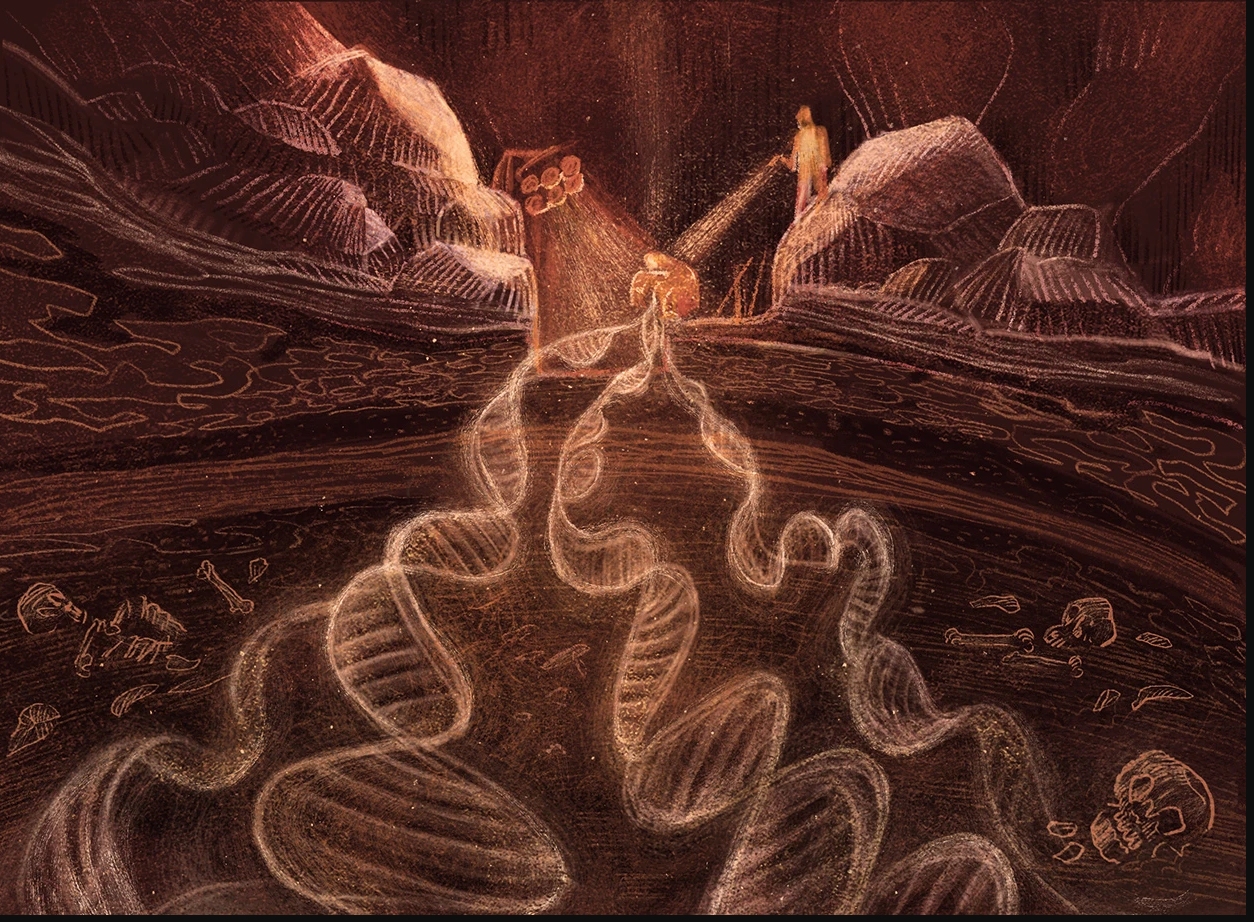
HEAS Team Leaders Pere Gelabert and Benjamin Vernot were recently interviewed for Nature Magazine for their work in sediment DNA.
The two researchers are pushing the boundaries of what we can learn from ancient dirt. Benjamin Vernot built a 1.6‑million‑probe capture panel to enrich for nuclear DNA in sediments – targeting Neanderthals, Denisovans, early modern humans, and even unknown archaic lineages. Such sediments typically contain very small amounts of human DNA, and lots of DNA from other species, and so Vernot also devised new computational methods to handle these challenges. He has applied these methods to sediments at caves like Galería de las Estatuas, where Neandertals lived for nearly 50,000 years. In this work, Vernot identified two distinct Neanderthal populationsm, with one replacing the other about 100,000 years ago. On the other side, Pere Gelabert showed you can brute‑force nuclear DNA from cave dirt with shotgun sequencing, and analyzed human, bison and wolf DNA from a single 25,000 year old sediment sample from Satsurblia cave. As Gelabert puts it, without sediment DNA, many of these human‑history clues would be impossible to uncover.