HEAS Workshop in New Methodologies and Perspectives in Palaeolithic Archaeofauna takes place in Vienna.
More On Article
- At the onset of the Late Gravettian: An updated chronology and stratigraphy for the multi-layered Gravettian open-air site Grub-Kranawetberg I (Austria).
- New Chronology Sheds Light on Human Occupation just before the onset of the Last Glacial Maximum
- Fire, temperature control, and silcrete heat treatment at Diepkloof and Mertenhof Rock Shelters, West Coast, South Africa
- Gerhard Weber and Harald Wilfing Retire
- The gene-regulatory evolution of the human skeleton
by Pere Gelabert.
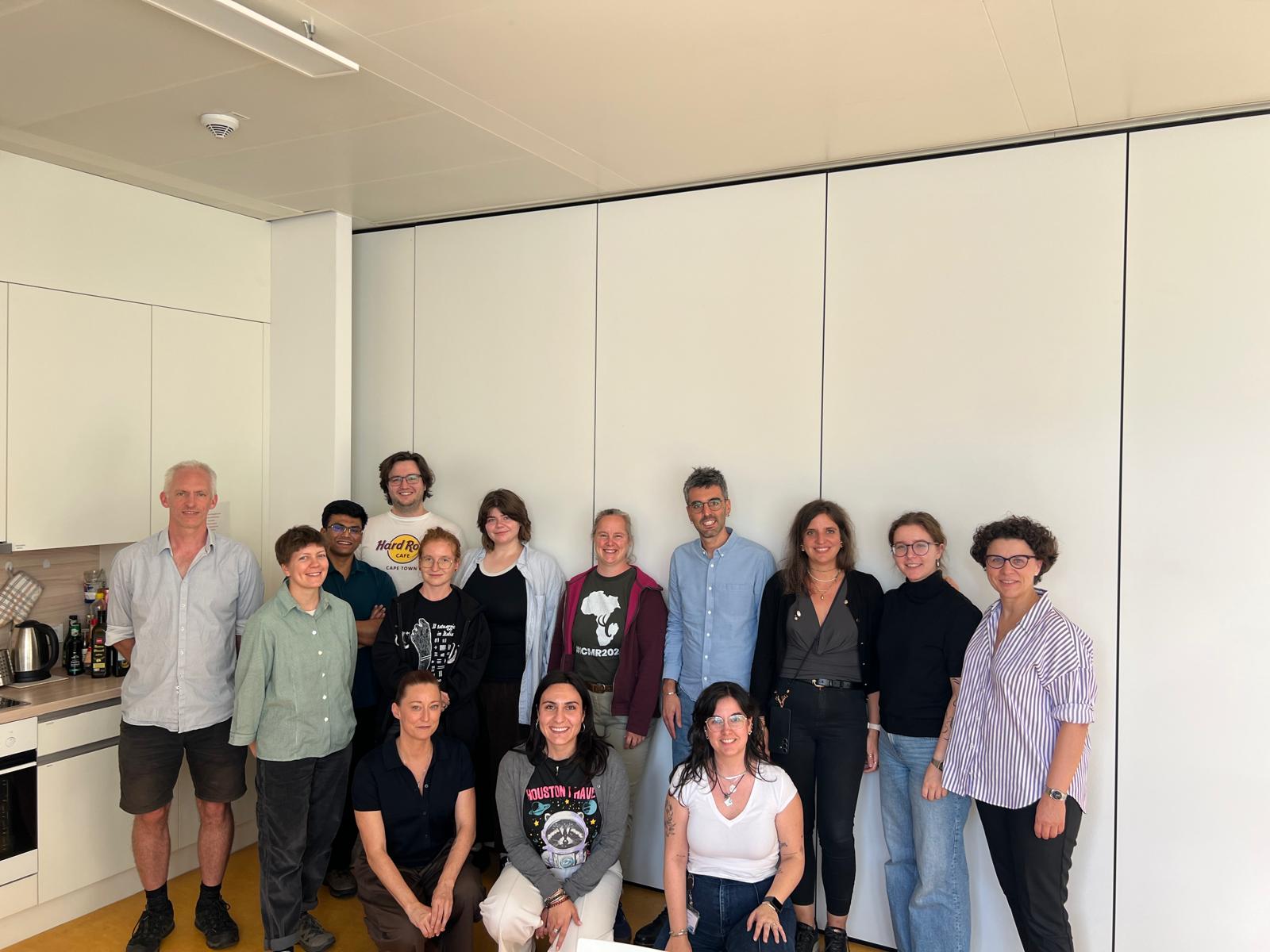
On September 25, 2026, the University of Vienna’s Biology Building hosted the HEAS Workshop, New Methodologies and Perspectives in Palaeolithic Archaeofauna. Organized by Marjolein Bosch (Vienna Institute of Archaeological Sciences) and Pere Gelabert (Department of Evolutionary Anthropology). The event united international experts to discuss how modern science is transforming the study of ancient human-animal relationships. The workshop consisted of two main blocks: the first was a set of presentations from experts and the second was a discussion moderated by the organisers about possible integration strategies.
The talks included: Isotopes and Art: Alex Pryor (University of Exeter) presented mammoth mobility tracking and its implications for prey availability in the landscape as part of the ERC Project MAMBA, while Olivia Rivero (University of Salamanca) explored animal symbolism in Palaeolithic art in relation to contemporary archaeological faunal assemblages. Molecular Breakthroughs: Shevan Wilkin (University of Basel) and Anna Wagner (University of Reading) showcased the rising power of proteomics in analysing ancient faunal remains. They presented on advances in both the identification of the type of animal tissues exploited by past human groups and the development of integrated ZooMS and zooarchaeological datasets to increase taxonomic identifications, respectively. Dietary Insights: Ana B. Marín Arroyo (University of Cantabria) presented PrehGastro, examining prehistoric culinary practices and how this can be used in public dissemination as a tourist activity. During the presentation, the organisers introduced their teams and showcased how their respective ERC projects, Pere Gelabert’s SHADOWS and Marjolein Bosch’s COPE, are pioneering new approaches in faunal analysis to shed light on Pleistocene human adaptation and environmental change.
The day concluded with an open debate, a practical case study on multidisciplinary integration strategies, and closing remarks highlighting the future of combined archaeofaunal and ancient DNA research. During the workshop, participants also toured the Paleogenomics and Paleoproteomics labs at the University of Vienna, making the event an exceptional platform for interdisciplinary collaboration across the HEAS network and beyond.