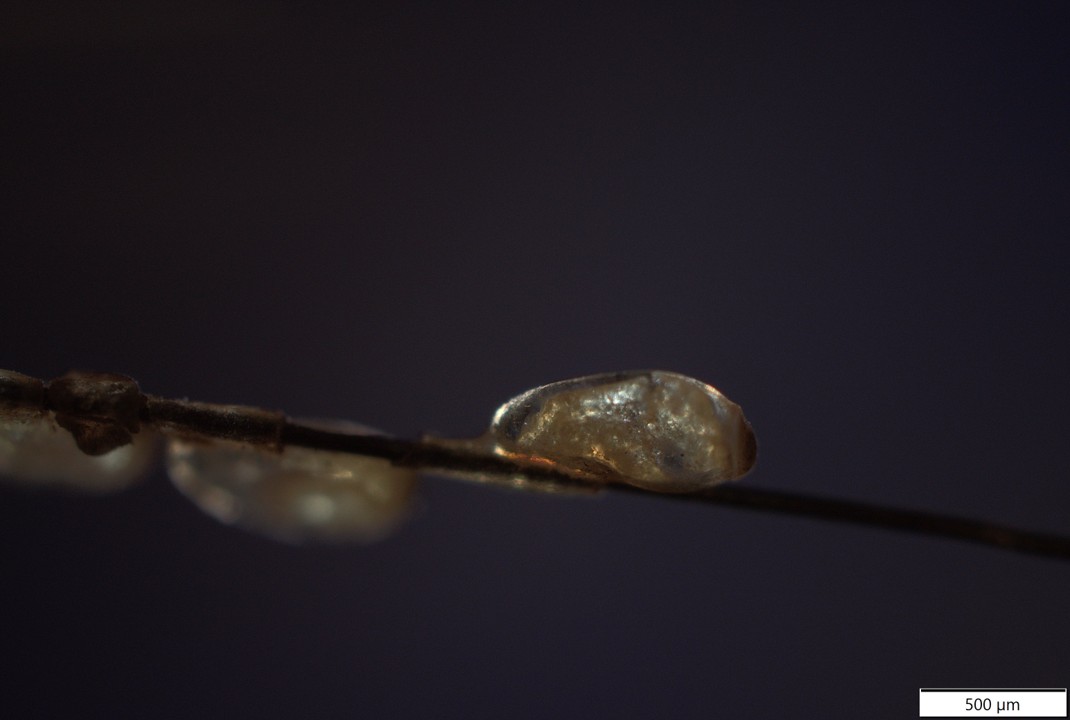
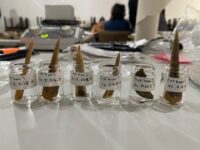
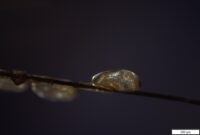
Michelle Hämmerle – The photo is showing louse nits from the species Pediculus humanus americanus on the head of a 500-year old Inca mummy, from which we extracted both host louse DNA and DNA of the bacterium Bartonella quintana. The picture was taken using cross-polarized light at 400× magnification.
HEAS Member Michelle Hämmerle, a PhD candidate in the Department of Evolutionary Anthropology, won the Annual HEAS Photo competition for her picture of louse nits from the species Pediculus humanus americanus on the head of a 500-year old Inca mummy. Michelle was presented with a €100 book voucher at the Gräzlfest, the HEAS Annual Meeting, by the Head of HEAS, Tom Higham. Other pictures from the competition can be seen in the gallery below.
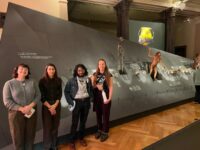
Tom Higham, Katerina and Anastasia – HEAS team at the Prague museum
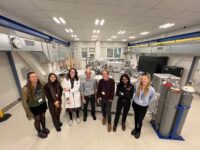
Tom Higham, Katerina and Anastasia – Nuclear Facility in Prague visiting the accelerator
Tom Higham, Katerina and Anastasia – non-destructive sampling of artefacts from the Neolithic site of Svinjarička Čuka, Serbia
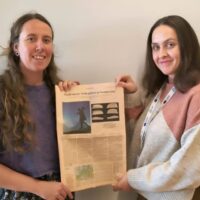
Emily Pigott and Konstantina Cheshmedzhieva (Ina) holding our newspaper article in, „Der Standard“ from our recent paper in PNAS, entitled – A new late Neanderthal from Crimea reveals long-distance connections across Eurasia
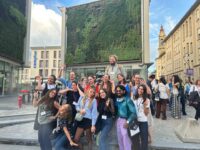
Konstantina Cheshmedzhieva – HEAS members trying to make happy faces after extremely long and hot day at the ISBA conference, thinking of the refreshing Aperol Spritz awaiting them behind the camera. Circa end of August, 2025
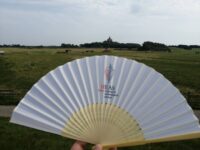
Fabian Siegle – Image 1) Neuwerk with the lighthouse
Fabian Siegle Image 2) Neuwerk, an island in the Baltic Sea
Fabian Siegle – Neuwerk with its lush green meadows and the Baltic Sea
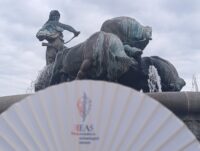
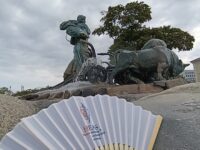
Fabian Siegle: Gefion Fountain (Copenhagen)
Fabian Siegle: Gefion Fountain (Copenhagen)
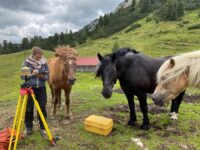
Valentina Laaha: Have you ever wondered how it feels like to give therapy to a GPS-antenna and rover with heavy communication problems, while the locals swing by to openly doubt the success of your mission? Fear not – a picture says more than 1000 words and you can see it all here.
(Setup of a GPS-antenna for the measurement of outlines and other important geo-points during the excavation on the Grafenbergalm, Austria, visited by some very nosy locals.)
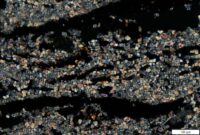
Thomas Beard – This is a high magnification (200x – scale in bottom right)
microphotograph of plant ash that is ~35,000 years old, taken in
cross-polarised light from a small fire feature in a thin section
produced from Satsurblia Cave, Georgia. The square crystals (some are
still forming!) are calcium oxalate which are present in plants and are
all that remain when the rest of the organics burn off, the darker areas
have indistinct fibers of charcoal.“
Michelle Hämmerle – The photo is showing louse nits from the species Pediculus humanus americanus on the head of a 500-year old Inca mummy, from which we extracted both host louse DNA and DNA of the bacterium Bartonella quintana. The picture was taken using cross-polarized light at 400× magnification.