New publication by HEAS Member José-Miguel Tejero on prehistioric sound instruments
More On Article
- Fire, temperature control, and silcrete heat treatment at Diepkloof and Mertenhof Rock Shelters, West Coast, South Africa
- Gerhard Weber and Harald Wilfing Retire
- HEAS Workshop in New Methodologies and Perspectives in Palaeolithic Archaeofauna takes place in Vienna.
- The gene-regulatory evolution of the human skeleton
- Demographic history and management practices shape the genomic landscape of New Zealand’s feral Kaimanawa Horses.
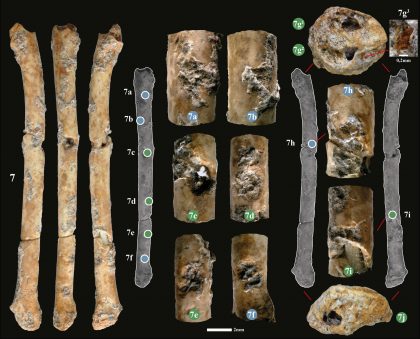
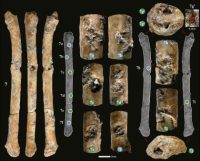
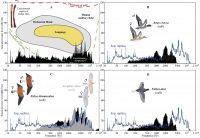
Sound instruments over 12,000 years old identified as used by the last hunter-gatherers of the Near East to imitate the call of birds of prey An international team of archaeologists and ethnomusicologists led by José-Miguel Tejero (Researcher at the Pinhasi Laboratory of the Department of Evolutionary Anthropology of the University of Vienna and HEAS Member) and Laurent Davin (CNRS. France) has discovered a unique set of prehistoric sound instruments in the Near East. These objects come from the Eynan-Mallaha archaeological site (Natufian archaeological culture, c. 13,000-9,700 BC) in northern Israel, excavated since 1955 by a Franco-Israeli team. The results of the study of these materials have just been published in the journal Scientific Reports.