News

HEAS Virtual Anthropology Group releases free 3D data of Australopithecus afarensis cranium

The virtual reconstruction of the Ethiopian Australopithecus afarensis specimen A.L. 444-2 from Hadar was now released for free use in the digital@rchive of fossil hominoids https://www.virtual-anthropology.com/3d-data/free-data/   The reconstruction was made in the Virtual Anthropology Lab at University of Vienna by Sascha Senck, Stefano Benazzi, Gerhard Weber, and others. It is described in detail in the supplement of “Ledogar, J. A., Senck, S., Villmoare, B. A., Smith, A. L., Weber, G. W., Richmond, B. G., Dechow, P. C., Ross, C. F., Grosse, I. R., Wright, B. W., Wang, Q., Byron, C., Benazzi, S., Carlson, K. J., Carlson, K. B., McIntosh, L. C., Van Casteren, A., & Strait, D. S. (2022). Mechanical compensation in the evolution of the early hominin feeding apparatus [Article]. Proceedings of the Royal Society B: Biological Sciences, 289(1977), Article 20220711. https://doi.org/10.1098/rspb.2022.0711   The surface file of the reconstructed cranium and the endocast are available.

Research Areas:
Read More
News

HEAS welcomes NHM as a Partner

HEAS is delighted to welcome the Naturhistorisches Museum Wien (NHM) as a new partner in the research network. Gerhard Weber, head of HEAS said “This collaboration will mean that we broaden our expertise and extend our possibilities. We started to bridge between institutions in Vienna (University and Museum), to create an even more effective European hub for human evolution research”      

Read More
Blog Posts

HEAS WELCOMES OUR FIRST JUNIOR INTERN DR BHAVNA AHLAWAT

Bhavna Ahlawat is our first Junior Intern and is visiting HEAS currently working on exciting new research concerned with biomolecules from ancient Indian sites. I am a molecular biologist specializing in ancient DNA and population genetics, focusing on different archaeological sites in India. During my doctoral research at Panjab University and BSIP, India, I honed my skills in ancient DNA protocols while working in India's first dedicated aDNA facility, which specializes in analyzing degraded DNA from tropical samples. My expertise in diverse extraction and library preparation protocols was significant in generating high-quality data from critical human skeletal remains, including samples from the Vadnagar archaeological complex and the Indus Valley Civilization site at Lothal (∼2200 BCE). Currently, as a research intern with HEAS at the University of Vienna, I am exploring the application of Zooarchaeology by Mass Spectrometry (ZooMS) on a variety of bone remains of different species from South Asia—an under-researched region in this context. My work focuses on: 1. Species Identification: Utilizing peptide mass fingerprinting through MALDI-ToF-MS for South Asian samples. 2. Degraded Collagen Analysis: Investigating the potential of ZooMS for analyzing fragile and degraded bone collagen from this region. Through this research, I aim to bridge gaps in South Asian archaeogenetics and develop methodologies for studying ancient remains in challenging environments and understand the hman animal interaction. I…

Research Areas:
Read More
Archive Events

HEAS Workshop

The HEAS Workshops are intended to introduce basics of techniques/methods in a concise format to other colleagues, no matter if they come from the same discipline or from completely different fields. The typical workshop is a one-day event (but can be longer) and includes a theoretical part (mostly to make participants familiar with terms and procedures), and importantly, much practical work. After a workshop one should have a good idea what can be achieved with a particular technique or method, what the main inputs and outputs are, and where it links to other fields.   HEAS Workshops can be organized in an online or hybrid format and are offered within our network without costs. For external participants we charge a fee of € 100/day. All workshops come with a maximum number of attendees. It is necessary to register in advance.     One example for a HEAS workshop would be:   Title                                                                                             Location              Max. no. of participants 3D shape and form analysis (EVAN Toolbox)                          Online                     15    

Read More
News

International Mountain Conference (IMC) taking place in Innsbruck in September 2025

The program for the International Mountain Conference (IMC), taking place in Innsbruck from September 14–18, 2025, is now available online. We would like to highlight the following (geo)archaeological focus sessions (4 in total), workshops (1), and keynote lectures (1) that may be of particular interest. In addition to these, the conference features over 150 sessions covering a wide range of topics related to mountain research across the world’s high-altitude regions. We encourage you to explore the program and discover the diverse opportunities for engagement and collaboration. Focus Sessions on Mountain Archaeology https://imc2025.info/imc25/sessions-n-workshops/focus-sessions/?filter_thematic-focus=archaeology Synthesis workshop: People and Mountains: Stories from an Archaeological Perspective: https://imc2025.info/imc25/sessions-n-workshops/synthesis-workshop/sw-3-103-people-and-mountains-stories-from-an-archaeological-perspective/ Key Note: AI, Extra Credit, and the Andes: Discovering World’s Highest Communal Hunting Traps https://imc2025.info/imc25/keynotes/ai-extra-credit-and-the-andes-discovering-worlds-highest-communal-hunting-traps/ Michael Meyer (Univ. Innsbruck, Austria) Bonnie Pitblado (U. Oklahoma, USA)  

Read More
News

Invitation to Exhibition Opening at the ÖAW

BALKAN-ARCHÄOLOGIE IM FOKUS Sehr geehrte Damen und Herren, liebe Kolleginnen und Kollegen, das Österreichische  Archäologische  Institut der Österreichischen Akademie der Wissenschaften  lädt  Sie  sehr  herzlich  ein  zur: Ausstellungseröffnung     Balkan-Archäologie im Fokus. Visualisierung neuer Forschungen« 13.Oktober 2022, um 15:00 Uhr Festsaal und Aula Dr. Ignaz Seipel-Platz 2, 1010 Wien Die Visualisierung des archäologischen Erbes auf dem Balkan stellt eine Region ins Rampenlicht, die für die Geschichte auf dem europäischen Kontinent in vielerlei Hinsicht grundlegend ist. Südosteuropa ist eine Schlüsselregion für die Menschheitsgeschichte, in der fundamentale kulturelle, soziale und technologische Entwicklungen erstmals auftreten und einen nachhaltigen Einfluss auf Europa und seine Gesellschaften haben. Damit zählt der Balkanraum zu einem der aufregendsten und auch herausforderndsten Gebiete für die archäologische Grundlagenforschung. Die Österreichische Akademie der Wissenschaften kann auf eine lange Forschungstradition  in  Südosteuropa  zurückblicken,  die  das  Österreichische Archäologische Institut in enger Zusammenarbeit mit Kooperationspartner*innen aus verschiedenen Ländern des Balkans fortführt. Daher freuen wir uns, Sie zur Ausstellungseröffnung gemeinsam mit dem Präsidenten der Österreichischen Akademie der Wissenschaften Heinz Faßmann und diplomatischen Vertretungen begrüßen zu dürfen, welche den Beginn unserer archäologischen Wanderausstellung markiert. In diesem Rahmen wird auch die Premiere unseres 3D-Animationsfilms "Visualising the Unknown Balkans" stattfinden.   Die Eröffnung beginnt um 15:00 Uhr mit anschließendem Empfang im Hauptgebäude der Österreichischen Akademie der Wissenschaften, Doktor-Ignaz-Seipel-Platz 2, 1010 Wien. Ein detailliertes Programm entnehmen Sie bitte dem Anhang. Um Antwort…

Read More
News

Last terrapins – first turkeys – humans out of place

500 years of building history mirrored by rubble layers, artefacts, bones and documents It started with a rescue excavation of a few weeks in 2004, when the centre of the Nationalpark Donauauen was established in one of the most unique of our Renaissance castles; 17 years later, and coordinated by Nikolaus Hofer from the  Federal Monuments Authority Austria, a team of historians, art historians, archaeologists, stratigraphers and osteologists together assemble a colourful picture, mutually benefitting from each others results; for the first time in Austria, the history of a monumental building could be traced over such a long period - inderdisciplinarity more than an out-dated phrase  

Read More
News

Mining and Dining: Prehistoric Diets in the Salt Mines of Hallstatt

by HEAS Team Leader Kerstin Kowarik   The FWF-funded project Mining and Dining investigates the dietary habits of Bronze and Iron Age miners through the analysis of exceptionally well-preserved human excrement recovered from the prehistoric salt mines of Hallstatt, Austria. The aim is to produce high-resolution, individual dietary profiles, offering new insights into nutrition, health, and everyday life in the Metal Ages. By combining archaeobotanical, parasitological, genetic, and proteomic analyses, the project examines 50 individual palaeofaeces to explore: • the diversity and complexity of prehistoric miners' diets, • long-term dietary patterns via gut microbiome composition, • the consumption of fermented and dairy products, • and possible correlations between diet and biological sex. This integrated, multi-method approach opens up a new perspective on prehistoric food culture – from cooking and consumption practices to health and social structures – and highlights the unique scientific potential of salt-preserved palaeofaeces. Project Details Mining and Dining is funded by the FWF Joint Projects Programme (Austria–South Tyrol) and carried out under the joint leadership of the Austrian Archaeological Institute (OeAI, Austrian Academy of Sciences) and the Institute for Mummy Studies (Eurac Research, Bolzano). Research partners include: • Natural History Museum Vienna • Department of Evolutionary Anthropology, University of Vienna • Geosphere Austria • Institute for Systems Biology, Seattle (USA) • MedUni Vienna • University of Trento…

Research Areas:
Read More
News

Monograph published by HEAS member Mathias Mehofer

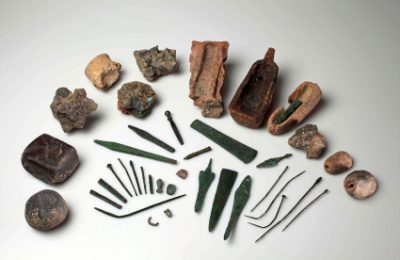
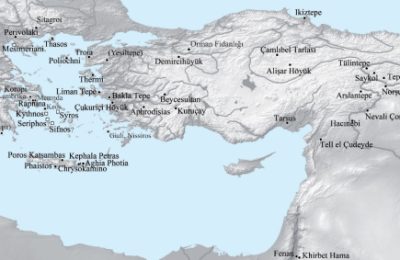
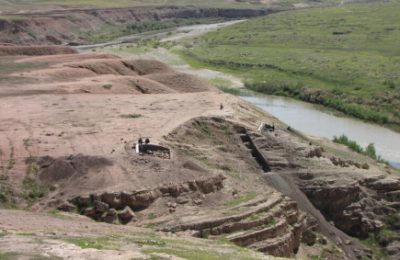
  Monograph published by HEAS member Mathias Mehofer HEAS member Mathias Mehofer recently published his monograph “Çukuriçi Höyük 3, Ein frühbronzezeitliches Metallhandwerkerzentrum in Westanatolien, OREA 22, Vienna 2022” on EBA metallurgy found in Western Turkey. The site was investigated within several FWF, START and ERC grants under the direction of HEAS´ co-operationpartner Prof. Dr. Barbara Horejs Austrian Archaeological Institute, Austrian Academy of Science. The book itself focuses on the interdisciplinary examination of the metallurgical remains from Çukuriçi Höyük (western Turkey), which date from the Late Chalcolithic to Early Bronze Age (c. 3300–2700 BC). The exceptionally rich ensemble includes almost all parts of the technological chain (chaîne opératoire), from tools, casting moulds, furnaces, ores, raw metal and ingots to finished products, tin bronzes and precious metals (Au, Ag). On the one hand, these remains were classified according to archaeological typological criteria, and on the other hand, they were analysed using various scientific methods (metallography, SEM-EDS, ED-XRF and lead isotope analysis). The arsenical copper production can be regarded as an outstanding result of the research; to date, there are only very few Bronze Age sites where evidence for this is present. The produced As-copper was fed into the East Aegean-West Anatolian networks. Precious metal and weapons additionally demonstrate that not only everyday objects but also prestige goods were produced. The fact that…

Read More
News

New FWF Podcast ‚Was Wir Wissen‘ Launched

  Interest in science is high, as evidenced by well-attended children's universities, dedicated citizen scientists, and science fiction bestsellers. But how is new knowledge created, what are researchers working on, and why are diverse perspectives on unresolved questions more important today than ever before? The new podcast "What We Know" from the Austrian Science Fund (FWF) takes listeners into the world of science. It contextualizes new knowledge, previously overlooked connections, and background information. Each season focuses on a major scientific topic. The very first season of the FWF podcast, which premieres on November 12, tackles a truly significant subject. It's about nothing less than us: humanity. What do we know about being human? A good question – and not so easy to answer. Therefore, in six episodes, hosts Francesca Grandolfo and Thomas Zauner visit researchers at their workplaces and gather as much knowledge as possible. The episodes span from the origin of life four billion years ago, through the history of civilization and the development of language and cognition, to artificial intelligence and the impact of humans on the environment in the Anthropocene. Speaking of the Anthropocene – does it even exist? Making science tangible In laboratories, institutes, and in the field, journalists Francesca and Thomas speak with researchers throughout Austria about their current work, about basic research, curiosity, and…

Research Areas:
Read More
News

New Paper by HEAS Member Tom Maltas

HEAS Member Tom Maltas has recently had a paper published in Scientific Reports on 'Agricultural adaptations to mid-late Holocene climate change in western Türkiye'. Abstract The period around the mid-late Holocene transition (c. 2200 bc) saw major societal developments across the eastern Mediterranean. At the same time, the region experienced a shift to more arid climatic conditions. This included punctuated episodes of rapid climate change such as the ‘4.2 ka event’, which has been implicated in widespread societal ‘collapse’ at the end of the Early Bronze Age. The ways in which societies adapted agricultural production to cope with a drying climate are poorly understood. We begin to rectify this through stable isotope analysis of archaeobotanical remains from the Aegean region of western Türkiye, conducted to reveal changes in agricultural decision making across the mid-late Holocene transition. We find that Bronze Age farmers adapted agricultural production strategies by investing in drought-tolerant cereals cultivated on drier fields with water management strategies redirected towards pulses. Despite this, we find no evidence for pronounced drought stress in cereals grown during the period of the 4.2 ka event. This raises the potential for alternative explanations for societal disruptions visible across the Anatolian Plateau during this time, such as the breakdown of long-distance trade networks. Read full article

Research Areas:
Read More
News

New paper on fossils, fish and tropical forests

A new article has been published by HEAS member Katerina Douka et al. on fossils, fish and tropical forests : prehistoric human adaptations on the island frontiers of Oceania. Oceania is a key region for studying human dispersals, adaptations and interactions with other hominin populations. Although archaeological evidence now reveals occupation of the region by approximately 65–45 000 years ago, its human fossil record, which has the best potential to provide direct insights into ecological adaptations and population relationships, has remained much more elusive. Read full article      

Read More
Read More
News

New Paper Published!

HEAS members Philip R. Nigst and Marjolein D. Bosch published new paper on Fire Use during the Last Glacial Maximum at Korman' 9, Ukraine We are very pleased to announce our latest publication on our research on fire use and combustion activties during the Last Glacial Maximum in collaboration with William Chase Murphree, University of Algrave (Faro, Portugal). We analysed three combustion features at the Epigravettian site of Korman' 9 in the Middle Dnister valley, Ukraine. Our paper was published in Geoarchaeology. Open-access. The Last Glacial maximum (LGM), spanning from 26.5 to 19 thousand years before present (ka BP), is a period of extreme climatic degradation associated with reduced biomass production and resource stress throughout Eurasia. Arguably, one of the most fundamental tools for human survival during this cold and arid period was the ability to create, maintain and use fire. While fire is widely considered a ubiquitous tool in modern human behaviour, there are surprisingly few well‐described combustion features during the LGM in Europe. In this paper, we provide high‐resolution geoarchaeological research into three combustion features associated with Epigravettian occupations at the site of Korman' 9 (Ukraine) with ages falling in the LGM. Our results show distinct variations in the size and structure of the combustion features, potentially indicating multiple occupations within the same layer or reflect differences in…

Research Areas:
Read More
News

New Publication by HEAS Head Gerhard Weber

The new paper “Quantum Leaps in Human Biocultural Evolution and the Relationship to Cranial Capacity” published in Life 2023, 13 by HEAS Head Gerhard Weber bridges between the domains of biological anthropology and archaeology. The evolution of the genus Homo can only be understood by considering both of the inheritance systems that interact to shape human nature: biology and culture. While growing intellectual abilities are a key factor of human evolution, they are rarely contrasted with cultural progress. Cranial capacity data of 193 hominin fossils from the last seven million years and artefacts of increasing number and complexity in the archaeological record are used to demonstrate the concordant progression of brain-size increase and cultural development, starting approximately two million years ago. Our biocultural evolution shows a number of quantum leaps along the time axis applying to both domains. At first, humans left the canonical evolutionary pathway, which pertains to all other organisms, by enhancing their fitness using sophisticated tools and fire; secondly, they turned into a symbolic species; and finally, humanity now faces a new challenge: “intentional evolution”. Chronologically, these quantum leaps correspond to cranial capacity data used here as a proxy for cognitive performance. This contribution tries to demonstrate this parallel development and argues for a simple and generalized model of human biocultural evolution. An extrapolation of the model into the…

Research Areas:
Read More
Read More
News Allgemein

New publication by HEAS Member José-Miguel Tejero on prehistioric sound instruments

Sound instruments over 12,000 years old identified as used by the last hunter-gatherers of the Near East to imitate the call of birds of prey An international team of archaeologists and ethnomusicologists led by José-Miguel Tejero (Researcher at the Pinhasi Laboratory of the Department of Evolutionary Anthropology of the University of Vienna and HEAS Member) and Laurent Davin (CNRS. France) has discovered a unique set of prehistoric sound instruments in the Near East. These objects come from the Eynan-Mallaha archaeological site (Natufian archaeological culture, c. 13,000-9,700 BC) in northern Israel, excavated since 1955 by a Franco-Israeli team. The results of the study of these materials have just been published in the journal Scientific Reports. Link to article   [gallery ids="2519,2522"] [playlist type="video" ids="2517"]      

Research Areas:
Read More
News

New Publication by HEAS Member Offers New Insights into Ancient Roman Settlement Patterns in Austria

Dominik Hagmann's latest research, "Home is Where my Villa Is: A Machine Learning-based Predictive Suitability Map for Roman Features in Northern Noricum (ca. 50–500 CE/Lower Austria/AUT)," was recently published in the Journal of Maps. The study applies the Maxent machine learning (ML) algorithm to identify suitable locations for Roman archaeological features in Lower Austria. It offers new insights into ancient Roman settlement patterns and provides valuable support for heritage management and archaeological research.   https://www.heas.at/research/publications/home-is-where-my-villa-is-a-machine-learning-based-predictive-suitability-map-for-roman-features-in-northern-noricum-ca-50-500-ce-lower-austria-aut/

Research Areas:
Read More
Read More
News Allgemein

New publication on deep learning for population genetics by HEAS member Xin Huang and others

  The journal Nature Reviews Genetics published today a comprehensive review on how deep learning techniques are used in the context of population genetics, such as tasks for inferring demographic histories, identifying population structure and investigating natural selection from high-throughput sequencing data. With increasingly large-scale datasets on genetic diversity, especially for modern and ancient humans, technologies from deep learning are becoming more and more popular for studying evolutionary biology. An overview on this highly dynamic interdisciplinary field is presented in this publication, providing guidelines and discussing future directions. HEAS members Xin Huang and Martin Kuhlwilm led this work, with contributions from HEAS member Aigerim Rymbekova, as well as collaborators in Spain. Click here for more

Read More
News Allgemein

New Publication: Exploring Roman Frontier Mobility with GIS and Network Analysis

We are pleased to announce the publication of the new research article “I Walk an Ancient Road: A Straightforward Methodology for Analyzing Intra- and Inter-Regional Connectivity Systems along Roman Frontier Zones (c. 1st–5th century AD)” by Dominik Hagmann in the Journal of Archaeological Science: This study presents an innovative methodology for reconstructing ancient road networks in Roman hinterlands, focusing on the Danube Limes in Northern Noricum (modern Austria). By integrating Geographic Information Systems (GIS), Least-Cost Analysis (LCA), Spatial Social Network Analysis (SSNA), and Visibility Analysis (VA), the research uncovers patterns of movement and connectivity between military, economic, and civilian sites along the Roman frontier. Key findings include: A detailed reconstruction of potential Roman roads and transportation networks in the hinterland of the Danube frontier. Insights into how military logistics, trade, and settlement patterns were influenced by infrastructure. Methodological advancements for applying digital archaeology, computational modeling, and open data in Roman studies. This approach enhances our understanding of mobility in ancient borderlands and offers a scalable method for future research on historical transportation networks. For more details, read the full article here: https://doi.org/10.1016/j.jas.2024.106151   [caption id="attachment_4311" align="alignnone" width="300"] Fig. A schematic workflow illustrating the methodology for analyzing connectivity in Roman frontier hinterlands using spatial, least-cost, visibility, and social network approaches.[/caption]   https://www.heas.at/research/publications/i-walk-an-ancient-road-a-straightforward-methodology-for-analyzing-intra-and-inter-regional-connectivity-systems-along-roman-frontier-zones-c-1st-5th-century-ad/

Research Areas:
Read More
Read More
Read More
News

NHM Vienna Archaeologists Discover Earlier Traces of Settlements of Early Farming Communities in Hallstatt

During excavation work in Hallstatt (on the property of the Kocsar-Riezinger family in the Seestraße), archaeological layers of scientific importance were uncovered: Medieval terracing walls, a burnt layer with coins, bricks and fragments of vessels of the Roman period, as well as up to one meter thick layers from the Latène period (Late Iron Age, c 450-15 BC). Around 1,000 artefacts from different epochs have recently been recovered. The results will be presented to the public on the 12th August 2025 at the NHM Wien. More information in the press release here. Press Release   [gallery ids="4676,4677,4678,4675"]    

Research Areas:
Read More
News

OeAW Early Career Researchers Visit the UBB

We were very happy to welcome a group of early career researchers from the OeAW from the HEAS Partner Insitute the ÖAW to the University of Vienna Biology building (the UBB). The group had a tour of the UBB followed by a tour of the Vienna Micro-CT Lab by Gerhard Weber, a tour of the Higham and Douka labs by Tom Higham and of the Pinhasi Lab by Olivia Cheronet. We were happy to have such an enthuastic group visit us and we hope to have a lot more fruitful meetings in the future.    

Research Areas:
Read More
Read More
Jobs Allgemein

PhD position in Virtual Anthropology Group

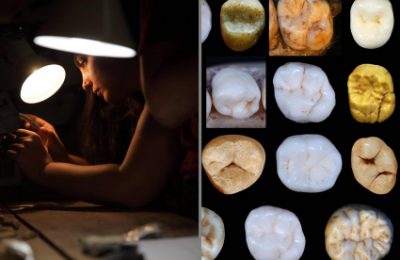
The Virtual Anthropology group at University of Vienna (Prof. Gerhard Weber) is now offering a position as a Ph.D. candidate (PraeDoc) in the area of 3D dental morphology. The position is funded by the Austrian Science Foundation (FWF) project “Variation of the 3D shape and size of human teeth” running from November 2024 to October 2027 and will be available from July 2025 onwards. The successful candidate will have an eligible master’s degree in biology or related fields, and have extensive knowledge in human dental anatomy, 3D image data processing (e.g, Amira-Avizo) and Geometric Morphometric analyses. Fluent English skills and team-work ability are required. Salary will be paid according to the official FWF/University scheme in Austria and full social security benefits will be provided. Please send your application to gerhard.weber@univie.ac.at.

Read More
News

Pinhasi Lab featured on ARTE documentary

HEAS members Ron Pinhasi and Olivia Cheronet were recently featured on an arte documentary series 'Das Steinzeit Menu' in the second episode on 'Als Homo sapiens zum Bauern wurde'   The documentary (in German) can be viewed on the link below until the 24th July 2024.   https://www.arte.tv/de/videos/106261-000-A/das-steinzeit-menue/

Research Areas:
Read More
News

Podiumsdiskussion: Seit wann gibt es moderne Menschen und was treibt sie an?

Am 13. Juni 2022 nahm Gerhard Weber, Leiter des HEAS, an einer Podiumsdiskussion im Universitätshauptgebäude der Universität Wien teil. Unser Verhalten hat sich weiterentwickelt: als Mittel zum Überleben. Heute stehen wir kurz davor, mit unserem Verhalten das Überleben zukünftiger Generationen zu gefährden. An der Universität Wien diskutierten Experten aus den unterschiedlichsten Bereichen am Ende unserer aktuellen #SEMESTERFRAGE die Faktoren und Muster, die unser Handeln bestimmen.     Podiumsdiskussion: Seit wann gibt es moderne Menschen und was treibt sie an?    

Read More
News Allgemein

Portable X-Ray Fluorescence (p-XRF) Colloquia Series – First lecture on 12th of February

The Global p-XRF Network (GopXRF.net) initiated by HEAS-member Michaela Schauer (VIAS) and the European Academy of Sciences & Arts/STEMAC Expert Group represented by Ioannis Liritzis, are organising a series of online colloquia to explore the use of portable X-ray fluorescence (pXRF) in archaeology and cultural heritage. Since its introduction in the 1950s, pXRF has evolved from bulky, radioactive instruments to compact, handheld devices, now widely used across multiple industries. Despite these advancements, challenges remain in defining standards for accuracy, precision, and guidelines for archaeological and cultural heritage applications. The colloquia aim to provide a platform for knowledge exchange, offering expert presentations from both natural sciences and humanities. Each session includes 30-minute talks by specialists from archaeology and natural sciences, followed by a 30-minute discussion. The first lecture of the series is scheduled for 12th of February 2025 from 06:00–07:30 pm CET. Sofia Soares (with Teresa Pena and Patrícia Jodão) will present on the topic Which Rock is This? - Challenges for pXRF Studies in Raw Material Provenance Michelle Richards will be discussing pXRF for Geochemical Rock Classification in Archaeometry: A Pacific Case Study Interested participants are invited to join the lecture and share this information with their peers! The Zoom room can be accessed here. More information about the colloquium series is available on the networks website and the EASA website.…

Research Areas:
Read More
News

Poster prize for HEAS member

At the UK Archaeological Science conference 20-22 April 2022 in Aberdeen, Scotland, Dr Magdalena Blanz and colleagues won the Runnerup Poster Prize for early career researchers. The poster, titled "Ratios of strontium and barium to calcium as complementary palaeodietary indicators of seaweed consumption", it describes research done by Magdalena and colleagues during her doctoral studies at the University of the Highlands and Islands, Scotland. This research is published now in the Journal of Archaeological Science.

Read More
News

Primate diversity studies with a contribution of HEAS member Martin Kuhlwilm

Several studies on primate genomic variation have now been published in the journal Science. An international consortium of researchers generated and studied high-quality genomes from 233 primate species to gain insights into their evolution, and open new perspectives in conservation biology and human variation related to health. HEAS member Martin Kuhlwilm contributed to these studies, refining a catalog of human-specific changes in the genome. Many recent genetic changes in humans turn out not to be unique to us, but shared with other species. Genetic changes that might make us human seem to be more rare. Studying our living relatives improves how we understand our own species. The publications can be found here: https://doi.org/10.1126/science.abn7829 https://doi.org/10.1126/science.abn8197 https://doi.org/10.1126/science.abn8153   University of Vienna Press Release         FINAL Embargoed INTERNATIONAL Press Release Primates IBE_UPF https://www.derstandard.de/story/3000000172769/was-der-genomvergleich-von-menschen-mit-affen-bringt?ref=rss https://www.diepresse.com/6295230/affen-erbgut-zeigt-was-uns-krank-macht   https://www.vbio.de/aktuelles/details/erbgut-von-primaten-als-schluessel-zur-menschlichen-gesundheit https://biermann-medizin.de/erbgut-von-primaten-als-schluessel-zur-menschlichen-gesundheit/  

Research Areas:
Read More
News Allgemein

Program for Conference on Methodological Innovations in P-XRF-Studies released!

The first Conference on Methodological Innovations in P-XRF-Studies will be held on 24th of September 2024 at the Vienna Institute for Archaeological Science with an Ice-breaker Event at the Naturhistorisches Museum Wien on the 23rd of September. It will give space to discuss portable X-ray fluorescence (p-XRF), a method widely used in a variety of research fields including archaeometry, conservation, geology, heritage studies, and many more. However, despite its widespread use, there still remains a lack of understanding of the specific requirements and best practices for handling the instrument across different research applications and materials: The simplicity of the instrument, as easy as pulling a trigger, gives the impression that, compared to laboratory methods, it does not require a specialist to operate it. As a result, there is a lack of training opportunities for practitioners, a deficit of groundwork and innovative studies and a tendency to apply p-XRF in a repetitive manner to the ever-same research questions. This sidelines p-XRF and neglects its innovative potential. Therefore, this conference will provide a platform to present cutting-edge methods and strategies for p-XRF data acquisition, processing and interpretation. It aims to highlight practical and software innovations, handling techniques and the new ways of the application of p-XRF to a variety of materials. Presentations from a variety of fields utilizing p-XRF will be presented…

Research Areas:
Read More
News

Publication by HEAS member Günther Karl Kunst

HEAS member Günther Karl Kunst  co-authored a paper along with Silvia Radbauer from the Austrian Academy of Sciences, Austrian Archaeological Institute et al. "Palaeogenomic analysis of black rat (Rattus rattus) reveals multiple European introductions associated with human economic history" which was published this week in Nature Communications. There is further discussion on the Max Planck website

Read More
Read More
Blog Posts

Review of the 10th Radiocarbon & Archaeology Conference (Zürich, 11-14th September). T. Higham

The 10th Radiocarbon and Archaeology conference was held at the ETH Zürich (Eidgenössische Technische Hochschule Zürich), in parallel with the 24th Radiocarbon conference.   The meeting got underway on Sunday 11/09, with a series of workshops at the Hönggerberg ETH campus, covering topics such as the Carbon cycle, compound-specific radiocarbon dating, mortar dating and also included lab tours of the ETH facilities. This was followed by an ice-breaker event.   The remainder of the conference was held at the main ETH building in central Zurich. Following a welcome from the Rector of the ETH, Prof. Dissertori, Alex Bayliss began the conference by giving an overview of the radiocarbon dating of historic sites in the age of single-year calibration, providing a measure of how far the field of radiocarbon dating and archaeology has come in terms of precision and interdisciplinarity, with dendrochronology and genetics now complementing AMS dating. Aside from two other plenary talks, the remainder of the Archaeology part of the conference was split into two parallel sessions, covering the topics of agriculture/migration/DNA, diet and reservoir effects, archaeological samples for accurate dating, dating at the limit of the method, geoarchaeology, art and cultural heritage and radiocarbon and the protection of cultural heritage. The parallel sessions of the Radiocarbon conference focussed on technical developments and the carbon cycle.   As in…

Read More
Blog Posts

Roman Cuisine: A Vegan and Organic Feast? Our Kinderuni Session on Ancient Diets

Authors: Dominik Hagmann and Nisa Iduna Kirchengast Description: In this blog post, we, Dominik and Nisa, reflect on our Kinderuni session "Römisches Essen: alles bio und vegan? Mit der Archäologie der antiken Ernährung auf der Spur" (Roman Food: All Organic and Vegan? Tracing Ancient Diet with Archaeology). On Monday, July 8th, we had the pleasure of diving into the world of Roman cuisine with a group of curious young researchers aged 7 to 12. This session was part of the wider Kinderuni initiative, which also includes a virtual session on ancient diets available online since 2020: "Parrots, Fish Sauce, and Dogs" (https://kinderuni.online/kurs/papageien-fischsauce-und-hunde/). What did we do? We explored what the ancient Romans ate, discussing not only the ingredients but also how we can still discover what was on people's plates nearly 2000 years ago. We examined archaeological finds, peeked into ancient cookbooks, and even considered how one could cook Roman food today – with a modern twist, of course! What went well: Lively discussions: The children were enthusiastic and surprised us with their questions and ideas. They wanted to know everything, from the Romans' favorite dishes to the spices they used. Interactive elements: We cooked "ancient" recipes together (with modern ingredients, of course!) and the children could even try their hand at it. This was not only fun but also…

Research Areas:
Read More
Read More
Blog Posts

Round 2 of Geoarchaeology in Vienna: Pushing Borders – Expanding Horizons

Authors: Valentina Laaha, Thomas Beard, Doris Jetzinger, and Doralice Klainscek   From the 12th to the 14th of February 2025, the second edition of the ‘Geoarchaeology in Vienna’ workshop took place at the University of Vienna. It was generously funded by the HEAS research network and a joint events grant from the Doctoral School of Historical and Cultural Studies and the Vienna Doctoral School of Ecology and Evolution. We organised this event because in geoarchaeology, as it is very interdisciplinary and uses a wide variety of different methods from different fields, many geoarchaeologists would otherwise never meet at the same place or conference. Therefore this event was aimed at getting to know each other and the geoarchaeological research ongoing in Austria and beyond, as last year´s workshop started a network for all geoarchaeologists and those interested in the parallel branches. We were also pleased to further establish collaborations, after noting some that have developed after our initial event. You can find the booklet with the workshop programme as well as the presentation and poster abstracts for this year’s event here. Geoarchaeology in Vienna Booklet You can read about the first workshop and the network in our blog here. The 2025  workshop was conceived and organised by Doris Jetzinger, Thomas Beard,  Valentina Laaha, and Doralice Klainscek, all students from different departments…

Research Areas:
Read More