HEAS in the News: HEAS Head Gerhard Weber in Profil Magazine
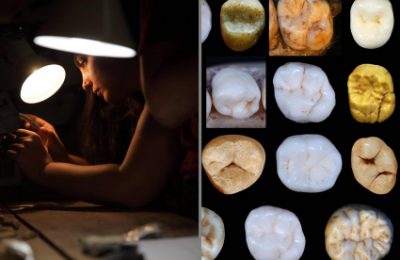
HEAS head Gerhard Weber's work was recently featured in the Austrian Scientific Magazine Profil Neanderthaler Profil
HEAS member Maria Ivanova-Bieg was appointed as a member of the EAA Scientific Advisory Committee. The European Association of Archaeologists (EAA) is the most important professional association of archaeologists in Europe with over 15.000 members from 60 countries worldwide, working in prehistory, classical, medieval and historical archaeology. The Scientific Advisory Committee serves as a think-tank, assisting the Executive Board and the Statutory Committees of the EAA in strategic decision-making.
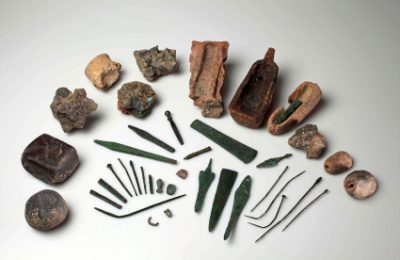
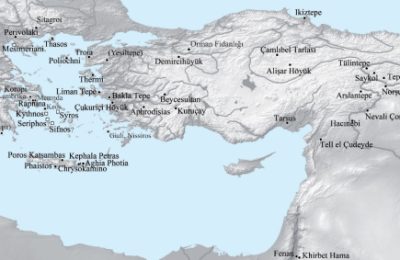
Austria's Der Standard published an article on HEAS's own Mathias Mehofer's research on the metallurgy at the Cukurici Höyük. Full Story, in German, below: https://www.derstandard.at/story/2000138691196/das-grosse-netzwerk-der-metallurgen-vom-cukurici-hoeyuek Check out the original research in the Open Access book Çukuriçi Höyük 3 For general information on Mathias Mehofer´s work see: https://vias.univie.ac.at/en/research/archaeometallurgy-and-archaeometry/projects/
The Southern Arc and its lively genetic History Vast paleogenetic study reveals insights on migration patterns, the expansion of farming and language development from the Caucasus over western Asia and Southern Europe from the early Copper Age until the late middle ages In a trio of papers, published simultaneously in the journal Science, Ron Pinhasi from the Department of Evolutionary Anthropology and Human Evolution and Archaeological Sciences (HEAS) at the University of Vienna and Songül Alpaslan-Roodenberg from the University of Vienna and Harvard University, Iosif Lazaridis and David Reich at Harvard University—together with 202 co-authors—report a massive effort of genome-wide sequencing from 727 distinct ancient individuals with which it was possible to test longstanding archaeological, genetic and linguistic hypotheses. They present a systematic picture of the interlinked histories of peoples across the Southern Arc Region from the origins of agriculture, to late medieval times. Read in full here The Southern Arc and its lively genetic History Ancient DNA from Mesopotamia suggests distinct Pre-Pottery and Pottery Neolithic migrations into Anatolia. A genetic probe into the ancient and medieval history of Southern Europe and West Asia. The genetic history of the Southern Arc: A bridge between West Asia and Europe
HEAS's own Tom Higham and Katerina Douka were recently interviewed for the Austrian state broadcaster ORF on their work on Neanderthal and Denisovan DNA and the gene varients which can be found in humans today. Read full story (in German)
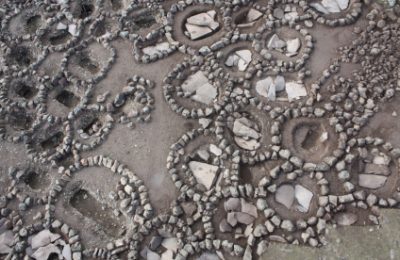
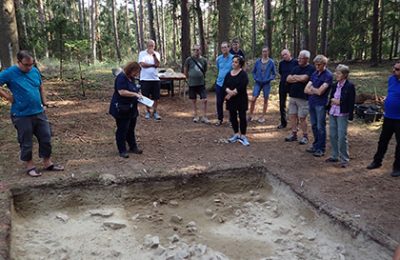
The Open Day at the Early Bronze Age rampart at Ratzersdorf/Am Dachsgraben in Lower Austria, which took place on the 28th July 2022, was a great success. HEAS Member Alexandra Krenn-Leeb conducted a guided tour of the site. The Open Day was organised by the Department of Prehistoric and Historical Archaeology, University of Vienna Ratzersdorf_Flyer_2022_EN
HEAS member Martin Kuhlwilm is among 20 researchers awarded a grant in the FWF 1000 Ideas scheme. With this programme, the FWF funds high-risk research projects off the beaten track. In this project, Prof. Kuhlwilm will explore the potential preservation of RNA viruses in historical specimens of great apes. Since it is well-known that zoonotic transmissions of viruses had an impact on humans, studying virus evolution in the past can guide the understanding of the present. However, unlike DNA, RNA is very poorly preserved and more challenging to explore. Read more here (in German)
Archaeologist and HEAS member Maria Ivanova-Bieg was profiled in the University of Vienna magazine, 'Rudolphina' on her work using isotope analyzes to reconstruct the life of the first farmers in Europe. Full article with video (in German) below Read full article
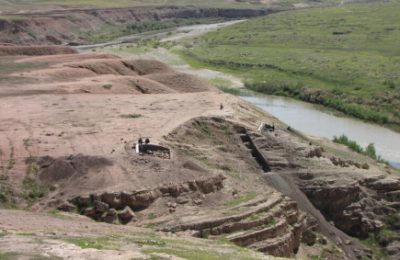
Monograph published by HEAS member Mathias Mehofer HEAS member Mathias Mehofer recently published his monograph “Çukuriçi Höyük 3, Ein frühbronzezeitliches Metallhandwerkerzentrum in Westanatolien, OREA 22, Vienna 2022” on EBA metallurgy found in Western Turkey. The site was investigated within several FWF, START and ERC grants under the direction of HEAS´ co-operationpartner Prof. Dr. Barbara Horejs Austrian Archaeological Institute, Austrian Academy of Science. The book itself focuses on the interdisciplinary examination of the metallurgical remains from Çukuriçi Höyük (western Turkey), which date from the Late Chalcolithic to Early Bronze Age (c. 3300–2700 BC). The exceptionally rich ensemble includes almost all parts of the technological chain (chaîne opératoire), from tools, casting moulds, furnaces, ores, raw metal and ingots to finished products, tin bronzes and precious metals (Au, Ag). On the one hand, these remains were classified according to archaeological typological criteria, and on the other hand, they were analysed using various scientific methods (metallography, SEM-EDS, ED-XRF and lead isotope analysis). The arsenical copper production can be regarded as an outstanding result of the research; to date, there are only very few Bronze Age sites where evidence for this is present. The produced As-copper was fed into the East Aegean-West Anatolian networks. Precious metal and weapons additionally demonstrate that not only everyday objects but also prestige goods were produced. The fact that…
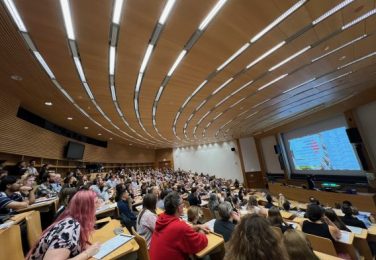
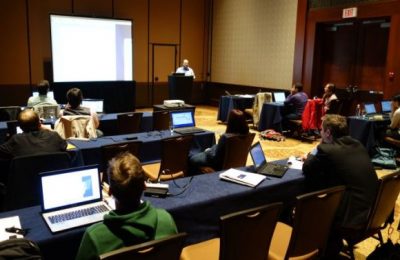
The 10th Radiocarbon and Archaeology conference was held at the ETH Zürich (Eidgenössische Technische Hochschule Zürich), in parallel with the 24th Radiocarbon conference. The meeting got underway on Sunday 11/09, with a series of workshops at the Hönggerberg ETH campus, covering topics such as the Carbon cycle, compound-specific radiocarbon dating, mortar dating and also included lab tours of the ETH facilities. This was followed by an ice-breaker event. The remainder of the conference was held at the main ETH building in central Zurich. Following a welcome from the Rector of the ETH, Prof. Dissertori, Alex Bayliss began the conference by giving an overview of the radiocarbon dating of historic sites in the age of single-year calibration, providing a measure of how far the field of radiocarbon dating and archaeology has come in terms of precision and interdisciplinarity, with dendrochronology and genetics now complementing AMS dating. Aside from two other plenary talks, the remainder of the Archaeology part of the conference was split into two parallel sessions, covering the topics of agriculture/migration/DNA, diet and reservoir effects, archaeological samples for accurate dating, dating at the limit of the method, geoarchaeology, art and cultural heritage and radiocarbon and the protection of cultural heritage. The parallel sessions of the Radiocarbon conference focussed on technical developments and the carbon cycle. As in…
[embed]https://www.youtube.com/watch?v=Gos4hRHFhoo&t=2078s[/embed]
»The creative millennia: transition to the Neolithic in the central Zagros« Hojjat Darabi | Austrian Archaeological Institute, Austrian Academy of Sciences; Department of Archaeology, Razi University The central Zagros received pioneering research on the emergence of early agricultural and village life by R. Braidwood in 1959-60. However, later shift of research toward the Levant put it in shadow for several decades until recent investigations have once again highlighted its key place in the Neolithization processes in west Asia. Unlike the Levant, where a protracted change from Epipaleolithic to Neolithic is seen, the border line between these two periods is evidently sharp in the central Zagros suggesting unprecedent features appeared in the first two millennia of the Holocene, a pivotal transitional time severely known in the region. Current evidence gained from the sites of Chogha Golan, Sheikhi Abad, Asiab, Ganj Dareh and a few others suggests that, following an environmental improvement at the end of the Younger Dryas, local communities engaged in short-term inhabitations, collective or communal ceremonies, and an increasing reliance on wild progenitors of early domestic plant and animal species. It is assumed that subsequent longer occupation towards sedentary life not only increased population numbers but also resulted in an environmental depression. This seems to have caused people to widen their diet toward low-level food production and subsequently agricultural village…
HEAS is delighted to welcome the Naturhistorisches Museum Wien (NHM) as a new partner in the research network. Gerhard Weber, head of HEAS said “This collaboration will mean that we broaden our expertise and extend our possibilities. We started to bridge between institutions in Vienna (University and Museum), to create an even more effective European hub for human evolution research”
An international team led by The University of Vienna and the Ulsan National Institute of Science and Technology in collaboration with the National Museum of Korea has successfully sequenced and studied the whole genome of eight 1.700-year-old individuals dated to the Three Kingdoms period of Korea (approx. 57 BC-668 AD). The Team was led by Pere Gelabert and Prof. Ron Pinhasi with Victoria Obbreiter of HEAS together with Prof. Jong Bhak and Asta Blazyte from the UNIST and Prof. Kidong Bae from the National Museum of Korea. These are the first published genomes from this period in Korea and bring key information for the understanding of Korean population history. Links: University of Vienna Website Full article
Am 13. Juni 2022 nahm Gerhard Weber, Leiter des HEAS, an einer Podiumsdiskussion im Universitätshauptgebäude der Universität Wien teil. Unser Verhalten hat sich weiterentwickelt: als Mittel zum Überleben. Heute stehen wir kurz davor, mit unserem Verhalten das Überleben zukünftiger Generationen zu gefährden. An der Universität Wien diskutierten Experten aus den unterschiedlichsten Bereichen am Ende unserer aktuellen #SEMESTERFRAGE die Faktoren und Muster, die unser Handeln bestimmen. Podiumsdiskussion: Seit wann gibt es moderne Menschen und was treibt sie an?
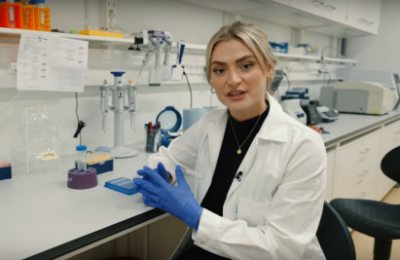
Traces of human life are not only found in fossils but also in sediments. In the video, doctoral candidate and HEAS member Victoria Oberreiter explains how she develops new methods to retrieve ancient DNA from "dirt" to get a better insight into our past. "Most people would probably associate sediments with the dirt underneath their feet. But what if I tell you that with my research, we are able to extract ancient human DNA from exactly that source?" Victoria Oberreiter, PhD candidate at the Vienna Doctoral School of Ecology and Evolution, says. Her research focuses on extracting ancient DNA from mineralogical sources. VIDEO: Heas Member Victoria Oberreiter explains her research
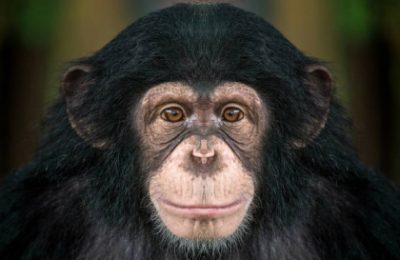
In this paper, DNA data has been gathered from feces of hundreds of chimpanzee individuals living in Africa. Such genomic data from the wild provides a fine-grained picture of the history of our closest living relatives. During the past tens of thousands of years, differences between regions emerged, but there were also opportunities for gene flow and migration. The local genetic variation can now be used to track the geographic origin of captive and confiscated chimpanzees, which is important for the conservation of threatened species. Read full article
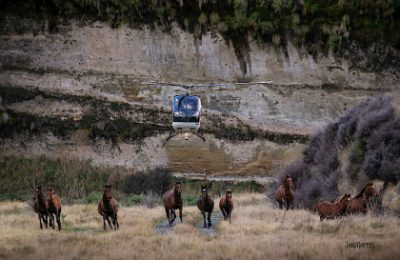
Congratulations to HEAS member Elmira Mohandesan on winning the first prize of the Photo Contest "Pictures of Life (Sciences)", featuring extraordinary and exciting snapshots of research at the Faculty of Life Sciences. Her photograph "Eat the Wind" (credit: Jan Maree Vodanovich) illustrates New Zealand feral Kaimanawa horses being mustered by helicopter, limiting the population size to protect the native ecosystem, in which several endangered species of plants live. The picture will be displayed in the Dean's office, and Elmira will be presented with a professional print of her photo.
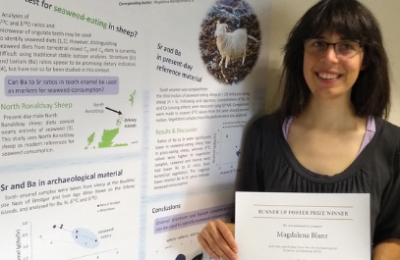
At the UK Archaeological Science conference 20-22 April 2022 in Aberdeen, Scotland, Dr Magdalena Blanz and colleagues won the Runnerup Poster Prize for early career researchers. The poster, titled "Ratios of strontium and barium to calcium as complementary palaeodietary indicators of seaweed consumption", it describes research done by Magdalena and colleagues during her doctoral studies at the University of the Highlands and Islands, Scotland. This research is published now in the Journal of Archaeological Science.
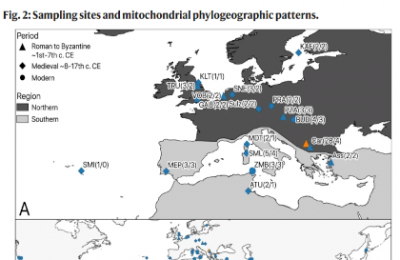
HEAS member Günther Karl Kunst co-authored a paper along with Silvia Radbauer from the Austrian Academy of Sciences, Austrian Archaeological Institute et al. "Palaeogenomic analysis of black rat (Rattus rattus) reveals multiple European introductions associated with human economic history" which was published this week in Nature Communications. There is further discussion on the Max Planck website
HEAS Member Cinzia Fornai has recently published articles on Centric relation: A matter of form and substance and Dynamic finite-element simulations reveal early origin of complex human birth pattern.
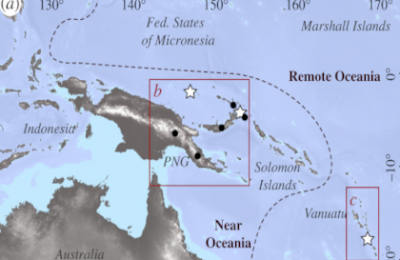
A new article has been published by HEAS member Katerina Douka et al. on fossils, fish and tropical forests : prehistoric human adaptations on the island frontiers of Oceania. Oceania is a key region for studying human dispersals, adaptations and interactions with other hominin populations. Although archaeological evidence now reveals occupation of the region by approximately 65–45 000 years ago, its human fossil record, which has the best potential to provide direct insights into ecological adaptations and population relationships, has remained much more elusive. Read full article
In the latest edition of Profil Magazine, HEAS Head Gerhard Weber is interviewed about his work (in German) Download a PDF here
The groups for (paleo-)genomics/proteomics at the growing Department for Evolutionary Anthropology at the University of Vienna support applications to the MCSA postdoctoral fellow programme. We are searching for motivated candidates with project ideas related to our research interests, to be implemented at this high-level institution. We encourage you to get into contact with us if you are interested in working on the following topics: Ron Pinhasi: ancient DNA, human population history, sediment DNA (https://www.pinhasilab.at/) Verena Schünemann: ancient and historical pathogen genomics, historical RNA (https://www.iem.uzh.ch/en/people/abg/VerenaSchuenemann-.html) Katerina Douka: paleoproteomics, dating, ancient hominins (https://www.katerinadouka.com/) Martin Kuhlwilm: computational admixture genomics in humans and primates (https://admixture.univie.ac.at) More information on implementation and additional support here: https://forschungsservice.univie.ac.at/foerdermoeglichkeiten/msca-pf/ The University of Vienna is an equal-opportunity employer, supports applications from underrepresented groups and minorities and offers generous support for a 3rd year of employment to the 10 top-ranked MSCA European Postdoctoral Fellowships (top 5 female and top 5 male) awarded to the University.
Congratulations to Ron Pinhasi, Deputy Head of HEAS, who has been made a full Professor at the University of Vienna. For more information on Ron's background click here
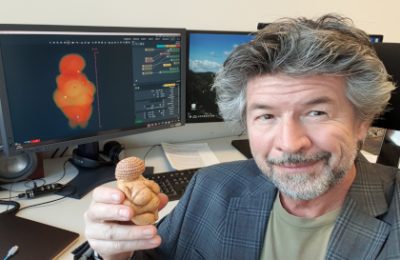
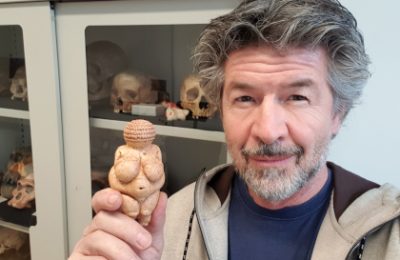
Gerhard Weber was recently interviewed by the Austrian Public Broadcaster ORF about his recent publication on the Venus from Willendorf. The report can be viewed here
Mystery solved about the origin of the 30,000-year-old Venus of Willendorf as new research method shows that the material likely comes from northern Italy The almost 11 cm high figurine from Willendorf is one of the most important examples of early art in Europe. It is made of a rock called "oolite" which is not found in or around Willendorf. A research team led by the anthropologist Gerhard Weber from the University of Vienna and the two geologists Alexander Lukeneder and Mathias Harzhauser... Read More
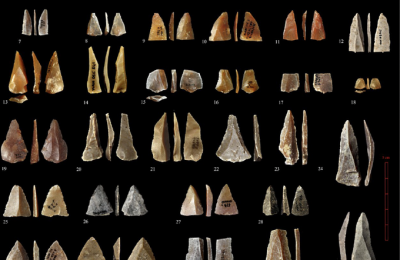
A new article on the Grotte Mandrin has been published. Higham, Douka et. al. show that Homo sapiens made the so-called "Neronian" Palaeolithic industry there ~54,000 years ago. This is the earliest evidence there is in this part of the world for modern humans. Read More
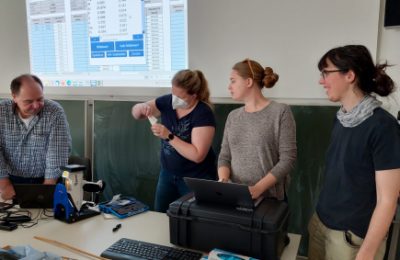
The HEAS Workshops are intended to introduce basics of techniques/methods in a concise format to other colleagues, no matter if they come from the same discipline or from completely different fields. The typical workshop is a one-day event (but can be longer) and includes a theoretical part (mostly to make participants familiar with terms and procedures), and importantly, much practical work. After a workshop one should have a good idea what can be achieved with a particular technique or method, what the main inputs and outputs are, and where it links to other fields. HEAS Workshops can be organized in an online or hybrid format and are offered within our network without costs. For external participants we charge a fee of € 100/day. All workshops come with a maximum number of attendees. It is necessary to register in advance. One example for a HEAS workshop would be: Title Location Max. no. of participants 3D shape and form analysis (EVAN Toolbox) Online 15
[embed]https://www.youtube.com/watch?v=vQYVA5EiRMg[/embed]
[embed]https://www.youtube.com/watch?v=TJEZO19Mljo&t=3s&ab_channel=HEAS[/embed]
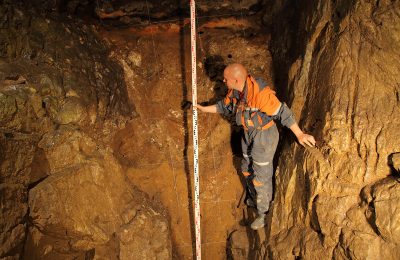
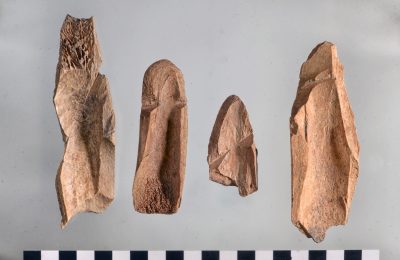
A new article co-authored by HEAS members Tom Higham and Katherina Douka sheds light on the Denisovan remains in Siberia. The team found and sequenced 5 new human bones using ZooMS dating back to 200,000 yrs in East Chamber. To read the article in full click here Press Coverage Anthropologie: Älteste Überreste des Denisova-Menschen - science.ORF.at
500 years of building history mirrored by rubble layers, artefacts, bones and documents It started with a rescue excavation of a few weeks in 2004, when the centre of the Nationalpark Donauauen was established in one of the most unique of our Renaissance castles; 17 years later, and coordinated by Nikolaus Hofer from the Federal Monuments Authority Austria, a team of historians, art historians, archaeologists, stratigraphers and osteologists together assemble a colourful picture, mutually benefitting from each others results; for the first time in Austria, the history of a monumental building could be traced over such a long period - inderdisciplinarity more than an out-dated phrase
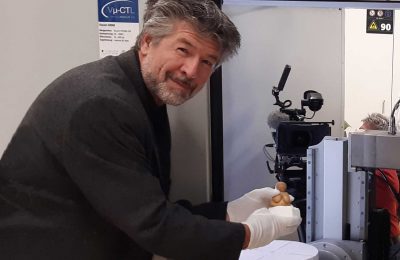
The famous 30,000-year-old Venus from Willendorf figurine will be the central theme of a new Universum episode which will be broadcasted on the International Women’s Day on 8th March 2022. Shooting also took place in the new “University Biology Building – UBB” in the Vienna µCT Lab.
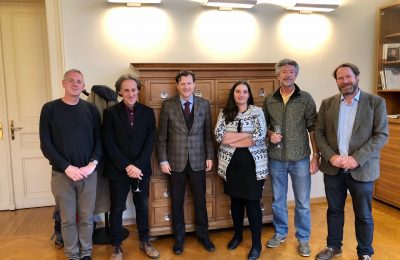
Vice Rector Jean-Robert Tyran welcomed a delegation from HEAS in his office at main campus of University of Vienna to celebrate the successful implementation of the new research network (Forschungsverbund). From left to right – Prof. Ron Pinhasi, Prof. Tom Higham, Vice Rector Jean-Robert Tyran, Prof., Katerina Douka, Prof. Gerhard Weber, Prof. Immo Trinks
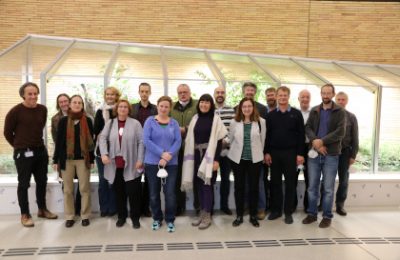
The Kick-Off Meeting for Heas took place on Friday 12th November in Vienna. The members contributed to a planning session both online and in person which was hosted at the new UBB in the 3rd district. With over 500 years of collective experience in the room, the discussion included joint projects, funding, maintaining momentum, shared resources and strategic priorities for new infrastructure. There was also lively discussion about the planning of network activities for the coming year.
In the framework of a scientific cooperation between the University of Vienna, Vienna, Institute for Archaeological Science (VIAS), the Central Institute for Meteorology and Geodynamics and the new research centre for manor houses around the Baltic at Greifswald University, the buried foundations of Putbus Castle on the German peninsula of Rügen have been mapped in great detail. Links:read more on www.zeit.de read more on www.ndr.de