Read More
Publications

Early Neolithic pastoral land use at Alsónyék-Bátaszék, Hungary (Starčevo culture): New insights from stable isotope ratios

Blanz, Magdalena, Marie Balasse, Delphine Frémondeau, Erika Gál, Anett Osztás, Anna Zs Biller, Éva Á. Nyerges, Denis Fiorillo, Eszter Bánffy, and Maria Ivanova (2023). "Early Neolithic pastoral land use at Alsónyék-Bátaszék, Hungary (Starčevo culture): New insights from stable isotope ratios." PloS one 18(12): e0295769. read more

Research Areas:
Read More
News Allgemein

HEAS Member Verena Schünemann has a new paper in Nature on Prehistoric human remains from South-America helping to uncover the origins of treponemal diseases.

The oldest known genome of a bacterium from a family that causes diseases such as syphilis has been identified in prehistoric human remains from Brazil, a Nature paper reveals. The finding helps to shed light on the origins of this disease group. Closely related but distinct subspecies of Treponema pallidum bacteria cause different types of treponemal disease, such as venereal syphilis and a non-sexually transmitted disease known as bejel. The origins of these diseases are debated: some argue that the syphilis epidemic in late 15th century Europe arose after Columbus’ expeditions introduced the bacteria from the Americas. Previous theories of the emergence of these diseases have been based on studies of ancient bone pathology but definitive evidence to identify the causative subspecies has eluded researchers. Verena Schuenemann and colleagues extracted DNA from four individuals from a nearly 2,000-year-old Brazilian burial site and were able to reconstruct the genomes of T. pallidum bacteria that had infected them. Their analysis revealed that the pathogen responsible was most closely related to the modern species that causes bejel. The finding adds strength to previous suggestions that civilizations in the Americas experienced treponemal infections in pre-Columbian times, and that treponemal disease was already present in the New World at least 500 years before Columbus set sail. The study does not shed light on the emergence…

Research Areas:
Read More
Department of Prehistoric and Historical Archaeology (IUHA) Members

Lukas WALTENBERGER

I am a postdoctoral researcher at the Department of Prehistoric and Historical Archaeology and at the Department of Prehistory and WANA Archaeology, of the Austrian Archaeological Institute. I am a biological and forensic anthropologist with a research focus on cremated human remains, trauma analyses, and palaeopathology. I have a master's degree in Forensic Osteology (Bournemouth University, UK) and a PhD in Life Sciences (University of Vienna) performed in the framework of the ERC-project »VAMOS – The value of mothers to society« (ÖAW, PI: Katharina Rebay-Salisbury). Currently, I am spokesman of the working group »Palaeoanthropology and Prehistoric Anthropology« of the Anthropological Society (GfA).

Read More
News

HEAS member Muhammad Bilal Sharif successfully completes PhD. Congratulations Dr. Sharif!

We are pleased to share that a HEAS member, Muhammad Bilal Sharif, has successfully completed his PhD under the supervision of Dr. Elmira Mohandesan and Prof. Katrin Schaefer. He defended his thesis "The Threads of Time in Equine Management: A Genetic Exploration of Iron Age and Roman Equids, and New Zealand's Feral Horses" on January 5th, 2024. Congratulations to Dr. Sharif on this remarkable achievement!

Read More
News

HEAS Virtual Anthropology Group releases free 3D data of Australopithecus afarensis cranium

The virtual reconstruction of the Ethiopian Australopithecus afarensis specimen A.L. 444-2 from Hadar was now released for free use in the digital@rchive of fossil hominoids https://www.virtual-anthropology.com/3d-data/free-data/   The reconstruction was made in the Virtual Anthropology Lab at University of Vienna by Sascha Senck, Stefano Benazzi, Gerhard Weber, and others. It is described in detail in the supplement of “Ledogar, J. A., Senck, S., Villmoare, B. A., Smith, A. L., Weber, G. W., Richmond, B. G., Dechow, P. C., Ross, C. F., Grosse, I. R., Wright, B. W., Wang, Q., Byron, C., Benazzi, S., Carlson, K. J., Carlson, K. B., McIntosh, L. C., Van Casteren, A., & Strait, D. S. (2022). Mechanical compensation in the evolution of the early hominin feeding apparatus [Article]. Proceedings of the Royal Society B: Biological Sciences, 289(1977), Article 20220711. https://doi.org/10.1098/rspb.2022.0711   The surface file of the reconstructed cranium and the endocast are available.

Research Areas:
Read More
Vienna Institute for Archaeological Science (VIAS) Members

Gabriele SCHARRER-LIŠKA

Gabriele Scharrer-Liška was educated at the University of Vienna (M.A. in 1994, PhD in 1999). Since 19959 she has been employed at the Vienna Institute for Archaeological Sciences (VIAS) focusing at social, economic and landscape archaeological issues of the Mediaeval Period in Central Europe.    

Read More
Read More
Publications

A genetic history of the Balkans from Roman frontier to Slavic migrations.

Olalde, I., Carrión, P., Mikić, I., Rohland, N., Mallick, S., Lazaridis, I., Mah, M., Korać, M., Golubović, S., Petković, S., Miladinović-Radmilović, N., Vulović, D., Alihodžić, T., Ash, A., Baeta, M., Bartík, J., Bedić, Ž., Bilić, M., Bonsall, C., Bunčić, M., Bužanić, D., Carić, M., Čataj, L., Cvetko, M., Drnić, I., Dugonjić, A., Đukić, A., Đukić, K., Farkaš, Z., Jelínek, P., Jovanovic, M., Kaić, I., Kalafatić, H., Krmpotić, M., Krznar, S., Leleković, T., M. de Pancorbo, M., Matijević, V., Milošević Zakić, B., Osterholtz, A.J., Paige, J.M., Tresić Pavičić, D., Premužić, Z., Rajić Šikanjić, P., Rapan Papeša, A., Paraman, L., Sanader, M., Radovanović, I., Roksandic, M., Šefčáková, A., Stefanović, S., Teschler-Nicola, M., Tončinić, D., Zagorc, B., Callan, K., Candilio, F., Cheronet, O., Fernandes, D., Kearns, A., Lawson, A.M., Mandl, K., Wagner, A., Zalzala, F., Zettl, A., Tomanović, Ž., Keckarević, D., Novak, M., Harper, K., McCormick, M., Pinhasi, R., Grbić, M., Lalueza-Fox, C., Reich, D., 2023. A genetic history of the Balkans from Roman frontier to Slavic migrations. Cell 186, 5472-5485.e5479. read more

Research Areas:
Read More
Read More
Vienna Institute for Archaeological Science (VIAS) Team Leaders

Nives DONEUS

I am an archaeologist at the Vienna Institute for Archaeological Sciences (VIAS) focusing on the archaeological prospection of Roman landscapes. The joint interpretation of data from different prospection techniques makes it possible to go beyond the archaeological sites to record landscape history and trace the many facets of human life. The diachronic investigation of human land use is particularly exciting here, as it shows the interaction between humans and the environment, in particular the modification of the natural environment to meet the needs of habitation, infrastructure or agriculture.    

Read More
Publications

Identification of constrained sequence elements across 239 primate genomes

Kuderna, L.F.K., Ulirsch, J.C., Rashid, S., Ameen, M., Sundaram, L., Hickey, G., Cox, A.J., Gao, H., Kumar, A., Aguet, F., Christmas, M.J., Clawson, H., Haeussler, M., Janiak, M.C., Kuhlwilm, M., Orkin, J.D., Bataillon, T., Manu, S., Valenzuela, A., Bergman, J., Rouselle, M., Silva, F.E., Agueda, L., Blanc, J., Gut, M., de Vries, D., Goodhead, I., Harris, R.A., Raveendran, M., Jensen, A., Chuma, I.S., Horvath, J.E., Hvilsom, C., Juan, D., Frandsen, P., Schraiber, J.G., de Melo, F.R., Bertuol, F., Byrne, H., Sampaio, I., Farias, I., Valsecchi, J., Messias, M., da Silva, M.N.F., Trivedi, M., Rossi, R., Hrbek, T., Andriaholinirina, N., Rabarivola, C.J., Zaramody, A., Jolly, C.J., Phillips-Conroy, J., Wilkerson, G., Abee, C., Simmons, J.H., Fernandez-Duque, E., Kanthaswamy, S., Shiferaw, F., Wu, D., Zhou, L., Shao, Y., Zhang, G., Keyyu, J.D., Knauf, S., Le, M.D., Lizano, E., Merker, S., Navarro, A., Nadler, T., Khor, C.C., Lee, J., Tan, P., Lim, W.K., Kitchener, A.C., Zinner, D., Gut, I., Melin, A.D., Guschanski, K., Schierup, M.H., Beck, R.M.D., Karakikes, I., Wang, K.C., Umapathy, G., Roos, C., Boubli, J.P., Siepel, A., Kundaje, A., Paten, B., Lindblad-Toh, K., Rogers, J., Marques Bonet, T., Farh, K.K.-H., 2023. Identification of constrained sequence elements across 239 primate genomes. Nature. read more

Research Areas:
Read More
Read More
Publications

Investigating the co-occurrence of Neanderthals and modern humans in Belgium through direct radiocarbon dating of bone implements

Abrams, G., Devièse, T., Pirson, S., De Groote, I., Flas, D., Jungels, C., Jadin, I., Cattelain, P., Bonjean, D., Mathys, A., Semal, P., Higham, T., Di Modica, K., 2024. Investigating the co-occurrence of Neanderthals and modern humans in Belgium through direct radiocarbon dating of bone implements. Journal of Human Evolution 186, 103471.   read more

Research Areas:
Read More
News

HEAS member Mathias Mehofer awarded with a EU-H2020-IPERION grant

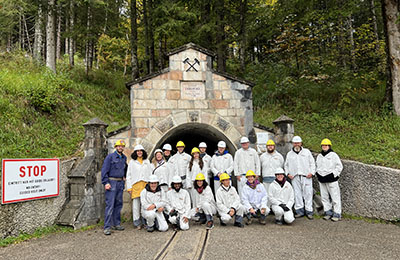
Congratulations to VIAS-HEAS Member Mathias MEHOFER on being awarded a standalone EU-H2020-IPERION project titled “Hallmetals-Archaeometallurgical analyses on metals from the famous Iron Age cemetery of Hallstatt, Austria. The discovery of the famous cemetery of Hallstatt, Austria, with its rich and spectacular grave goods gave its name to an entire prehistoric culture – the Hallstatt culture (ca. 8th to the 4th cent. BC). These metal objects, which are nowadays housed in the Naturhistorisches Museum Wien (NHM), represent a remarkable and, to date unexplored, (archaeometallurgical) pool to examine the wide-ranging exchange connections of the prehistoric salt miners. As a first step, a set of 130 metals (gold and copper based objects) covering the time span of the 8th to the 4th century BC, will be examined for their chemical composition and metal provenance. For the first time, the generated archaeometallurgical database will allow for in-depth analyses of Iron Age metal exchange to the region over vast distances.   Project partners: Priv.-Doz. Mag. Dr. Karina Grömer, Mag. Dr. Georg Tiefengraber, Mag. Daniel Oberndorfer, Conservator-Restorer, Prehistory, Natural History Museum Vienna Prof. Dr. Ernst Pernicka, CEZA Mannheim, Germany   More information can be found on the following homepage

Research Areas:
Read More
Department of Evolutionary Anthropology (DEA) Members Allgemein

Arne BIELKE

After I started studying biology at Leibniz University Hannover, I developed an interest in population genetics, conservation genetics, and ecology. Driven this passion, I pursued my education in evolutionary systems biology at the University of Vienna. For my master's thesis, I focused on recurrent ecotype formation of an alpine plant. I conducted a comprehensive analysis of smRNA profiles from reciprocally transplanted individuals and those grown in a common garden. Currently, for my PhD, my research focuses on New Zealand feral horses. Through bioinformatic and comparative population genomics, my goal is to provide science- based insights for future conservation management plans. This endeavor aims to preserve the historical and cultural heritage of New Zealand's European settlers through studying their horses, as human history has always shaped and been shaped by the history of our livestock’s.

Read More
Natural History Museum Vienna (NHM) Members

Nicole GRUNSTRA

I am an evolutionary anthropologist and morphometrician. I obtained a PhD in Biological Anthropology from the University of Cambridge and am currently based at the Department of Evolutionary Biology at the University of Vienna as an ESPRIT fellow. I am interested in which sense the human lineage is unique and in which sense we are “just another unique species.” Central to my research, therefore, is placing human evolution in a wider comparative and theoretical biology context. I study complex traits such as the pelvis, cranium, inner ear, and the entire dentition. Currently, my main research focus is on the study of evolutionary trade-offs in the human and non-human placental mammalian pelvis in pursuit of understanding what constrains human pelvic canal size and flexibility, leading to a tight fit and difficult childbirth (an "obstetrical dilemma"). I lead an FWF-funded project devoted to this question, in which I aim to disentangle the relative contributions of reproduction, locomotion, posture, body mass support, and phylogenetic heritage in hard and soft tissue anatomy of the mammalian, including human, pelvis.  

Read More
Read More
Read More
Publications

Improved detection of methylation in ancient DNA

Sawyer, S., Gelabert, P., Yakir, B., Lizcano, A.L., Sperduti, A., Bondioli, L., Cheronet, O., Neugebauer-Maresch, C., Teschler-Nicola, M., Novak, M., Pap, I., Szikossy, I., Hajdu, T., Meshorer, E., Carmel, L., Pinhasi, R., 2023. Improved detection of methylation in ancient DNA. bioRxiv, 2023.2010.2031.564722. read more

Research Areas:
Read More
Read More
Vienna Institute for Archaeological Science (VIAS) Members

Roland FILZWIESER

Roland Filzwieser is a postdoctoral researcher in archaeological prospection, landscape archaeology, medieval history, and digital humanities at the Vienna Institute for Archaeological Science (VIAS). He is specialized in geophysical prospection and digital documentation methods in combination with historical written and cartographic sources

Read More
Publications

Der Dernberg. Neue Perspektiven auf einen mittelalterlichen Hausberg mit anschließender Ortswüstung durch integrierte archäologische Prospektion und die systematische Analyse historischer Karten

Roland Filzwieser, Michael Doneus, Gerhard Hasenhündl, Matthias Kucera, Andreas Lenzhofer, Michał Pisz, David Russ, Franz Seidl, Gerhard Stüttler, Geert Verhoeven, Georg Zotti und Wolfgang Neubauer. (2023): Der Dernberg. Neue Perspektiven auf einen mittelalterlichen Hausberg mit anschließender Ortswüstung durch integrierte archäologische Prospektion und die systematische Analyse historischer Karten. In: Beiträge zur Mittelalterarchäologie in Österreich 39, S. 115–136. read more

Research Areas:
Read More
Read More
Read More
Publications

Das Gräberfeld von Obereggendorf (NÖ) – Erste interdisziplinäre Einblicke in eines der größten awarenzeitlichen Gräberfelder Ostösterreichs (The burial site of Obereggendorf (Lower Austria) – An initial interdisciplinary insight into one of the largest Avar cemeteries in Eastern Austria).

Binder, M., Doneus, M., Klostermann, P., Özyurt, J., Strang, S., Tobias, B., & Fiedler, K. (2023). Das Gräberfeld von Obereggendorf (NÖ) – Erste interdisziplinäre Einblicke in eines der größten awarenzeitlichen Gräberfelder Ostösterreichs (The burial site of Obereggendorf (Lower Austria) – An initial interdisciplinary insight into one of the largest Avar cemeteries in Eastern Austria). Beiträge Zur Mittelalterarchäologie in Österreich, 39, 7–22. read more

Research Areas:
Read More
News

HEAS Partner Institution VIAS spearheading p-XRF research for archaeometry

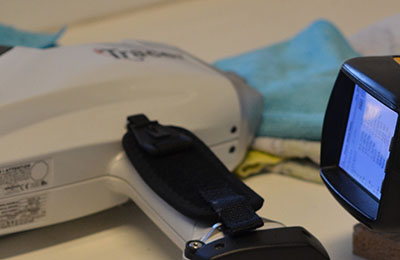
Starting in October 2023, VIAS will host for the next three years the FWF ESPRIT project “Standardising portable X-ray fluorescence for archaeometry” led by early career researcher Michaela Schauer. Having recently completed her award-winning doctoral thesis on Linearband and La Hoguette pottery at Ludwig-Maximilians-University Munich, she will now study p-XRF instruments and the specifics of their application to archaeological material with a focus on understanding the influence of different environmental conditions. An archaeologist by training, she has gained in-depth knowledge by applying this chemical analysis method mainly to pottery and soils in more than 30 projects over the past seven years. During this time she has encountered a wide range of unresolved issues relating to the equipment, its application to ancient ceramics, data processing and interpretation. Her research project focuses on experiments to improve our understanding of the former and to develop solutions to the latter, defining standards for the application of the method. Her results will be discussed within a network of experts who also contribute to the creation of appropriate training programmes for researchers and students interested in the method. She will introduce herself and her research in the HEAS Pecha Kucha Series in the upcoming weeks. Read more

Research Areas:
Read More
Vienna Institute for Archaeological Science (VIAS) Team Leaders

Michaela SCHAUER

I’m an archaeologist by training, specialised in the chemical analysis of archaeological and geological materials using portable X-ray fluorescence (p-XRF). Recently, I have finished my PhD on LBK and La Hoguette pottery at Ludwig-Maximilians-University (LMU) in Munich, and won the LMU Dissertations Prize of Faculty 9. With more than seven years of experience and over 30 p-XRF related research projects under my belt, I will now continue methodological R&D into the p-XRF technique at VIAS in the framework of a three-year FWF ESPRIT fellowship on “Standardising portable X-ray fluorescence for archaeometry”. My main focus will be on experiments to improve our understanding of instrument handling, particularly in relation to environmental conditions. I will also carry out a series of tests on their application to ancient pottery and sediments. I enjoy discussing methods and approaches, as well as being involved in pottery studies and projects around the world.

Read More
News

HEAS Member interviewed for Austria Innovativ Magazine

HEAS Member Karina Grömer was recently interviewed for the Austria Innovativ magazine on her work as a science mediator, experiences of the pandemic and what you should pay attention to as a science ambassador. The print version of this magazine was delivered to all participants at the Forum Alpbach in August 2023 . Read article (in German) here Austria Innovativ_Magazin Forum Alpbach

Research Areas:
Read More
Read More
Read More
The Austrian Academy of Sciences (ÖAW) Team Leaders

Kerstin KOWARIK

I am a prehistoric archaeologist and coordinator of the research group Prehistoric Identities at the Department of Prehistory & West Asian/Northeast African Archaeology at Austrian Archaeological Institute of the ÖAW. My research focuses on human-environment interaction, prehistoric dietary patterns, risk management and crisis and coping (natural hazards, physical stress), and Alpine archaeology. I enjoy working in interdisciplinary networks and am especially interested in and developing new innovative research frameworks using bioarchaeological and geoarchaeological approaches to gain new insights the living conditions of Europe’s Metal Ages communities.     Kerstin Kowarik Publications

Read More
Network Associates

Anne LE MAÎTRE

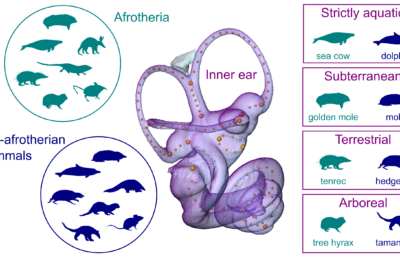
I am a post-doctoral researcher at the Department of Evolutionary Biology at the University of Vienna, and part of Philipp Mitteröcker's research group. Following a generalist training in natural sciences, including geosciences and palaeontology, I did a PhD in palaeoanthropology. I study the evolutionary processes underlying vertebrate morphology, particularly the primate skull, and I am currently working on different aspects of ear evolvability in mammals and birds. I am also interested in the development of morphometric and statistical methods, especially in relation to geometric morphometrics.

Read More
Read More
Publications

Impact of a recent wildfire on tortoises at Cape Point, South Africa, and implications for the interpretation of heated bones in the archaeological record

Stahlschmidt, M.C., Mentzer, S.M., Heinrich, S., Cooper, A., Grote, M.N., McNeill, P.J., Wilder, J.C.B., Steele, T.E., 2023. Impact of a recent wildfire on tortoises at Cape Point, South Africa, and implications for the interpretation of heated bones in the archaeological record. Archaeological and Anthropological Sciences 15, 126. read more

Research Areas:
Read More
News

HEAS Member Philipp Mitteroecker is the 2023 recipient of the Rohlf Medal for Excellence in Morphometric Methods and Applications 

On October 24, 2023 at Stony Brook University, the seventh Rohlf Medal for Excellence in Morphometric Methods and Applications will be awarded to Philipp Mitteroecker, Professor of Biostatistics and Biometrics in the Department of Evolutionary Biology at the University of Vienna, Austria. Since receiving his Ph.D. in 2007, Mitteroecker's research has spanned a remarkable range of today's biological questions from his broadly biostatistical-morphometric point of view. His contributions combine advances in the foundations of morphometric representations and inferences with applications across a great variety of examples in evolutionary and developmental biology. Recent work incorporates additional types of data (genomics, volume imaging, perceptions of faces) and, lately, one particularly salient bridge between human evolution and public health (the topic of Caesarian section and the "obstetrical dilemma''). His published work, widely cited in the field, and his appearances in broadcast and online media, have broadened the participation of morphometrics in the biological sciences. For these reasons, the committee has selected Professor Phillip Mitteroecker as the 2023 Rohlf Medal Recipient. Stony Brook University Provost's Lecture Series: Philipp Mitteroecker - YouTube

Research Areas:
Read More
Department of Evolutionary Anthropology (DEA) Team Leaders

Philipp MITTEROECKER

I am a theoretical biologist, anthropologist, and biostatistician in the Department of Evolutionary Biology at the University of Vienna. I have studied the development and evolution of human and primate anatomy, with medical applications to orthodontics and gynecology. I am particularly interested in the interaction of developmental, environmental, and evolutionary processes. Another current research focus is on human childbirth: an evolutionary conundrum involving biological, environmental, and sociocultural dynamics. My methodological work comprises contributions to geometric morphometrics, multivariate biostatistics, and quantitative genetics.    

Read More
Publications

Predictive use of modern reference osteological collections for disentangling the shape of Eurasian equid cheek teeth and metapodials in archaeological material

Mohaseb, A.F., Cornette, R., Zimmermann, M.I., Davoudi, H., Berthon, R., Guintard, C., Cucchi, T., Hanot, P., Mohandesan, E., Eisenmann, V., 2023. Predictive use of modern reference osteological collections for disentangling the shape of Eurasian equid cheek teeth and metapodials in archaeological material. International Journal of Osteoarchaeology. read more

Research Areas:
Read More
Read More
Publications

Body appreciation around the world: Measurement invariance of the Body Appreciation Scale-2 (BAS-2) across 65 nations, 40 languages, gender identities, and age.

Swami, V., Tran, U.S., Stieger, S., Aavik, T., Ranjbar, H.A., Adebayo, S.O., Afhami, R., Ahmed, O., Aimé, A., Akel, M., Halbusi, H.A., Alexias, G., Ali, K.F., Alp-Dal, N., Alsalhani, A.B., Álvares-Solas, S., Amaral, A.C.S., Andrianto, S., Aspden, T., Argyrides, M., Aruta, J.J.B.R., Atkin, S., Ayandele, O., Baceviciene, M., Bahbouh, R., Ballesio, A., Barron, D., Bellard, A., Bender, S.S., Beydağ, K.D., Birovljević, G., Blackburn, M.-È., Borja-Alvarez, T., Borowiec, J., Bozogáňová, M., Bratland-Sanda, S., Browning, M.H.E.M., Brytek-Matera, A., Burakova, M., Çakır-Koçak, Y., Camacho, P., Camilleri, V.E., Cazzato, V., Cerea, S., Chaiwutikornwanich, A., Chaleeraktrakoon, T., Chambers, T., Chen, Q.-W., Chen, X., Chien, C.-L., Chobthamkit, P., Choompunuch, B., Compte, E.J., Corrigan, J., Cosmas, G., Cowden, R.G., Czepczor-Bernat, K., Czub, M., da Silva, W.R., Dadfar, M., Dalley, S.E., Dany, L., Datu, J.A.D., Berbert de Carvalho, P.H., Coelho, G.L.d.H., De Jesus, A.O.S., Debbabi, S.H., Dhakal, S., Di Bernardo, F., Dimitrova, D.D., Dion, J., Dixson, B., Donofrio, S.M., Drysch, M., Du, H., Dzhambov, A.M., El-Jor, C., Enea, V., Eskin, M., Farbod, F., Farrugia, L., Fian, L., Fisher, M.L., Folwarczny, M., Frederick, D.A., Fuller-Tyszkiewicz, M., Furnham, A., García, A.A., Geller, S., Ghisi, M., Ghorbani, A., Martinez, M.A.G., Gradidge, S., Graf, S., Grano, C., Gyene, G., Hallit, S., Hamdan, M., Handelzalts, J.E., Hanel, P.H.P., Hawks, S.R., Hekmati, I., Helmy, M., Hill, T., Hina, F., Holenweger, G., Hřebíčková, M., Ijabadeniyi,…

Research Areas:
Read More