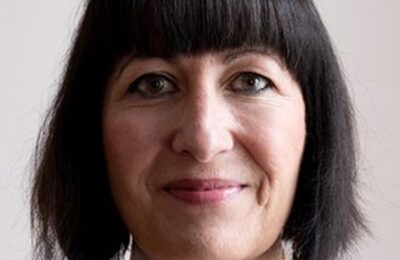
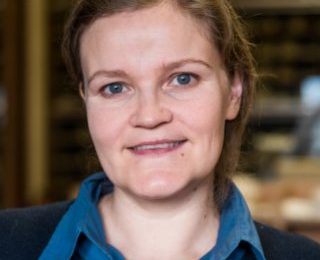
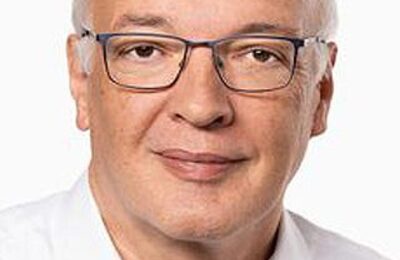
Department of Prehistoric and Historical Archaeology (IUHA) Team Leaders

Alexandra KRENN-LEEB

Since 1995 I have been teaching and researching as an archaeologist (assistant professor) at the Department of Prehistoric and Historical Archaeology at the University of Vienna on the Neolithic Period, Copper and especially the Bronze Age with a focus on social, environmental and landscape archaeological issues. As director of studies, I am responsible for the curricula and all study matters. My main research interests are identity, mobility & tradition of Bronze Age populations, human ecology of the Copper Age, deposits in the context of space and ritual, ritual violence, conflict archaeology.    

The Austrian Academy of Sciences (ÖAW) Team Leaders

Alexandra S. RODLER-RØRBO

I am an archaeological scientist at the Austrian Archaeological Institute of the Austrian Academy of Sciences with a PhD in Geosciences. My research focuses on the organization of ancient colorant networks in view of economic, political and technological changes, currently from late Bronze Age to late Antiquity in the Mediterranean, southwest Asia and Europe. This includes materials of various industries such as mineral pigments, glasses/glazes, metals, and earths, and includes geological fieldwork, experiments, and mineralogical/petrographic and geochemical analyses with a focus on mass spectrometry.  

The Austrian Academy of Sciences (ÖAW) Team Leaders

Alfred GALIK

Alfred Galik originally studied paleontology at the Univ. of Vienna. Since 2003 he has collaborated as a research associate at the institute for Anatomy at the Vetmed Univ Vienna. From 2012 to 2016 he was university assistant at the institute for Anatomy, histology and embryology at the Vetmed Univ Vienna with cooperations in numerous historical and prehistoric archaeozoological projects. He was awarded with the habilitation with the venia legendi “archaeozoology in veterinary medicine” in 2016. Since 2016 Alfred Galik is member of the ÖAI as academy scientist. His prime-interest lies on Archaeozoology, including archaeomalacology and ichthyoarchaeology, besides animal anatomy and osteology, palaeopathology, domestication and evolution research, morphometry and environmental history.

The Austrian Academy of Sciences (ÖAW) Team Leaders

Andreas G. HEISS

I am an archaeobotanist, holding a PhD in Biology from the University of Innsbruck. The primary focus of my research is the exploration of the interactions between human cultures and plants, with a particular emphasis on the history of agriculture and food cultures. My research interests also extend to a range of other topics, including but not limited to mining, dyeing, wood use, and ritual practices. Throughout the years of my professional life, I have participated in a considerable number of research projects across Europe and the Mediterranean region. These projects have played a pivotal role in the development of my expertise.   During my academic career I have had the privilege of teaching at three institutions: the University of Natural Resources and Applied Life Sciences, Vienna (BOKU), the University of Vienna, and the University of Applied Arts, Vienna. In 2012 I was honoured with the BOKU Teaching Award and in 2020 I received the Venia Docendi (habilitation) for Archaeobotany at the same university.   As a founding member of the Austrian Bioarchaeological Society (BAG) in 2015 and a current board member, I have been actively contributing to the development of zooarchaeology, archaeobotany, and biological anthropology in Austria. This experience has been both rewarding and fulfilling.   In 2016, I was awarded the opportunity to establish an Archaeobotany Laboratory at…

The Austrian Academy of Sciences (ÖAW) Team Leaders

Barbara HOREJS

Deputy Head

I am Professor for Prehistory and Scientific Director of the Austrian Archaeological Institute at the Austrian Academy of Sciences, where I am heading the Department for Prehistory & WANA Archaeology. My research focuses on late Pleistocene to Holocene phenomena in Southeast Europe and West Asia with excavations and geoarchaeological surveys to produce, analyse and model new primary data of early communities and their environmental contexts. I enjoy working with interdisciplinary teams of students, ECR’s and experts to gain new insights into neolithization, intensification & centralisation.    

Vienna Institute for Archaeological Science (VIAS) Team Leaders

Birgit BÜHLER

Birgit Bühler was educated at the University of Vienna, Austria (Pre- & Protohistoric Archaeology: M.A. in 1998, PhD in 2002; Evolutionary Anthropology: MSc in 2020), specializing in Early Medieval Archaeology. Since 2000, she has been employed (part-time) at Vienna Institute for Archaeological Science (VIAS), focusing on the technology of precious metalwork from prehistory to the Middle Ages.

Department of Palaeontology (PAL) Team Leaders

Doris NAGEL

Management Board

My research focuses on mammal evolution and ecological niche development especially in carnivorous animals. The different aspects include food preference (microwear methods), locomotion adaption and population development (in co-operation with Michael Hofreiter, DNA-lab, Univ. Potsdam and the Radiocarbon lab in Mannheim). Current projects focus on niche development of Miocene carnivores and climate adaptions of mammals in the Upper Pleistocene (Teufelslucke).

Department of Evolutionary Anthropology (DEA) Team Leaders

Elmira MOHANDESAN

I am a principal investigator at the Department of Evolutionary Anthropology (University of Vienna). My research interests mainly cover the topics related to population and conservation genomics, phylogenetics and animal domestication. Particularly, in my research group, we generate and analyze non-human paleogenomic data to address various evolutionary, and socio-cultural questions, many of which cannot be well-addressed by ancient DNA studies of humans alone. I have been working on ancient specimens from various species, such as human, cave bear, chimpanzee, iconic New Zealand Tuatara, Arabian camels and horses. In my current project, we are researching on the Palaeogenomics of Roman Equids, using a multidisciplinary approach.

Core Facility for Micro-Computed Tomography (Vienna Micro-CT Lab) Department of Evolutionary Anthropology (DEA) Team Leaders

Gerhard WEBER

Management Board

  I’m the head of the Department of Evolutionary Anthropology, the Vienna µCT Lab, and the research network “HEAS”. My interest is to get as much information as possible about functional morphology from fossils and osteological material. I contributed especially to the development of Virtual Anthropology and evolutionary research regarding modern humans and Neanderthals. Recently, I’m also concerned with applications in archaeology or orthodontics.

Vienna Institute for Archaeological Science (VIAS) Team Leaders

Günther Karl KUNST

Trained as a palaeontologist working on Ice-Age mammals, I made a change for the “younger stuff” with the founding of VIAS/IDEA in 1994. Since then, I have been involved in various excavation projects in Central Europe, Egypt and Turkey. I prefer excavation projects comprising  complicated archaeological situations, like multiphase buildings or settlements. Here, I like to collaborate with colleagues studying archaeological features and other find groups, especially pottery. I have been a lecturer for archaeozoology for almost three decades on various departments of the University of Vienna (Prehistory and Historic archaeology, Palaeontology, Anthropology). Special interests: taphonomy of buildings and complex settlements; butchery studies; relationships between animal bones and pottery remains

Research Areas:
Department of Evolutionary Anthropology (DEA) Team Leaders

Harald WILFING

A theoretical basis is of high importance in the fields of co-evolutionary theory and transition studies: Prof. Wilfing has gathered profound experience in epistemology, of which is mainly focused on theoretical biology. The main focus of the Work Group Human Ecology is currently on the topic: perspectives of sustainable development in industrialised societies and developing countries with special consideration of network research and the value action gap.

Research Areas:
Vienna Institute for Archaeological Science (VIAS) Team Leaders

Immo TRINKS

Deputy Head

I am a geophysicist interested in innovative research into efficient, high-resolution, geophysical prospection and digital documentation methods and their application to geosciences, archaeology and engineering problems. I am motivated by the potential of new techniques permitting the imaging of subsurface structures in unprecedented resolution, revealing hidden man-made and natural treasures. I enjoy sharing insights, findings and know-how with colleagues, students and the interested public.

Vienna Institute for Archaeological Science (VIAS) Team Leaders

Irmgard HEIN

Deputy director of VIAS, Egyptologist.  Research interests: Ceramic analysis and material culture.  Late Bronze Age, chronology and cultural interconnections in the Eastern Mediterranean. Development of archaeological methods. Ancient Egyptian Art. Fieldwork in Egypt (Tell el-Daba, Karnak North, and other sites). Principal investigator of the SFB SCIEM 2000, project Cyprus (1999-2011). Guest professor in Uppsala (Sweden) 2010-2013. Currently:  field work in Karnak/Egypt (cooperation IFAO).

Research Areas: ,
Department of Palaeontology (PAL) Team Leaders

Jürgen KRIWET

I am Professor of Palaeobiology and head of the Evolutionary Morphology Research Group at the Department of Palaeontology of the University of Vienna since September 2010. Prior to coming to Vienna I was curator at the Natural History Museum Berlin and State Museum of Natural History Stuttgart (Germany). My research is at the interface of palaeobiology and evolutionary developmental biology of vertebrates. For this I integrate living and fossil organisms, knowledge of their evolutionary relationships and past diversity patterns, and developmental biology, to provide a holistic understanding of their evolutionary history.

Natural History Museum Vienna (NHM) Team Leaders

Karina GRÖMER

I am the  head of the Department of Prehistory, Natural History Museum Vienna. As an archaeologist, I study the material culture of the Neolithic, Bronze and Iron Age in Central Europe, including theoretical aspects like identity, innovation and creativity, functional design theory, visual coding, design concepts, sociological and semiotic studies.  My focus research is on technological, economic and social aspects of  textiles with interdisciplinary research on artefacts from graves, settlements and saltmines, covering a timespan from 2500 BC till 1000 AD and a geographical area from Central Europe to Iran.. I have also the aim  to bridge gaps between research institutions (Universities, Academies) and cultural heritage institutions and am active in various dissemination activities.

Department of Evolutionary Anthropology (DEA) Team Leaders

Katerina DOUKA

I am an archaeological scientist interested in the development and application of analytical tools, in particularly chronometric and biomolecular methodologies, to archaeological and palaeoenvironmental investigations. I specialise in radiocarbon dating, and have extensive experience in sample collection, development of new protocols for decontaminating archaeological material, and the statistical interpretation of AMS results using Bayesian modelling. I am also interested in the application of biomolecular tools, such as collagen peptide fingerprinting (also known as ZooMS), to better understand the archaeological record.

The Austrian Academy of Sciences (ÖAW) Department of Prehistoric and Historical Archaeology (IUHA) Team Leaders

Katharina REBAY-SALISBURY

Deputy Head

Katharina Rebay-Salisbury is professor of Prehistory of Humanity at the University of Vienna and directs the research group ‘Prehistoric Identities’ at the Austrian Academy of Sciences. Enthusiastic about the European Bronze and Iron Ages, her research focusses on combining interdisciplinary approaches for insights into people’s lives, identities and social relations in prehistory. Her current research explores themes such as sex and gender, motherhood, kinship, mobility and migration through ERC and FWF-funded projects analyzing burial contexts and human remains from Central Europe.

Department of Evolutionary Anthropology (DEA) Team Leaders

Katrin SCHÄFER

We are specifically interested in the biological causes of facial shape variation and in the resulting social perception (both in children and adults). We study biological processes such as allometric, androgenic (current, and prenatal via 2D:4D) on (facial) morphology, and integrate concepts from evolutionary psychology and aesthetics to test evolutionary hypothesis in relation to mating system, fluctuating asymmetry, perceived attractiveness, sex stereotypes, overgeneralization, etc.  

Natural History Museum Vienna (NHM) Team Leaders

Katrin VOHLAND

Management Board

Dr. Katrin Vohland is Director General of the Naturhistorisches Museum Wien (NHM Vienna), Austria. Her main research interest is in the interface between science and different public audiences including policy. She develops Open Science strategically for the museum and beyond, including Citizen Science where she is active to employ integrative and reflective approaches.

The Austrian Academy of Sciences (ÖAW) Team Leaders

Kerstin KOWARIK

I am a prehistoric archaeologist and coordinator of the research group Prehistoric Identities at the Department of Prehistory & West Asian/Northeast African Archaeology at Austrian Archaeological Institute of the ÖAW. My research focuses on human-environment interaction, prehistoric dietary patterns, risk management and crisis and coping (natural hazards, physical stress), and Alpine archaeology. I enjoy working in interdisciplinary networks and am especially interested in and developing new innovative research frameworks using bioarchaeological and geoarchaeological approaches to gain new insights the living conditions of Europe’s Metal Ages communities.     Kerstin Kowarik Publications

The Austrian Academy of Sciences (ÖAW) Team Leaders

Laura DIETRICH

I am an archaeologist in the Department Prehistory and WANA Archaeology at the Austrian Archaeological Institute, and Associate Professor at the Free University of Berlin, Institute for Prehistoric Archaeology. I specialize in functional studies on stone tools and object biographies, with a focus on functional morphometric, use-wear and residue analyses, and experimental archaeology. My research focuses on Southwestern Asia to Central Europe, from Epipaleolithic to the Bronze Age, especially on the Neolithic and the process of the Neolithization.  

The Austrian Academy of Sciences (ÖAW) Team Leaders

Lyndelle WEBSTER

Based at the Department of Prehistory and WANA Archaeology at the Austrian Archaeological Institute, my research focuses on radiocarbon dating and soil micromorphology. Developing radiocarbon-based chronologies for Neolithic through Iron Age sites across a wide geographic area, from the Levant and Near East to Europe and the Balkans, has enabled me to contribute to key chronological debates. My current FWF ESPRIT project employs an integrated approach using soil micromorphology and other micro-scale techniques, as well as radiocarbon dating, to study earliest settlements along a major corridor for Neolithisation in the central Balkans.  

Department of Evolutionary Anthropology (DEA) Team Leaders

Mareike STAHLSCHMIDT

I am a geoarchaeologist and apply microscopic techniques to the sedimentary archaeological record. I view and analyze sediments, deposits and features as archives of paleoenvironments as well as of human behavior. I am particularly interested in how archaeological sites form and preserve over time, in the evolution of human use of fire and in archaeological sediments and speleothems as paleogenetic archives.  

The Austrian Academy of Sciences (ÖAW) Team Leaders

Mario GAVRANOVIĆ

Mario Gavranović is a prehistoric archeologist with research focus on Metal Ages in Europe and the Balkans in particular. He is Deputy Scientific Director of the Austrian Archaeological Institute at the Austrian Academy of Sciences, Department for Prehistory & WANA Archaeology and leader of the research group “Urnfield Culture Networks”.  In his projects, he explores the interactions, resource managements and burial practices of prehistoric communities by applying the fieldwork and interdisciplinary analytic approach. He is currently running several projects on metallurgy of Bronze Ages and copper distribution networks, radiocarbon dating of urn cemeteries and mobility patterns pf prehistoric groups in southeastern Europe.     Publications Mario Gavranović

Department of Prehistoric and Historical Archaeology (IUHA) Team Leaders

Marta LUCIANI

Marta Luciani is associate professor of Archaeology and History of Western Asia, spokesperson of the Cluster “Archaeology and Material Culture” of the Vienna Doctoral School of Historical and Cultural Studies and UNESCO world heritage list consultant. After heading excavations and surveys in Syria, Turkey and Italy, since the 2010s she directs the Joint Archaeological Project at Qurayyah in Saudi Arabia, the Northwest Sulaimaniyah Survey and excavations at Chemchemal in Iraqi Kurdistan and investigations on finds holdings of the Harvard Museum of the Ancient Near East (Tell el-Kheleifeh, Nuzi). As specialist of the Bronze and Iron Ages, passionate about human (as opposed to artificial) intelligence, she focuses her current research on investigating the formation of complex societies and urbanism in desert environments; through an FWF-funded interdisciplinary project (with OeAI/OeAW, TU Wien and University of Innsbruck) establishing with a multi-site approach ceramic production, use and circulation in NW Arabia and the Greater Levant; through metabolic analysis of ancient residues (with the Max Planck Institute of Geoanthropology) reconstructing ancient smellscapes and uses of medicinal and aromatic plants in the past; with BOKU, Wien, FU Berlin, DAI and OeAI/OeAW understanding human-nature (ancient fauna and flora) interplay in the genesis of anthropic landscapes, geomorphology and water resources in arid environments.

Department of Evolutionary Anthropology (DEA) Team Leaders

Martin FIEDER

Main research areas: evolutionary demography and behavior genetics. Martin Fieder investigates how our evolutionary heritage influences modern-day demographics, focusing on mating, social status and reproduction, as well as on the demographic causes of contemporary migration flows. In the field of behavioral genetics, he works on genetic predisposition and evolution of in-group vs. out-group attitudes, social status as well as homogamy, with a special attention on the evolution of religions. He mainly uses public demographic data, twin data, Genome Wide Association Studies and the Poly Genic Risk Score.

Department of Evolutionary Anthropology (DEA) Team Leaders

Martin KUHLWILM

Martin Kuhlwilm is a biologist and obtained a PhD working on population genomics of Neandertals at the MPI-EVA in Leipzig. As a postdoctoral researcher in Barcelona, he studied admixture in great apes. Currently, he is an Assistant Professor at the University of Vienna, with funding from the WWTF. His research involves computational approaches to study population history, particularly admixture between populations.

The Austrian Academy of Sciences (ÖAW) Team Leaders

Martin STESKAL

Management Board

Martin Steskal is Head of the Department of Historical Archaeology at the Austrian Archaeological Institute of the OeAW and Director of the excavations of Ephesos. He is a trained classical archaeologist with a research focus on Mediterranean archaeology. He has been studying the mortuary landscape and practices in Ephesos for many years and is trying to reconstruct the living environment of the inhabitants of one of the great ancient metropolises. His research includes archaeological, historical and scientific methods. In addition to his work at the OeAW, he is also a lecturer at the University of Vienna.  

Natural History Museum Vienna (NHM) Team Leaders

Mathias HARZHAUSER

I’m the head of the Geological-Paleontological Department of the Natural History Museum Vienna. My research deals with the paleogeography and the biotic development of the circum-Mediterranean Region and the early Indo-Pacific during the Cenozoic Era with strong focus on integrated stratigraphy. My main taxonomic tool to tackle these questions are marine and terrestrial molluscs. In addition, I’m very active in the popularization of science.  

Vienna Institute for Archaeological Science (VIAS) Team Leaders

Mathias MEHOFER

Since the year 2000 I have been head of the archaeometallurgical laboratory at the Vienna Institute for Archaeological Science/University Vienna.My research focus lies on the: Bronze Age Archaeology, Iron Age Archaeology, Medieval Ages, Experimental Archaeology, Mining Archaeology, metallurgy of copper, bronze and precious metals, metallurgy of iron, tool mark analyses, use wear analyses on bronze objects, analyses with the scanning electron microscope (SEM-EDS)

Research Areas:
The Austrian Academy of Sciences (ÖAW) Team Leaders

Michael BRANDL

I am a Prehistoric archaeologist, geo-scientist and coordinator of the Archaeological Sciences at the Austrian Archaeological Institute of the ÖAW. My research focusses on lithic raw material economy and questions relating to past human behaviour. For this task, I develop innovative protocols for provenance analyses of lithic raw materials and economic models. My geographical and chronological frame is broadly laid out to achieve a large comparative database and enable intercultural comparisons. Consequently, I am involved in extended international research networks and pursue the promotion of young scholars.   Publications Michael Brandl

Department of Prehistoric and Historical Archaeology (IUHA) Team Leaders

Michael DONEUS

Michael Doneus is professor for landscape archaeology and Head of the Department of Prehistoric and Historical Archaeology of the University of Vienna. He is specialized in archaeological prospection with a focus on methodological development of remote sensing techniques and integrated data interpretation. He was director of the Vienna Institute for Archaeological Science (2012-2013) and deputy director of the Ludwig Boltzmann Institute for Archaeological Prospection and Virtual Archaeology (2010-2017).

Vienna Institute for Archaeological Science (VIAS) Team Leaders

Michaela SCHAUER

I’m an archaeologist by training, specialised in the chemical analysis of archaeological and geological materials using portable X-ray fluorescence (p-XRF). Recently, I have finished my PhD on LBK and La Hoguette pottery at Ludwig-Maximilians-University (LMU) in Munich, and won the LMU Dissertations Prize of Faculty 9. With more than seven years of experience and over 30 p-XRF related research projects under my belt, I will now continue methodological R&D into the p-XRF technique at VIAS in the framework of a three-year FWF ESPRIT fellowship on “Standardising portable X-ray fluorescence for archaeometry”. My main focus will be on experiments to improve our understanding of instrument handling, particularly in relation to environmental conditions. I will also carry out a series of tests on their application to ancient pottery and sediments. I enjoy discussing methods and approaches, as well as being involved in pottery studies and projects around the world.

Department of Prehistoric and Historical Archaeology (IUHA) Team Leaders

Naoíse MAC SWEENEY

My research focuses on the ancient Greek world and Anatolia, and I am particularly interested in questions concerning migration, mobility, and cultural interaction. My current project (https://www.migmag-erc.eu/) investigates how multi-scalar mobilities contributed to the formation of ancient Greek communities in the first millennium BCE, comparing narrative of migration with evidence from landscape survey for population circulation and regional mobilities. I am working on a project to develop mew digital approaches to modelling regional mobilities using environmental, archaeological, and historical data. Since 2020 I have been a Professor of Classical Archaeology (Greek) at the University of Vienna.

Vienna Institute for Archaeological Science (VIAS) Team Leaders

Nives DONEUS

I am an archaeologist at the Vienna Institute for Archaeological Sciences (VIAS) focusing on the archaeological prospection of Roman landscapes. The joint interpretation of data from different prospection techniques makes it possible to go beyond the archaeological sites to record landscape history and trace the many facets of human life. The diachronic investigation of human land use is particularly exciting here, as it shows the interaction between humans and the environment, in particular the modification of the natural environment to meet the needs of habitation, infrastructure or agriculture.    

The Austrian Academy of Sciences (ÖAW) Team Leaders

Pamela FRAGNOLI

I am an archaeometrist with a degree in Archaeological Sciences and a PhD in Archaeology. As ceramic specialist I am involved in various projects in the pre- and historical Mediterranean and South-Western Asia. My research focuses on the study of craft organization in relation to cultural, economic and political changes. As supervisor of early-career scientists I expanded my expertise to pigment, brick, mortar and glass analyses. Currently, I am head of the Research Group “Object Itineraries” and part of the core team of the Research Infrastructure “Heritage Sciences” at the OeAI as well as lecturer at the University of Vienna.

Department of Evolutionary Anthropology (DEA) Team Leaders

Pere GELABERT

I am a Researcher in paleogenomics focusing on the study of genetic data from different sources. I am primarily interested in analyzing genomic data from past environments or populations that can be co-analyzed together with other disciplines to answer questions linked to cultural evolution and health status assessment of ancient populations. I am currently working on projects related to past microbiomes and populations as well on the analysis of ancient environmental genomic data of human-related environments

Department of Prehistoric and Historical Archaeology (IUHA) Team Leaders

Peter C. RAMSL

Peter C. Ramsl (Priv. Doz., Mag. Dr.) is university assistant specialising in the European Iron Age and is currently leading the FWF project ‘Celts Across The Alps’ (CATA). His research on the European Iron Ages focusses on the identities and social relationships of people, their mobility and possible migrations as well as dietary habits. This is achieved through a combination of interdisciplinary methodological approaches. Current research is also focussing on insights into social and biological gender and the effects of violence and war on societies. As part of the current FWF project, he and his research team are analysing the relationships between La Tène cemeteries from the Traisen valley in Lower Austria and those from northern Italy near Bologna and Mantova. Another interest is landscape archaeology, focussing on the use of the various landscapes of the Iron Age.  

Vienna Environmental Research Accelerator (VERA) Team Leaders

Peter STEIER  

Peter Steier is assistant professor at the Faculty of Physics and member of the research group Isotope Physics. Working with accelerator mass spectrometry (AMS) techniques he is interested in very heavy ions (actinides), time-of-flight detectors, energy loss and straggling, isobar identification, the 14C dating for archaeology, and application of Bayesian statistics to calibration.

Department of Prehistoric and Historical Archaeology (IUHA) Team Leaders

Philip R. NIGST

Philip R Nigst is a Palaeolithic archaeologist with an enthusiasm for fieldwork. His research covers the archaeology of human evolution and focuses currently on Neanderthal and modern human behaviour and adaptations in Central and Eastern Europe. Philip’s key research themes include the ecology of Neanderthal and modern human technological organisation, mobility, horizontal cultural transmission, lithic technology, chronostratigraphy, use of space and site formation processes at Neanderthal and modern human sites in western Eurasia. He is currently engaged in field projects focussing on Neanderthal and modern human adaptations in Central and Eastern Europe.