
Network Associates Department of Evolutionary Anthropology (DEA)

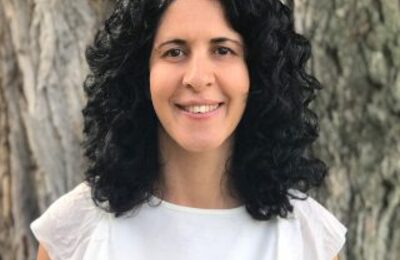
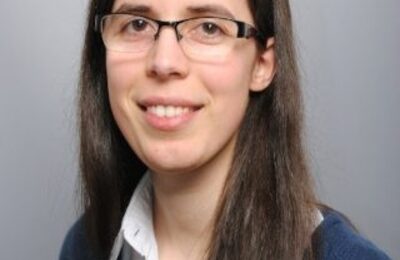
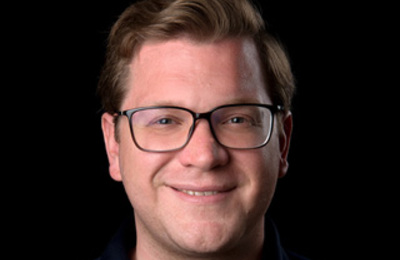
Verena SCHÜNEMANN

My research is centered around ancient DNA retrieved from a wide range of samples to better understand pathogen-host-environment interactions across time and to trace back the evolutionary history of pathogens. Furthermore, I also work on ancient genomics of domesticated plants and animals from various time periods as well as on ancient microbiomes.    

Research Areas:
Read More
Read More
Department of Evolutionary Anthropology (DEA) Members

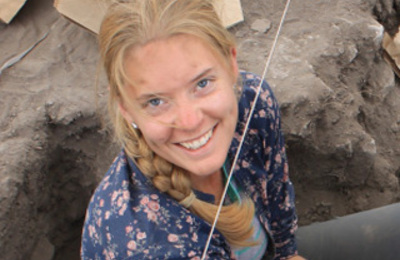
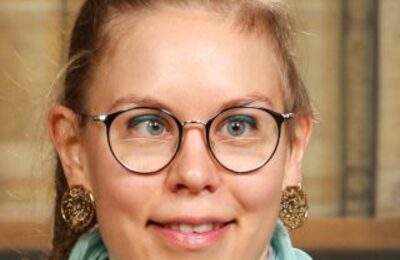
Victoria OBERREITER

I have completed my master’s program in Evolutionary Anthropology at the University of Vienna and I am currently a PhD student in Ron Pinhasi’s group. My research is part of the research platform MINERVA (Mineralogical Preservation of the Human Biome) which studies the interactions of ancient DNA (aDNA) with and protection by diverse mineral phases. I am currently specializing in extracting aDNA from archeological sediments with a specific focus on paleolithic cave sites. The obtained metagenomic data allow me to study human population history and occupations even at sites lacking human remains.  

Research Areas: ,
Read More
The Austrian Academy of Sciences (ÖAW) Members

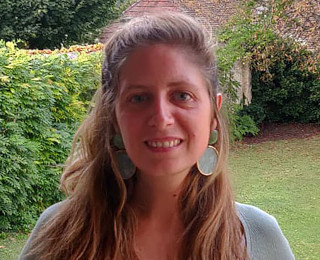
Viola SCHMID

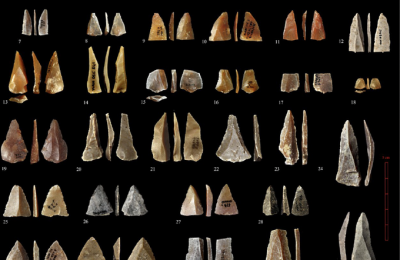
I am a postdoctoral researcher in the research group Quaternary Archaeology at the Department of Prehistory & West Asian/Northeast African Archaeology of the Austrian Archaeological Institute of the Austrian Academy of Sciences. Since my master’s, I focus on lithic technological developments in the southern African Stone Age. In 2019, I finished my PhD on the C-A layers of Sibhudu Cave (KwaZulu-Natal, South Africa) in the light of the MSA lithic technologies in MIS 5 with "magna cum laude" in a joint doctoral programme at the Universities of Tübingen and Paris Nanterre. I started my Hertha Firnberg project ‘Time of essential changes in human history (TECH)’ in October 2022. The project concerns the analysis of lithic assemblages from three quasi-synchronous sites, Sibhudu Cave, Bushman Rock Shelter, and Rose Cottage Cave, in different biomes of South Africa. My aim is to gain a better understanding of the lithic technology, innovativeness and connectedness of past societies in South Africa during Marine Isotope Stage 5.    

Read More
Read More
Press

What impact did extreme climate change have on life during the last Ice Age?

We warmly congratulate our colleague Marjolein D. Bosch on her newly acquired ERC Starting Grant. Her COPE project will investigate the influence of climatic changes on human behaviour during the last Ice Age. The onset of the Last Glacial Maximum (LGM) 30–25,000 years ago was marked by extreme climate fluctuations in Europe. Nevertheless, people lived near glaciers and adapted their behaviour to the harsh living conditions. As part of the ERC Starting Grant project entitled »The role of climate change on past human living conditions: Resource acquisition strategies and landscape use in eastern Central Europe from the Gravettian Golden Age to the Last Glacial Maximum« (COPE), Marjolein D. Bosch will now investigate the challenges faced by Ice Age hunter-gatherer groups. For example, which animals and plants humans used when resources became more and more scarce and what strategies they developed to survive in such an extreme climate. Material for the planned analyses comes from the Grub-Kranawetberg I and II sites in Lower Austria. These sites offer exceptionally well-preserved organic remains from the period leading up to the Last Glacial Maximum. Using the latest methods in the fields of sediment biomarkers, stable isotope analysis and palaeogenetics, COPE will reconstruct the local environmental conditions in terms of palaeotemperatures, plant vegetation and prey availability in the landscape. A new focus is on water…

Read More
Read More

Publications

Where are the Roman women of Ovilava? A spatio-temporal approach to interpret the female deficit at the eastern Roman cemetery (Gräberfeld Ost) of Ovilava, Austria

Hagmann, D., Ankerl, B., Greisinger, M., Miglbauer, R., Kirchengast, S., 2023. Where are the Roman women of Ovilava? A spatio-temporal approach to interpret the female deficit at the eastern Roman cemetery (Gräberfeld Ost) of Ovilava, Austria. Anthropological Review 86, 89-118. read more

Research Areas:
Read More
Read More
News Allgemein

Women in Prehistory talk by HEAS Members

Katharina Rebay-Salisbury and Barbara Horejs are organizing the opening of the Archaeo-Sexism exhibition on the 6th March with a talk on “Women in Prehistory” (in German) The exhibition will be on for two weeks: https://uha.univie.ac.at/news-events/ausstellung-archaeo-sexismus/ More information: https://uha.univie.ac.at/news-events/einzelseite/news/weltfrauentag-frauen-in-der-urgeschichte/        

Research Areas:
Read More
Department of Evolutionary Anthropology (DEA) Members

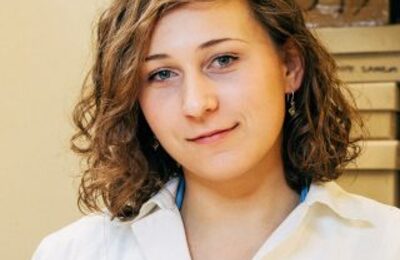
Xin HUANG

I am an evolutionary biologist and has been working on method development for solving different problems with population genomic data, including detecting positive selection, estimating strength of natural selection, quantifying time-varying selective pressures, inferring the distribution of fitness effects, and detecting archaic admixture. I will continue to investigate many other interesting topics in the future.

Read More
Blog Posts

You, Robot: Experiencing Robotics First-Hand at General Laser

By: Dominik Hagmann As part of the University of Vienna's course “AI and Interdisciplinary Research” held at the Department of Evolutionary Anthropology in the summer term of 2025, students from diverse academic fields participated in a hands-on robotics workshop and explored cutting-edge robotics at General Laser in Vienna. From humanoid robotic agents to agile robot dogs, the hands-on workshop illustrated vividly how artificial intelligence (AI) and automation shape both tomorrow’s industry and future research. Setting the Scene: From Myth to Machine Long before AI emerged as a formal scientific discipline, the idea of creating artificial beings fascinated the human imagination. For instance, Greek mythology introduced automata—self-moving devices—already during the first half of the 1st millennium BCE. According to some myths, the smithing god Hephaistos, for example, provided King Alcinoos with “robotic watchdogs” crafted from gold and silver. Furthermore, the deity created Talos, a humanoid “lethal autonomous weapon system” made from bronze, for King Midas to guard the island of Crete. Aside from several further examples, these two cases already comprehensively illustrate how deeply rooted complex visions of intelligent, artificial beings are in human thought. The term robot itself originates from the Czech word robota ("forced labor"), first coined in Karel Čapek’s 1920 play R.U.R. (Rossum’s Universal Robots), foreseeing a world where artificial workers ultimately rise against their human creators. Today,…

Read More