Department of Evolutionary Anthropology (DEA) Members

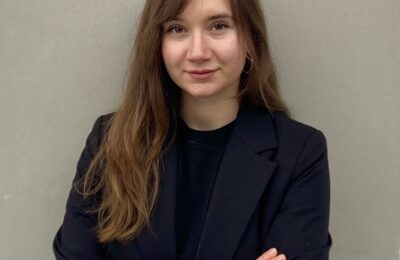
Aigerim RYMBEKOVA

I am a biologist and obtained a Master degree working on population genomics of multiple species including horses, dogs and date palms at University of Bologna. Currently, I am a PhD student in Computational Admixture Genomics group at the University of Vienna. My research interests involve computational approaches to study population history in humans and great apes, particularly admixture between populations.

Read More
Department of Prehistoric and Historical Archaeology (IUHA) Team Leaders

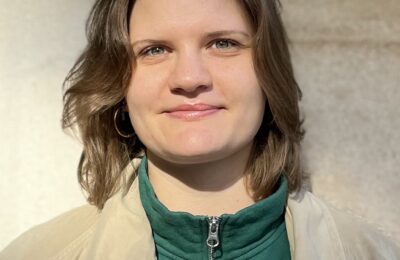
Alexandra KRENN-LEEB

Since 1995 I have been teaching and researching as an archaeologist (assistant professor) at the Department of Prehistoric and Historical Archaeology at the University of Vienna on the Neolithic Period, Copper and especially the Bronze Age with a focus on social, environmental and landscape archaeological issues. As director of studies, I am responsible for the curricula and all study matters. My main research interests are identity, mobility & tradition of Bronze Age populations, human ecology of the Copper Age, deposits in the context of space and ritual, ritual violence, conflict archaeology.    

Read More
The Austrian Academy of Sciences (ÖAW) Team Leaders

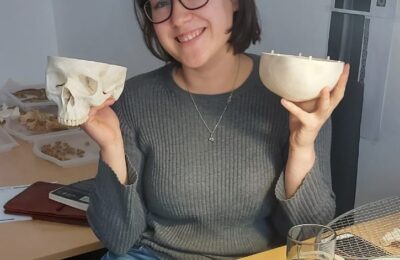
Alexandra S. RODLER-RØRBO

I am an archaeological scientist at the Austrian Archaeological Institute of the Austrian Academy of Sciences with a PhD in Geosciences. My research focuses on the organization of ancient colorant networks in view of economic, political and technological changes, currently from late Bronze Age to late Antiquity in the Mediterranean, southwest Asia and Europe. This includes materials of various industries such as mineral pigments, glasses/glazes, metals, and earths, and includes geological fieldwork, experiments, and mineralogical/petrographic and geochemical analyses with a focus on mass spectrometry.  

Read More
The Austrian Academy of Sciences (ÖAW) Team Leaders

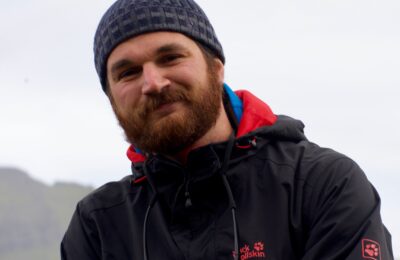
Alfred GALIK

Alfred Galik originally studied paleontology at the Univ. of Vienna. Since 2003 he has collaborated as a research associate at the institute for Anatomy at the Vetmed Univ Vienna. From 2012 to 2016 he was university assistant at the institute for Anatomy, histology and embryology at the Vetmed Univ Vienna with cooperations in numerous historical and prehistoric archaeozoological projects. He was awarded with the habilitation with the venia legendi “archaeozoology in veterinary medicine” in 2016. Since 2016 Alfred Galik is member of the ÖAI as academy scientist. His prime-interest lies on Archaeozoology, including archaeomalacology and ichthyoarchaeology, besides animal anatomy and osteology, palaeopathology, domestication and evolution research, morphometry and environmental history.

Read More
The Austrian Academy of Sciences (ÖAW) Department of Prehistoric and Historical Archaeology (IUHA) Members

Ana M. HERRERO CORRAL

Dr. Ana M. Herrero Corral is a Marie-Curie postdoctoral researcher at the Department of Prehistory and WANA Archaeology, of the Austrian Archaeological Institute. She has a master's degree in Physical Anthropology and a PhD in Prehistory from Universidad Complutense de Madrid (Spain). Her main research focuses on the social role that children of recent prehistory would have within their communities through the bioarchaeological analysis of the funerary record. During her Marie-Curie project she will explore biological and non-biological kinship relationships between children and adults buried together in multiple graves of recent prehistory Iberia. Since 2017 has been part of the Humanejos research project, one of the most important cemeteries of the III and II millennium BC in Iberia, financed by the Spanish Ministry of Culture. Out of an output of over 30 academic publications, those more relevant include: Herrero et al. 2019 The Inheritors: Bell Beaker Children’s Tombs in Iberia and their Social Context, Cintas and Herrero 2020 Missing prehistoric women? Sex ratio as an indicator for analyzing the population of Iberia from the 8th to the 3rd millennia B.C, or the recently published book (Herrero 2022) Bioarchaeological analysis of child burials from the III and II millennium BC in the upper and middle basins of the Tagus.

Read More
Department of Evolutionary Anthropology (DEA) Members

Anastasia PAPADOGIANNI

I am a PhD candidate in the Department of Evolutionary Anthropology at the University of Vienna, working under the supervision of Katerina Douka (University of Vienna) and Barbara Horejs (Austrian Academy of Sciences). I received my BA in Archaeology and Art History from the National and Kapodistrian University of Athens, Greece and my MSc in Archaeological Science from the University of Oxford, UK. My research interests lie in bioarchaeology and biomolecular archaeology (especially palaeoproteomics), for the study of palaeodiet, disease prevalence, and population mobility, mostly in prehistoric contexts. Throughout my studies, I have gained experience both in field and laboratory settings, which I enjoy equally, and I have been trained in the application of various analytical techniques applied on archaeological remains. For my PhD, my research focuses on the study of the emergence of the Neolithic way of life in the Greek peninsula and the Aegean, as well as the broader region of the Balkans. With the application of a multimethod approach on skeletal remains, combining traditional (14C dating, isotopic analyses) and cutting-edge biomolecular methods (palaeoproteomics on dental calculus, ZooMS), my PhD will contribute to the investigation of questions concerning the timing, processes and impact of the Neolithisation processes and the different models of diffusion of the Neolithic across Greece and further afield.    

Read More
The Austrian Academy of Sciences (ÖAW) Members

Andrea MEJIA ACEVEDO

I am a PhD student at the University of Vienna, and I currently work for my project at the Austrian Archaeological Institute of the OeAW. I have a Bachelors degree in Chemistry from the National Autonomous University of Mexico, and an Erasmus Mundus Masters in Archaeological Material Sciences. My PhD research focuses on the study of ancient pigment provenance and production in the Mediterranean during the Hellenistic and Roman periods.

Read More
The Austrian Academy of Sciences (ÖAW) Team Leaders

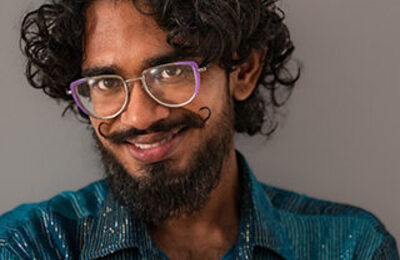
Andreas G. HEISS

I am an archaeobotanist, holding a PhD in Biology from the University of Innsbruck. The primary focus of my research is the exploration of the interactions between human cultures and plants, with a particular emphasis on the history of agriculture and food cultures. My research interests also extend to a range of other topics, including but not limited to mining, dyeing, wood use, and ritual practices. Throughout the years of my professional life, I have participated in a considerable number of research projects across Europe and the Mediterranean region. These projects have played a pivotal role in the development of my expertise.   During my academic career I have had the privilege of teaching at three institutions: the University of Natural Resources and Applied Life Sciences, Vienna (BOKU), the University of Vienna, and the University of Applied Arts, Vienna. In 2012 I was honoured with the BOKU Teaching Award and in 2020 I received the Venia Docendi (habilitation) for Archaeobotany at the same university.   As a founding member of the Austrian Bioarchaeological Society (BAG) in 2015 and a current board member, I have been actively contributing to the development of zooarchaeology, archaeobotany, and biological anthropology in Austria. This experience has been both rewarding and fulfilling.   In 2016, I was awarded the opportunity to establish an Archaeobotany Laboratory at…
Read More
Department of Evolutionary Anthropology (DEA) Members

Annette OERTLE

I am a postdoctoral fellow with the Douka Palaeoproteomics and ZooMS laboratory in the Department of Evolutionary Anthropology at the University of Vienna. As an archaeological scientist (zooarchaeologist) I specialise in collagen peptide fingerprinting (ZooMS) and archaeomalacology. My research interests lie in tropical, coastal and island archaeology with particular focus on Australia, the Pacific Islands and Island South East Asia (ISEA). I am interested in questions regarding human evolution, changes in subsistence behaviours, and site formation processes. I completed my PhD in 2019 from the University of Sydney, Australia, and was a postdoctoral researcher on the ERC FINDER project based at the Max Planck Institute SHH Jena, Germany. I am currently a Marie-Skłodowska Curie Postdoctoral Fellow leading project DENI-CESTOR (DENIsovan anCESTORs in Sahul: deciphering human evolution through molecular techniques) and PI on a Leaking Foundation Grant (Using ZooMS to identify new human fossils in archaeological deposits in Papua New Guinea). Marie-Skłodowska Curie Postdoctoral Fellow (2022-2024) Principal Investigator: Leakey Foundation Grant (2022-2023)

Read More
Department of Evolutionary Anthropology (DEA) Members Allgemein

Arne BIELKE

After I started studying biology at Leibniz University Hannover, I developed an interest in population genetics, conservation genetics, and ecology. Driven this passion, I pursued my education in evolutionary systems biology at the University of Vienna. For my master's thesis, I focused on recurrent ecotype formation of an alpine plant. I conducted a comprehensive analysis of smRNA profiles from reciprocally transplanted individuals and those grown in a common garden. Currently, for my PhD, my research focuses on New Zealand feral horses. Through bioinformatic and comparative population genomics, my goal is to provide science- based insights for future conservation management plans. This endeavor aims to preserve the historical and cultural heritage of New Zealand's European settlers through studying their horses, as human history has always shaped and been shaped by the history of our livestock’s.

Read More
The Austrian Academy of Sciences (ÖAW) Team Leaders

Barbara HOREJS

Deputy Head

I am Professor for Prehistory and Scientific Director of the Austrian Archaeological Institute at the Austrian Academy of Sciences, where I am heading the Department for Prehistory & WANA Archaeology. My research focuses on late Pleistocene to Holocene phenomena in Southeast Europe and West Asia with excavations and geoarchaeological surveys to produce, analyse and model new primary data of early communities and their environmental contexts. I enjoy working with interdisciplinary teams of students, ECR’s and experts to gain new insights into neolithization, intensification & centralisation.    

Read More
Department of Evolutionary Anthropology (DEA) Members

Bernhard FINK

Bernhard Fink received his PhD in Biological Anthropology from the University of Vienna (Austria). He then moved to the University of Göttingen (Germany) where he held prestigious grants from the German Science Foundation (DFG) to investigate the social perception of human facial/body morphology and body movements, such as dance and gait. His work comprises the study of cross-cultural similarities and differences in human social perception, including research in pre-industrialized (small-scale) societies. Bernhard has worked extensively on digit ratio (2D:4D), a supposed proxy for prenatal androgenization. Together with John Manning (Swansea University), he examines 2D:4D relationships with sex-dependent traits across nations in a large sample from the BBC internet study.

Read More
Vienna Institute for Archaeological Science (VIAS) Team Leaders

Birgit BÜHLER

Birgit Bühler was educated at the University of Vienna, Austria (Pre- & Protohistoric Archaeology: M.A. in 1998, PhD in 2002; Evolutionary Anthropology: MSc in 2020), specializing in Early Medieval Archaeology. Since 2000, she has been employed (part-time) at Vienna Institute for Archaeological Science (VIAS), focusing on the technology of precious metalwork from prehistory to the Middle Ages.

Read More
Department of Evolutionary Anthropology (DEA) Vienna Institute for Archaeological Science (VIAS) Members

Brina ZAGORC

I am an archaeologist and currently a PhD student in Ron Pinhasi's Lab group. My research areas include studying relationships between and within past societies, and I am especially interested in the field of bioarchaeology of children. The main focus of my PhD project is to observe sex-specific variations in subadult health status during Antiquity and Early Medieval times. My work includes aDNA analysis and other bioarchaeological methods where I compare the occurrence of physiological stress indicators, and other paleopathological indicators of bad health, in relation to the biological sex of the studied individuals. This will help me address questions on upbringing, weaning patterns, and overall health of the subadult population in the past.

Read More
Department of Evolutionary Anthropology (DEA) Members

Carla GÓMEZ MONTES

I am a PhD candidate jointly enrolled in the Department of Evolutionary Anthropology at the University of Vienna and the History and Geography PhD program at the University of Cantabria. My supervisors are Pere Gelabert (University of Vienna) and Ana B. Marín Arroyo (University of Cantabria). I hold a Bachelor’s degree in History and a Master’s degree in Prehistory and Archaeology, both from the University of Cantabria. My master’s thesis aimed to try refine the chronology of the Gravettian occupation at Altamira and to investigate the subsistence strategies of the earliest human groups in the site through the study of bioarchaeological remains. I am currently part of the BEAM Lab and the ERC project SHADOWS. Specifically, my field of research during the development of this project will be archaeozoology, a discipline in which I will focus mainly on two aspects: the taphonomic study of bone remains and the application of the ZooMS technique for proteomic analysis in bioarchaeological materials from sites in northern Spain and South-East France. I am also part of the EvoAdapta research group at the University of Cantabria. By combining proteomic approaches (ZooMS) with archaeozoological and taphonomic analyses, the project improves taxonomic identification of non-diagnostic faunal remains. This integrative framework enables a refined reconstruction of human-animal relationship seeking to widen the knowledge about human–carnivore dynamics, offering new…

Read More
The Austrian Academy of Sciences (ÖAW) Members

Caroline PARTIOT

I am a biological anthropologist and archaeo-anthropologist, currently a postdoctoral researcher at the Austrian Archaeological Institute of the Austrian Academy of Sciences. I hold a PhD in Biological Anthropology from the University of Bordeaux (France), as well as a Master’s degree in Biological Anthropology from the University of Bordeaux and a Master’s degree in Egyptology from Sorbonne University (Paris IV). My research focuses particularly on the life course (vitality at birth, paleopathology, stress) and the social status of children in the past through osteobiographical analysis, as well as on the study of burial practices through archaeothanatology. I work on a wide range of chrono-cultural contexts, from the Upper Paleolithic to the Modern period, both in the laboratory and in the field. This includes the Byzantine period in Ephesos (Turkey), Late Antiquity in Carinthia, Punic Carthage, the medieval period in southwestern France, pre-contact Amerindian Caribbean populations in Guadeloupe, and the Kerma period in Sudan. I am the founder of the ARTHA network, which focuses on developing archaeothanatology in Central Europe.    

Read More
Natural History Museum Vienna (NHM) Members

Caroline POSCH

Caroline Posch is a post-doctoral researcher and curator of the Stone Age Collection at the Prehistoric Department of the Natural History Museum Vienna (NHMW). She is specialised on the material culture and settlement strategies of the Alpine Mesolithic, with focus on landscape usage, raw material procurement strategies and lithic technology. Since 2022 she is a staff member of the NHMW. In her work, she focusses on the one hand on the curational practice as well as the scientific evaluation and study of various artefact types from the Palaeolithic, Mesolithic and Early Neolithic, including objects such as the Venus of Willendorf. One the other hand she is involved in several research projects centred on the first use and settlement of the Austrian Alps during the Late Pleistocene and Early Holocene.    

Read More
Department of Evolutionary Anthropology (DEA) Members

Cinzia FORNAI

I am an evolutionary anthropologist and morphometrician by training, with consolidated experience in Dental Anthropology. Over the course of my PhD program in Biology through the Department of Evolutionary Anthropology, University of Vienna (concluded in 2015), I have specialized in the use of virtual image techniques and geometric morphometrics for the exploration of hominin dental variation (http://othes.univie.ac.at/38865/1/2015-07-11_0963308.pdf). My postdoctoral research through the within the Evolutionary Morphology group of the Institute of Evolutionary Medicine, University of Zurich, focused on the evolutionary aspects of human birth and the investigation of the pelvis in hominoids. Currently affiliated with the Department of Evolutionary Anthropology, I continue research in Dental Anthropology, while being the scientific coordinator of the Vienna School of Interdisciplinary Dentistry www.viesid.com, where I focus on topics relevant to oral medicine such as functional morphology of the stomatognathic system and its clinical implications.

Read More
Department of Evolutionary Anthropology (DEA) Members

Constanze SCHATTKE

Constanze Schattke is a bioarchaeologist who studied biology and evolutionary anthropology in Kiel, Mainz, and Vienna. Her professional expertise includes ancient DNA and paleopathologies as well as the history of anthropology. Her current research focus is on the interconnection of different fields such as history and bioarchaeology to study the provenance of human remains in osteological collections. Here, she has worked together closely with communities from New Zealand and Tierra del Fuego, Chile. One of her main objectives is to help strengthen Indigenous’ identities through the careful study and analysis of ancestral human remains. Since 2021, Constanze is a PhD student in the Vienna Doctoral School of Ecology and Evolution. Her interdisciplinary dissertation focuses on different contexts of violence found in osteological museum collections at the Natural History Museum Vienna, Department of Anthropology. Here she will combine bioarchaeological and forensic methods with historical approaches to create a comprehensive picture of collections with diverse provenance. To that end, she also looks at what constitutes a museum object, how human remains fall into that category, and how to deal with such legacies in a conscious and responsible manner.

Read More
Department of Evolutionary Anthropology (DEA) Members

Corentin DEPPE

I am currently a PhD student in the Department of Evolutionary Anthropology at the University of Vienna. My academic background is in Ecology and Evolution, with a focus on palaeoecology. For my master’s thesis, I applied ancient DNA approaches to study population genomics in mussels. As a member of Pere Gelabert’s team within the ERC project, SHADOWS, which investigates human-carnivore interactions during the Upper Palaeolithic in several sites across Cantabria. My research focuses on the paleogenomics of the last megafaunal carnivore populations of the region, aiming to better understand their genetic diversity, evolutionary history, and relationship with humans.

Read More
Department of Evolutionary Anthropology (DEA) Members

Dominik HAGMANN

Dominik Hagmann is currently working on several projects, primarily focusing on Roman archaeology in Austria, and is a lecturer at the Department of Evolutionary Anthropology (University of Vienna). Since 2023, Dominik has been a principal investigator in the ÖAW-funded Go!Digital 3.0 long-term-archiving project IUENNA at the kärnten.museum, together with his colleague Franziska Reiner (ÖAI). In 2022, he obtained a Ph.D. degree (with honors) from the University of Vienna (Doctoral School for Cultural and Historical Studies) on his thesis "Roman Rural Landscapes in Noricum. Archaeological Studies on Roman Settlements in the Hinterland of Northern Noricum." As an archaeologist, Dominik focuses on Roman studies in terms of settlement and landscape archaeology in the Danube Basin, implementing state-of-the-art digital and interdisciplinary methods in his research. He participated in numerous field campaigns in Central and Southern Europe and the Middle East during third-party-funded international and national research projects.

Read More
Department of Prehistoric and Historical Archaeology (IUHA) Members

Domnika VERDIANU

I am a bioarchaeologist and currently a university assistant (predoctoral researcher) in the Department of Prehistory and Historical Archaeology at the University of Vienna. Since 2021, I have also been part of the “Prehistoric Identities” research group, led by Katharina Rebay-Salisbury at the Austrian Archaeological Institute (Austrian Academy of Sciences). I hold a Master's degree in Prehistory and Historical Archaeology from the University of Vienna. My research focuses on mortuary practices during the Bronze Age in Central Europe, as well as osteology, palaeopathology, and archaeothanatology. My PhD project investigates the bioarchaeology of children and adolescents, with a particular emphasis on sex-specific burial practices during the Early Bronze Age.  

Read More
Department of Prehistoric and Historical Archaeology (IUHA) Members

Doris JETZINGER

I am a PhD candidate at the Department of Prehistoric and Historical Archaeology where I work as a PraeDoc University Assistant in Michael Doneus’s team. I am a landscape- and geoarchaeologist specialising in the interdisciplinary analysis of sediment archives as well as landscape analyses and reconstructions. My main research interests are the study of human-landscape interactions, formation processes, and chronostratigraphic landscape contexts by employing interdisciplinary methods and approaches. For my dissertation project “Life of a Landscape”, I am working on the creation of an archaeological landscape biography of the Kreuttal microregion in Lower Austria which focuses on the development of the landscape over the millennia and the formation processes involved. In the course of my dissertation project and associated research activities I am developing skills in (p)OSL profiling and dating, sedimentology, geochemistry, and Historic Landscape Characterisation (HLC) approaches.  

Read More
Department of Palaeontology (PAL) Team Leaders

Doris NAGEL

Management Board

My research focuses on mammal evolution and ecological niche development especially in carnivorous animals. The different aspects include food preference (microwear methods), locomotion adaption and population development (in co-operation with Michael Hofreiter, DNA-lab, Univ. Potsdam and the Radiocarbon lab in Mannheim). Current projects focus on niche development of Miocene carnivores and climate adaptions of mammals in the Upper Pleistocene (Teufelslucke).

Read More
Department of Evolutionary Anthropology (DEA) Team Leaders

Elmira MOHANDESAN

I am a principal investigator at the Department of Evolutionary Anthropology (University of Vienna). My research interests mainly cover the topics related to population and conservation genomics, phylogenetics and animal domestication. Particularly, in my research group, we generate and analyze non-human paleogenomic data to address various evolutionary, and socio-cultural questions, many of which cannot be well-addressed by ancient DNA studies of humans alone. I have been working on ancient specimens from various species, such as human, cave bear, chimpanzee, iconic New Zealand Tuatara, Arabian camels and horses. In my current project, we are researching on the Palaeogenomics of Roman Equids, using a multidisciplinary approach.

Read More
Vienna Institute for Archaeological Science (VIAS) Members

Emily J. KATE

Emily J. Kate is bioarchaeologist specializing in radiocarbon dating, isotopic studies of paleodiet and migration, human osteology and paleodemography, and has worked with projects from Mexico, Belize, Guatemala, and in Europe. Her interests include the manner in which paleodietary variation and changing trends can be used to assess shifts in social structure, political organization, and resilience, the effects of long-distance migration on the social and political landscape of societies, and the refinement of regional chronologies through targeted radiocarbon programs and Bayesian modeling. Emily is currently the Project Coordinator for the ERC funded SUSTAIN project at the Vienna Institute for Archaeological Science and is also an editor for the Cambridge University Press book series, Elements in Ancient and Premodern Economies.

Read More
Department of Evolutionary Anthropology (DEA) Members

Emily PIGOTT

I am a PhD student at the Department of Evolutionary Anthropology, The Higham lab. My background is in Archaeological Sciences, which I obtained a bachelor’s degree at the University of Bradford, before being a commercial archaeologist for a few years in England, Ireland and Germany. My master’s degree is from Ludwig Maximilian University of Munich, in Paleobiology and Geobiology. My master’s thesis was concentrated on using microfossils and isotopes for further understanding the paleo-environment on Paleolithic sites in Lower Austria. My PhD with the Higham lab will involve using different dating techniques and methods to further understand hominins movements, interactions and extinctions in the Middle to Upper Paleolithic across Eurasia.

Read More
Department of Evolutionary Anthropology (DEA) Members

Florian EXLER

I am a PhD student working on a cooperative project between the Department of Environmental Geosciences and the Department of Evolutionary Anthropology. With a background in chemistry, my research focuses on enhancing lab methods to refine and improve the recovery rates and quality of ancient DNA (aDNA) data. In this context, I also investigate the sources of aDNA and the factors that may influence its preservation. While my work is primarily focused on sedimentary ancient DNA (sedaDNA), my approach also contributes to the study of aDNA from a variety of sources, broadening its potential applications in environmental and archaeological research.  

Research Areas: ,
Read More
Vienna Institute for Archaeological Science (VIAS) Members

Gabriele SCHARRER-LIŠKA

Gabriele Scharrer-Liška was educated at the University of Vienna (M.A. in 1994, PhD in 1999). Since 19959 she has been employed at the Vienna Institute for Archaeological Sciences (VIAS) focusing at social, economic and landscape archaeological issues of the Mediaeval Period in Central Europe.    

Read More
Core Facility for Micro-Computed Tomography (Vienna Micro-CT Lab) Department of Evolutionary Anthropology (DEA) Team Leaders

Gerhard WEBER

Management Board

  I’m the head of the Department of Evolutionary Anthropology, the Vienna µCT Lab, and the research network “HEAS”. My interest is to get as much information as possible about functional morphology from fossils and osteological material. I contributed especially to the development of Virtual Anthropology and evolutionary research regarding modern humans and Neanderthals. Recently, I’m also concerned with applications in archaeology or orthodontics.

Read More
Department of Evolutionary Anthropology (DEA) Members

Ginevra DI BERNARDO

I am a PhD candidate at the Department of Evolutionary Anthropology, with an interest in the study of human remains through Virtual Anthropology and Geometric Morphometrics. Presently, my research focuses in particular on dental anthropology, combining 3D virtual imaging techniques with geometric morphometrics. I hold a Master’s degree in Archaeology, Art and Landscape Heritage from the University of Bologna and I am currently completing an MSc in Geoarchaeological, Anthropological and Forensic Sciences at the University of Ferrara.

Read More
Vienna Institute for Archaeological Science (VIAS) Team Leaders

Günther Karl KUNST

Trained as a palaeontologist working on Ice-Age mammals, I made a change for the “younger stuff” with the founding of VIAS/IDEA in 1994. Since then, I have been involved in various excavation projects in Central Europe, Egypt and Turkey. I prefer excavation projects comprising  complicated archaeological situations, like multiphase buildings or settlements. Here, I like to collaborate with colleagues studying archaeological features and other find groups, especially pottery. I have been a lecturer for archaeozoology for almost three decades on various departments of the University of Vienna (Prehistory and Historic archaeology, Palaeontology, Anthropology). Special interests: taphonomy of buildings and complex settlements; butchery studies; relationships between animal bones and pottery remains

Research Areas:
Read More
The Austrian Academy of Sciences (ÖAW) Members

Hannah Stephanie ROHRINGER

I am a palaeolithic archaeologist specialised on human-environment interactions and lithic technology. My primary regions of study are the Levant and lately also central Europe, where I focus on homo sapiens settlement patterns, mobility, lithic technology and raw material use. I have studied at Cologne University in Germany until my PhD in 2019 on Levantine Upper Palaeolithic settlement patterns. From there I spend two years at the Rhenish Heritage Management focusing on copy editing and public relations. Then I moved to Israel for a Postdoc at the W.F. Albright Institute of Archaeology in Jerusalem, where I studied Levantine Aurignacian Carinated cores before spending another two years at the Department of Bible Studies, Archaeology and the Ancient Near East at Ben Gurion University in Beer Sheva. There I had a number of projects on Upper Palaeolithic flint raw material use. Since 2022 I am at the Austrian Academy of Science in the research group Quaternary Archaeology. Lately my projects focus on Lower Austria, the well-known site of Kammern-Grubgraben and my new site of Gobelsburg-Rossgraben, where we found a mammoth-killsite in a wine cellar.  

Read More
Department of Evolutionary Anthropology (DEA) Team Leaders

Harald WILFING

A theoretical basis is of high importance in the fields of co-evolutionary theory and transition studies: Prof. Wilfing has gathered profound experience in epistemology, of which is mainly focused on theoretical biology. The main focus of the Work Group Human Ecology is currently on the topic: perspectives of sustainable development in industrialised societies and developing countries with special consideration of network research and the value action gap.

Research Areas:
Read More
Department of Evolutionary Anthropology (DEA) Members

Heather CHAMBERLAIN IRWIN

I am a PhD candidate at the University of Vienna and an ancient DNA bioinformatician specializing in the study of ancient plants, particularly maize, and their role in human history. My work focuses on maize varieties from the Andes, where I collaborate with local communities to learn about their unique agricultural traditions and crop diversity. Combining advanced computational genomics with hands-on ancient DNA laboratory techniques, I uncover the genetic secrets of ancient crops. I am passionate about exploring ancient food systems, investigating how plants like maize were domesticated, diversified, and adapted to different environments. My research also delves into the co-evolution of plants and animals, examining the complex interplay between human societies, agriculture, and the ecosystems they shaped. Collaborating with Iowa State University in the United States and the Universidad Nacional Agraria La Molina in Peru, I integrate bioinformatics with a deep appreciation for the cultural and ecological significance of ancient food systems. Through my work, I aim to illuminate the intricate relationships that have sustained human and non-human life for millennia.    

Read More
Vienna Institute for Archaeological Science (VIAS) Team Leaders

Immo TRINKS

Deputy Head

I am a geophysicist interested in innovative research into efficient, high-resolution, geophysical prospection and digital documentation methods and their application to geosciences, archaeology and engineering problems. I am motivated by the potential of new techniques permitting the imaging of subsurface structures in unprecedented resolution, revealing hidden man-made and natural treasures. I enjoy sharing insights, findings and know-how with colleagues, students and the interested public.

Read More
Vienna Institute for Archaeological Science (VIAS) Team Leaders

Irmgard HEIN

Deputy director of VIAS, Egyptologist.  Research interests: Ceramic analysis and material culture.  Late Bronze Age, chronology and cultural interconnections in the Eastern Mediterranean. Development of archaeological methods. Ancient Egyptian Art. Fieldwork in Egypt (Tell el-Daba, Karnak North, and other sites). Principal investigator of the SFB SCIEM 2000, project Cyprus (1999-2011). Guest professor in Uppsala (Sweden) 2010-2013. Currently:  field work in Karnak/Egypt (cooperation IFAO).

Research Areas: ,
Read More
Department of Evolutionary Anthropology (DEA) Members

Jana Naomi VOGLMAYR

I am currently a PhD student at the Department of Evolutionary Anthropology at the University of Vienna. After completing my bachelor’s degree in biology with focus on physical anthropology, I obtained my master’s degree at the University of Vienna, specializing in dental anthropology combined with 3D imaging and geometric morphometrics. During my master’s studies, I spent four years working for an excavation company and took part in various archaeological excavations across multiple time periods. In my PhD project, I am focusing on dental morphology using virtual anthropology techniques and geometric morphometric methods, with a particular emphasis on tooth shape types and their relationship to sex and origin.

Read More
Department of Evolutionary Anthropology (DEA) Members

Jeannette BECKER

I am a PhD student at the Department of Evolutionary Anthropology and especially interested in respiratory diseases in past populations, palaeopathology, evolutionary medicine and diseases in regard of the human life history. I received a BSc in Biology in 2017, followed by a MSc in 2021 from the University of Vienna. I completed my master’s degree in Anthropology where I investigated paranasal sinusitis and their relation to skeletal stress markers in human remains. In addition, I am currently studying medicine at the Medical University of Vienna, which I will complete in 2022.

Read More
The Austrian Academy of Sciences (ÖAW) Members

Jessica Mendes CARDOSO

She holds a doctorate in Archaeology from the University of São Paulo, Brazil, and a doctorate in Geosciences from the University of Toulouse, France. Her research focused on the geochemical applications of isotope analysis in archaeological materials, primarily human and faunal bones and teeth, to reconstruct diet and determine the geological provenance of pre-colonial coastal Brazilian populations. She has extensive experience in zooarchaeology, particularly in South American Brazilian shellmounds, which was the focus of her bachelor's and master's research. She has worked as an archaeologist in several preventive archaeology projects, gaining experience in both field and laboratory work, as well as cultural heritage education. She was also one of the creators of Sambaquis: A History Before Brazil, the first Brazilian archaeology-themed game. Currently, she is a postdoctoral researcher in the ERC Starting Grant HUE project, working in the new geochemical laboratory with mass spectrometry and isotope analysis of ancient pigments.

Read More