Vienna Institute for Archaeological Science (VIAS) Members

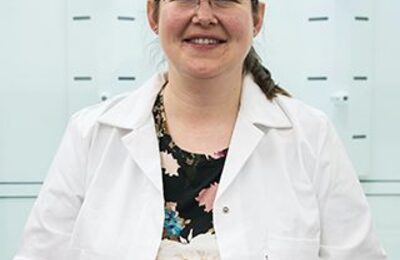
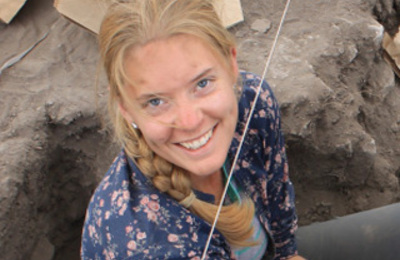
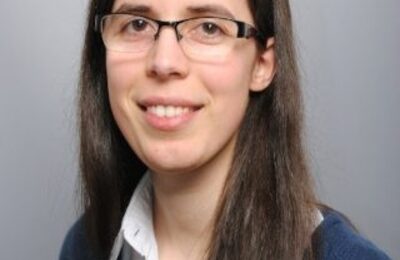
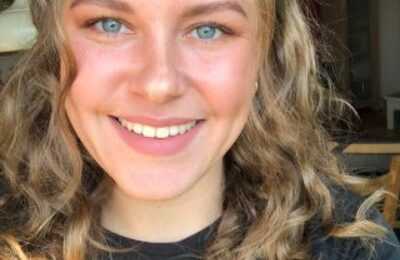
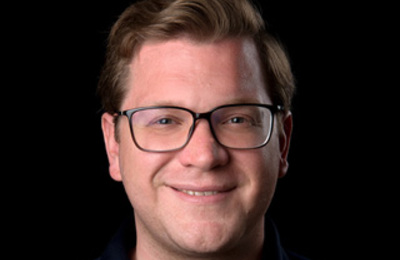
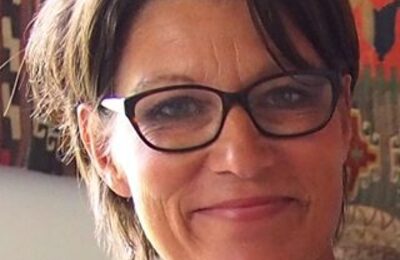
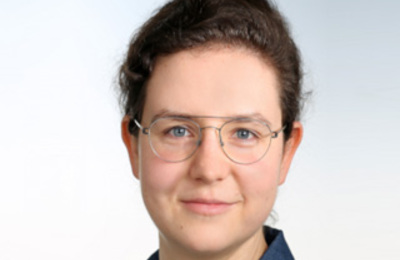
Nisa Iduna KIRCHENGAST

Nisa Kirchengast studied Classical Archaeology, Prehistory and Historical Archaeology, and Biology at the University of Vienna. Since 2017 she has been working freelance on zooarchaeological material in Austria and Italy. Since 2021 she is a PraeDoc assistant and fellow at the Doctoral School of Historical and Cultural Studies at the University of Vienna. Her PhD project is about Roman food supply and distribution systems of animal products in the Danubian provinces. Nisa's research focuses on butchery studies, taphonomy, animal husbandry practices, foodways, Human-Animal interactions, trade and supply networks.

Read More
Vienna Institute for Archaeological Science (VIAS) Team Leaders

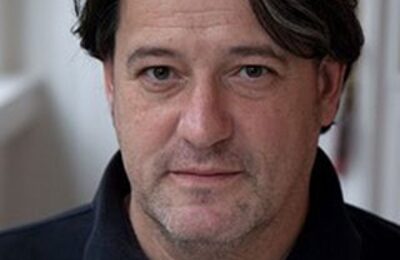
Nives DONEUS

I am an archaeologist at the Vienna Institute for Archaeological Sciences (VIAS) focusing on the archaeological prospection of Roman landscapes. The joint interpretation of data from different prospection techniques makes it possible to go beyond the archaeological sites to record landscape history and trace the many facets of human life. The diachronic investigation of human land use is particularly exciting here, as it shows the interaction between humans and the environment, in particular the modification of the natural environment to meet the needs of habitation, infrastructure or agriculture.    

Read More
Department of Evolutionary Anthropology (DEA) Members

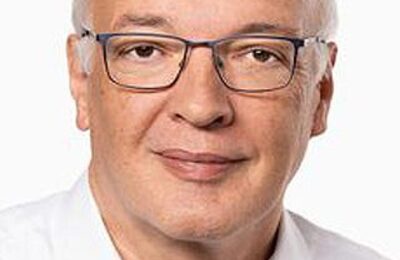
Olivia CHERONET

I am a post-doctoral researcher in the department of Evolutionary Anthropology at the University of Vienna, and the lab manager of Ron Pinhasi's ancient DNA lab. Following an undergraduate training in Paleobiology and a PhD in physical anthropology, I have a particular interest in using this knowledge to improve and optimise ancient DNA sampling methods, by making them more efficient and less destructive to invaluable archaeological skeletons.

Read More
The Austrian Academy of Sciences (ÖAW) Team Leaders

Pamela FRAGNOLI

I am an archaeometrist with a degree in Archaeological Sciences and a PhD in Archaeology. As ceramic specialist I am involved in various projects in the pre- and historical Mediterranean and South-Western Asia. My research focuses on the study of craft organization in relation to cultural, economic and political changes. As supervisor of early-career scientists I expanded my expertise to pigment, brick, mortar and glass analyses. Currently, I am head of the Research Group “Object Itineraries” and part of the core team of the Research Infrastructure “Heritage Sciences” at the OeAI as well as lecturer at the University of Vienna.

Read More
Department of Evolutionary Anthropology (DEA) Team Leaders

Pere GELABERT

I am a Researcher in paleogenomics focusing on the study of genetic data from different sources. I am primarily interested in analyzing genomic data from past environments or populations that can be co-analyzed together with other disciplines to answer questions linked to cultural evolution and health status assessment of ancient populations. I am currently working on projects related to past microbiomes and populations as well on the analysis of ancient environmental genomic data of human-related environments

Read More
Department of Prehistoric and Historical Archaeology (IUHA) Team Leaders

Peter C. RAMSL

Peter C. Ramsl (Priv. Doz., Mag. Dr.) is university assistant specialising in the European Iron Age and is currently leading the FWF project ‘Celts Across The Alps’ (CATA). His research on the European Iron Ages focusses on the identities and social relationships of people, their mobility and possible migrations as well as dietary habits. This is achieved through a combination of interdisciplinary methodological approaches. Current research is also focussing on insights into social and biological gender and the effects of violence and war on societies. As part of the current FWF project, he and his research team are analysing the relationships between La Tène cemeteries from the Traisen valley in Lower Austria and those from northern Italy near Bologna and Mantova. Another interest is landscape archaeology, focussing on the use of the various landscapes of the Iron Age.  

Read More
Vienna Environmental Research Accelerator (VERA) Team Leaders

Peter STEIER  

Peter Steier is assistant professor at the Faculty of Physics and member of the research group Isotope Physics. Working with accelerator mass spectrometry (AMS) techniques he is interested in very heavy ions (actinides), time-of-flight detectors, energy loss and straggling, isobar identification, the 14C dating for archaeology, and application of Bayesian statistics to calibration.

Read More
Department of Evolutionary Anthropology (DEA) Members

Petra ŠIMKOVÁ

I am an evolutionary anthropologist and trained morphometrician. I obtained my PhD in Evolutionary Anthropology from the Department of Evolutionary Anthropology at the University of Vienna, where I specialized in the use of 3D virtual imaging techniques combined with geometric morphometrics to study modern human dental variation. My research interests include hominin evolution, dental and functional morphology, and paleopathology. Currently, I am a postdoctoral researcher at the University of Vienna, continuing my research in dental anthropology. I focus on examining morphological variation within and between the dentitions of modern human populations, as well as those of prehistoric populations and other hominins.

Read More
Department of Prehistoric and Historical Archaeology (IUHA) Team Leaders

Philip R. NIGST

Philip R Nigst is a Palaeolithic archaeologist with an enthusiasm for fieldwork. His research covers the archaeology of human evolution and focuses currently on Neanderthal and modern human behaviour and adaptations in Central and Eastern Europe. Philip’s key research themes include the ecology of Neanderthal and modern human technological organisation, mobility, horizontal cultural transmission, lithic technology, chronostratigraphy, use of space and site formation processes at Neanderthal and modern human sites in western Eurasia. He is currently engaged in field projects focussing on Neanderthal and modern human adaptations in Central and Eastern Europe.

Read More
Department of Evolutionary Anthropology (DEA) Team Leaders

Philipp MITTEROECKER

I am a theoretical biologist, anthropologist, and biostatistician in the Department of Evolutionary Biology at the University of Vienna. I have studied the development and evolution of human and primate anatomy, with medical applications to orthodontics and gynecology. I am particularly interested in the interaction of developmental, environmental, and evolutionary processes. Another current research focus is on human childbirth: an evolutionary conundrum involving biological, environmental, and sociocultural dynamics. My methodological work comprises contributions to geometric morphometrics, multivariate biostatistics, and quantitative genetics.    

Read More
Vienna Environmental Research Accelerator (VERA) Team Leaders

Robin GOLSER

Management Board

Robin Golser is head of the Vienna Environmental Research Accelerator (VERA), a dedicated facility for Accelerator Mass Spectrometry (AMS) at the University of Vienna. VERA is used for ultrasensitive radioisotope analysis including radiocarbon dating. Robin’s research interests lie in opening totally new avenues for AMS such as the world-wide unique Ion Laser Interaction Mass Spectrometry system and applications in Astrophysics.

Read More
Vienna Institute for Archaeological Science (VIAS) Members

Roland FILZWIESER

Roland Filzwieser is a postdoctoral researcher in archaeological prospection, landscape archaeology, medieval history, and digital humanities at the Vienna Institute for Archaeological Science (VIAS). He is specialized in geophysical prospection and digital documentation methods in combination with historical written and cartographic sources

Read More
Department of Evolutionary Anthropology (DEA) Team Leaders

Ron PINHASI

Deputy Head

Dr. Ron Pinhasi  is the Head of the Ancient DNA Lab. His research focuses on human evolution including fieldwork projects on the Middle-Upper Palaeolithic transition in the Caucasus. He held an ERC Starting Grant project (2011-2015) that focused on human genetic history, migrations and admixture, and developed the widely-used ancient DNA optimisation method from the petrous bone.

Research Areas: , ,
Read More
Department of Evolutionary Anthropology (DEA) Members

Sojung HAN

I am a postdoctoral researcher in the Computational Admixture Genomics group. My primary interests are understanding the evolutionary history and the genetic background of species-specific traits of primates, in particular of chimpanzees and bonobos, the closest extant species of humans. I am using bioinformatics approaches, and am trying to investigate not only the host genomic materials but also pathogens and environmental context in this endeavor.

Read More
Department of Evolutionary Anthropology (DEA) Members

Sonja WINDHAGER

Sonja Windhager is a trained biologist and lecturer in Evolutionary Anthropology at the University of Vienna. Her research focus is on geometric morphometric approaches to human facial shape and interpersonal perception. This includes an interest in modern imaging techniques to study human facial form in two and three dimensions. The emphasis is on the use of calibrated morphs in intra- and cross-cultural research. Furthermore, she investigates human social behavior in the context of biophilia and the urban environment.

Research Areas:
Read More
Vienna Institute for Archaeological Science (VIAS) Members

Stefan KROJER

Stefan Krojer is a research associate and PhD candidate at the Vienna Institute for Archaeological Science (VIAS) at the University of Vienna. His research and teaching focus on the application of geophysical and imaging techniques for the investigation of underwater archaeological sites in Austria and internationally. As part of the FWF-WEAVE project “Drowned Villages of the Scheldt. A Geoarchaeological Study,” he investigates submerged historical settlements in the Scheldt Delta (Netherlands) using high-resolution sonar technologies. In parallel, he is involved in several projects concerning the documentation of underwater archaeological sites in Austrian lakes – among others in close collaboration with and on behalf of the Kuratorium Pfahlbauten (Board of Pile Dwellings), within the framework of the UNESCO World Heritage Site “Prehistoric Pile Dwellings around the Alps.” Krojer is a certified scientific diver with decades of experience in technical diving. He also works as an instructor and examiner for diving instructors and technical divers, combining this practical expertise with academic research and teaching. He is the founder of a specialized company for underwater archaeological prospection and currently teaches at the Department of Prehistoric and Historical Archaeology at the University of Vienna in the field of underwater archaeological surveying. His methodological focus lies in high-resolution, large-scale and minimally invasive prospection using sonar technology (including side-scan, multibeam, and sub-bottom systems) and underwater photogrammetry. In…

Read More
Department of Environmental Geosciences (EDGE) Team Leaders

Stephan M. KRAEMER

Management Board

Stephan Kraemer is the head of the Department of Environmental Geosciences at the University of Vienna and co-founder of the MINERVA (Mineralogical Preservation of the Human Biome) research platform. He is a low temperature geochemist interested in molecular scale bio-mineral interactions. A particular focus is the reactivity of biogenic molecules including ligands, reductants, enzymes and nucleic acids at mineral surfaces. His research interests include interactions of DNA with mineral phases in the context of long-term eDNA and aDNA preservation. He uses stable isotopes including strontium, mercury and other transition metals as process- and forensic tracers. His laboratory includes a MC-ICPMS isotope lab, trace metal analytics and spectroscopic facilities and methods for mineral characterization. After studying Earth Sciences at Ruhr Universität Bochum, he obtained his PhD in 1997 under the guidance of Prof. Janet Hering (CALTECH) and held positions at UC Berkeley and ETH-Zürich before moving to Vienna in 2006.

Read More
Department of Evolutionary Anthropology (DEA) Members Allgemein

Susanna SAWYER

Susanna is a Lise Meitner Postdoctoral Researcher at the Department of Evolutionary Anthropology at the University of Vienna. She completed her PhD under Svante Pääbo on genomic insights into Denisovans and Neandertals of Denisova Cave. She joined the department in 2018 and has focused on a wide range of ancient DNA questions. She is particularly interested in ancient epigenetics and the effect of maternal behavior on methylation signals during gestation in ancient human populations. In 2023 she will begin a new project on human ancient DNA analyses from sediments.

Read More
Department of Evolutionary Anthropology (DEA) Team Leaders

Sylvia KIRCHENGAST

The main research focus is the evolution of human life history patterns, comprising studies concerning growth patterns in recent as well as historical populations, in particular the impact of endogenous und exogenous stress factors on body height and directional asymmetry patterns. On the other hand, female reproductive biology, in particular pregnancy, childbirth and menopause are focused on.

Read More
Department of Evolutionary Anthropology (DEA) Members

Thomas BEARD

I am a PhD candidate in the Department of Evolutionary Anthropology as part of Mareike Stahlschmidt’s team. I received my Masters degree from the University of the Witwatersrand, South Africa. For my MSc I worked at the site of Border Cave, South Africa, using the geoarchaeological techniques of fabric and facies analyses to understand the formation of the upper portion of the archaeological sequence. I am a geoarchaeologist, with a specific interest in investigating micro- to macroscale cave/rockshelter site formation processes and employing a multiproxy approach, using methods such as XRF, particle size analysis, and fabric analysis. I am also a multidisciplinary archaeologist and have a generalised knowledge of other archaeological fields. For my PhD I am pivoting into microarchaeology by using the technique of micromorphology to understand and contextualize the preservation of ancient DNA at the microscale at Upper Palaeolithic cave sites in Georgia.

Read More
The Austrian Academy of Sciences (ÖAW) Team Leaders

Thomas EINWÖGERER

Since 2017 I have been the head of the research group “Quaternary Archaeology” at the Austrian Archaeological Institute of the Austrian Academy of Sciences and group leader of the Krems branch. I am an expert for the Federal Office for the Protection of Monuments, I am involved in extended international research networks and pursue the promotion of young scholars by teaching at the Institute for Prehistory and Historical Archaeology at the University of Vienna. I also maintain public relations and was curator for several exhibitions in museums in Lower Austria. As the principal investigator of the excavation sites Krems-Wachtberg (2005-2015), Gösing am Wagram (2014) and Kammern-Grubgraben (since 2015) my research focusses on the Upper Palaeolithic in the Danube Region. My interest is to get as much information as possible about past human behaviour, settlement structures and settlement patterns, art and jewellery and stone tool inventories. For this purpose, I also focus on the prospecting of Palaeolithic find layers by means of pile-driven probing and experimental archaeology (reconstructions and models).

Read More
Department of Prehistoric and Historical Archaeology (IUHA) Members

Timothy CANESSA

I am a doctoral student at the Department of Prehistoric and Historical Archaeology at the University of Vienna investigating the variability of Early Upper Palaeolithic assemblages in the Iberian Peninsula. My research project seeks to understand the drivers of this stone tool assemblage variability and its relationship to the idiosyncratic pattern of modern human settlement in the region. I am particularly interested in the connection between, on the one hand, mobility and lithic technological strategies and, on the other hand, the character and composition of these lithic artefact assemblages. As a corollary of this, I am exploring whether expedient technology was a feature of human occupation during this time and if this has any bearing on the “indeterminate” nature of some Early Upper Palaeolithic assemblages.    

Read More
Department of Evolutionary Anthropology (DEA) Members

Tobias GÖLLNER

Tobias Göllner investigates the peopling of Asia via genetic ancestry, population structure, demography and selection. Currently he works together with the Maniq, a primary hunter-gatherer community of Southeast Asia to uncover their genetic history, admixture, and archaic introgression. Further topics of investigation will be selection and adaptation to a hunter-gatherer lifestyle in the rainforest. (PhD Supervisors: Martin Fieder and Helmut Schaschl)

Read More
Department of Evolutionary Anthropology (DEA) Team Leaders

Tom HIGHAM

Head

  I am a Professor of Scientific Archaeology in the Department of Evolutionary Anthropology at the University of Vienna. Prior to coming to Vienna in August 2021 I was the Director of the University of Oxford’s Radiocarbon Accelerator Unit. My research focuses on developing and improving the radiocarbon method and applying it to the dating of archaeological sites, especially those dating to the Palaeolithic period.

Read More
Department of Prehistoric and Historical Archaeology (IUHA) Members

Tom MALTAS

I am a Postdoctoral Researcher in Environmental Archaeology on the 'Migration and the Making of the Ancient Greek World' (MIGMAG) project at the Institute for Classical Archaeology, University of Vienna. My research uses archaeobotany and stable isotope analysis to understand the roles of farming in societal change in the prehistoric Mediterranean. For MIGMAG, I am investigating changes in land use and agricultural production strategies that may have accompanied mobility, demographic change and urbanisation in the Iron Age Mediterranean. I recently completed a DPhil (PhD) at the University of Oxford, where I analysed archaeobotanical assemblages from Chalcolithic and Bronze Age western Anatolia.

Read More
Department of Environmental Geosciences (EDGE) Members

Veer Vikram SINGH

I am a Ph.D. candidate at the Department of Environmental Geosciences (EDGE), University of Vienna. I completed my M.Sc. at the Indian Institute of Technology Bombay, India, where I studied clay chemistry and mineralogy to understand the formation of bole beds (clay-rich horizons) present in Deccan basaltic flows. My doctoral research is a part of the research platform MINERVA (Mineralogical Preservation of the Human Biome from the Depth of Time), a collaboration between EDGE and the Department of Evolutionary Anthropology of the University of Vienna. In my doctoral research, I am focusing on understanding the roles of environmentally relevant minerals such as clays, iron oxides, hydroxyapatite and calcite in preserving the DNA against the common degradational agents such as nucleases, reactive oxygen species and ionizing radiation. My work will help develop a better understanding of the role of minerals in the long-term preservation of the human genome in the environment.  

Read More
Network Associates Department of Evolutionary Anthropology (DEA)

Verena SCHÜNEMANN

My research is centered around ancient DNA retrieved from a wide range of samples to better understand pathogen-host-environment interactions across time and to trace back the evolutionary history of pathogens. Furthermore, I also work on ancient genomics of domesticated plants and animals from various time periods as well as on ancient microbiomes.    

Research Areas:
Read More
Department of Evolutionary Anthropology (DEA) Members

Victoria OBERREITER

I have completed my master’s program in Evolutionary Anthropology at the University of Vienna and I am currently a PhD student in Ron Pinhasi’s group. My research is part of the research platform MINERVA (Mineralogical Preservation of the Human Biome) which studies the interactions of ancient DNA (aDNA) with and protection by diverse mineral phases. I am currently specializing in extracting aDNA from archeological sediments with a specific focus on paleolithic cave sites. The obtained metagenomic data allow me to study human population history and occupations even at sites lacking human remains.  

Research Areas: ,
Read More
The Austrian Academy of Sciences (ÖAW) Members

Viola SCHMID

I am a postdoctoral researcher in the research group Quaternary Archaeology at the Department of Prehistory & West Asian/Northeast African Archaeology of the Austrian Archaeological Institute of the Austrian Academy of Sciences. Since my master’s, I focus on lithic technological developments in the southern African Stone Age. In 2019, I finished my PhD on the C-A layers of Sibhudu Cave (KwaZulu-Natal, South Africa) in the light of the MSA lithic technologies in MIS 5 with "magna cum laude" in a joint doctoral programme at the Universities of Tübingen and Paris Nanterre. I started my Hertha Firnberg project ‘Time of essential changes in human history (TECH)’ in October 2022. The project concerns the analysis of lithic assemblages from three quasi-synchronous sites, Sibhudu Cave, Bushman Rock Shelter, and Rose Cottage Cave, in different biomes of South Africa. My aim is to gain a better understanding of the lithic technology, innovativeness and connectedness of past societies in South Africa during Marine Isotope Stage 5.    
Read More
Vienna Institute for Archaeological Science (VIAS) Team Leaders

Wolfgang NEUBAUER

Wolfgang Neubauer is an Austrian archaeologist. He is director of the Ludwig Boltzmann Institute for Archaeological Prospection and Virtual Archaeology since 2010. He is also member of the Vienna Institute for Archaeological Science (VIAS) and teaches at the University of Vienna. His research foci lie in the archaeological geo-physical prospection, virtual archaeology, and stratigraphy. Some of his beacon projects included research at Stonehenge and in Birka (Vikings).

Read More
Department of Evolutionary Anthropology (DEA) Members

Xin HUANG

I am an evolutionary biologist and has been working on method development for solving different problems with population genomic data, including detecting positive selection, estimating strength of natural selection, quantifying time-varying selective pressures, inferring the distribution of fitness effects, and detecting archaic admixture. I will continue to investigate many other interesting topics in the future.

Read More