Blog Posts

HEAS WELCOMES OUR FIRST JUNIOR INTERN DR BHAVNA AHLAWAT

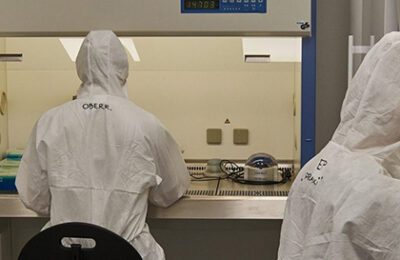
Bhavna Ahlawat is our first Junior Intern and is visiting HEAS currently working on exciting new research concerned with biomolecules from ancient Indian sites. I am a molecular biologist specializing in ancient DNA and population genetics, focusing on different archaeological sites in India. During my doctoral research at Panjab University and BSIP, India, I honed my skills in ancient DNA protocols while working in India's first dedicated aDNA facility, which specializes in analyzing degraded DNA from tropical samples. My expertise in diverse extraction and library preparation protocols was significant in generating high-quality data from critical human skeletal remains, including samples from the Vadnagar archaeological complex and the Indus Valley Civilization site at Lothal (∼2200 BCE). Currently, as a research intern with HEAS at the University of Vienna, I am exploring the application of Zooarchaeology by Mass Spectrometry (ZooMS) on a variety of bone remains of different species from South Asia—an under-researched region in this context. My work focuses on: 1. Species Identification: Utilizing peptide mass fingerprinting through MALDI-ToF-MS for South Asian samples. 2. Degraded Collagen Analysis: Investigating the potential of ZooMS for analyzing fragile and degraded bone collagen from this region. Through this research, I aim to bridge gaps in South Asian archaeogenetics and develop methodologies for studying ancient remains in challenging environments and understand the hman animal interaction. I…

Research Areas:
Read More
Archive Events

HEAS Workshop

The HEAS Workshops are intended to introduce basics of techniques/methods in a concise format to other colleagues, no matter if they come from the same discipline or from completely different fields. The typical workshop is a one-day event (but can be longer) and includes a theoretical part (mostly to make participants familiar with terms and procedures), and importantly, much practical work. After a workshop one should have a good idea what can be achieved with a particular technique or method, what the main inputs and outputs are, and where it links to other fields.   HEAS Workshops can be organized in an online or hybrid format and are offered within our network without costs. For external participants we charge a fee of € 100/day. All workshops come with a maximum number of attendees. It is necessary to register in advance.     One example for a HEAS workshop would be:   Title                                                                                             Location              Max. no. of participants 3D shape and form analysis (EVAN Toolbox)                          Online                     15    

Read More
Department of Evolutionary Anthropology (DEA) Members

Heather CHAMBERLAIN IRWIN

I am a PhD candidate at the University of Vienna and an ancient DNA bioinformatician specializing in the study of ancient plants, particularly maize, and their role in human history. My work focuses on maize varieties from the Andes, where I collaborate with local communities to learn about their unique agricultural traditions and crop diversity. Combining advanced computational genomics with hands-on ancient DNA laboratory techniques, I uncover the genetic secrets of ancient crops. I am passionate about exploring ancient food systems, investigating how plants like maize were domesticated, diversified, and adapted to different environments. My research also delves into the co-evolution of plants and animals, examining the complex interplay between human societies, agriculture, and the ecosystems they shaped. Collaborating with Iowa State University in the United States and the Universidad Nacional Agraria La Molina in Peru, I integrate bioinformatics with a deep appreciation for the cultural and ecological significance of ancient food systems. Through my work, I aim to illuminate the intricate relationships that have sustained human and non-human life for millennia.    

Read More
Allgemein Publications

High continuity of forager ancestry in the Neolithic period of the eastern Maghreb

Lipson, M., Ringbauer, H., Lucarini, G., Aouadi, N., Aoudia, L., Belhouchet, L., Cheronet, O., Dahmani, A.-R., Genchi, F., La Pastina, F., Lucci, M., de Lumley, H., Mansouri, N., Nava, A., Touj, F., Mallick, S., Rohland, N., Coppa, A., Pinhasi, R., Reich, D., 2025. High continuity of forager ancestry in the Neolithic period of the eastern Maghreb. Nature. read more

Research Areas:
Read More
Publications

History and Archaeology in Discourse on the Dernberg–Reconstructing the Historical Landscape of a Medieval Motte-and-Bailey Castle and Deserted Village

Filzwieser, R., Ruß, D., Kucera, M., Doneus, M., Hasenhündl, G., Verhoeven, G.J., Zotti, G., Lenzhofer, A., Stüttler, G., Pisz, M., Neubauer, W., 2022. History and Archaeology in Discourse on the Dernberg–Reconstructing the Historical Landscape of a Medieval Motte-and-Bailey Castle and Deserted Village. Heritage 5 (3), 2123–2141. doi:10.3390/heritage5030111. read more

Research Areas:
Read More
Read More
Read More
Publications

Homo sapiens reached the higher latitudes of Europe by 45,000 years ago

Mylopotamitaki, D., Weiss, M., Fewlass, H., Zavala, E.I., Rougier, H., Sümer, A.P., Hajdinjak, M., Smith, G.M., Ruebens, K., Sinet-Mathiot, V., Pederzani, S., Essel, E., Harking, F.S., Xia, H., Hansen, J., Kirchner, A., Lauer, T., Stahlschmidt, M., Hein, M., Talamo, S., Wacker, L., Meller, H., Dietl, H., Orschiedt, J., Olsen, J.V., Zeberg, H., Prüfer, K., Krause, J., Meyer, M., Welker, F., McPherron, S.P., Schüler, T., Hublin, J.-J., 2024. Homo sapiens reached the higher latitudes of Europe by 45,000 years ago. Nature 626, 341-346. read more

Research Areas:
Read More
Read More
Publications

Human dispersal and plant processing in the Pacific 55 000–50 000 years ago.

Gaffney, D., Tanudirjo, D.A., Djami, E.N.I., Mas'ud, Z., Macap, A.R., Russell, T., Dailom, M., Ray, Y., Higham, T., Bradshaw, F., Petchey, F., Florin, S.A., Roberts, P., Lucas, M., Tromp, M., Greig, K., Xhauflair, H., Montenegro, A., Hall, R., Boulanger, C., Ono, R., Oertle, A., Scholz, D., Spitzer, M., Szabo, K., Bertelli, I., Ribechini, E., Haberle, S., 2024. Human dispersal and plant processing in the Pacific 55 000–50 000 years ago. Antiquity, 1-20.   read more

Research Areas:
Read More
Read More
Read More
Read More
Read More
Publications

Identification of constrained sequence elements across 239 primate genomes

Kuderna, L.F.K., Ulirsch, J.C., Rashid, S., Ameen, M., Sundaram, L., Hickey, G., Cox, A.J., Gao, H., Kumar, A., Aguet, F., Christmas, M.J., Clawson, H., Haeussler, M., Janiak, M.C., Kuhlwilm, M., Orkin, J.D., Bataillon, T., Manu, S., Valenzuela, A., Bergman, J., Rouselle, M., Silva, F.E., Agueda, L., Blanc, J., Gut, M., de Vries, D., Goodhead, I., Harris, R.A., Raveendran, M., Jensen, A., Chuma, I.S., Horvath, J.E., Hvilsom, C., Juan, D., Frandsen, P., Schraiber, J.G., de Melo, F.R., Bertuol, F., Byrne, H., Sampaio, I., Farias, I., Valsecchi, J., Messias, M., da Silva, M.N.F., Trivedi, M., Rossi, R., Hrbek, T., Andriaholinirina, N., Rabarivola, C.J., Zaramody, A., Jolly, C.J., Phillips-Conroy, J., Wilkerson, G., Abee, C., Simmons, J.H., Fernandez-Duque, E., Kanthaswamy, S., Shiferaw, F., Wu, D., Zhou, L., Shao, Y., Zhang, G., Keyyu, J.D., Knauf, S., Le, M.D., Lizano, E., Merker, S., Navarro, A., Nadler, T., Khor, C.C., Lee, J., Tan, P., Lim, W.K., Kitchener, A.C., Zinner, D., Gut, I., Melin, A.D., Guschanski, K., Schierup, M.H., Beck, R.M.D., Karakikes, I., Wang, K.C., Umapathy, G., Roos, C., Boubli, J.P., Siepel, A., Kundaje, A., Paten, B., Lindblad-Toh, K., Rogers, J., Marques Bonet, T., Farh, K.K.-H., 2023. Identification of constrained sequence elements across 239 primate genomes. Nature. read more

Research Areas:
Read More
Publications

Impact of a recent wildfire on tortoises at Cape Point, South Africa, and implications for the interpretation of heated bones in the archaeological record

Stahlschmidt, M.C., Mentzer, S.M., Heinrich, S., Cooper, A., Grote, M.N., McNeill, P.J., Wilder, J.C.B., Steele, T.E., 2023. Impact of a recent wildfire on tortoises at Cape Point, South Africa, and implications for the interpretation of heated bones in the archaeological record. Archaeological and Anthropological Sciences 15, 126. read more

Research Areas:
Read More
Read More
Publications

Improved detection of methylation in ancient DNA

Sawyer, S., Gelabert, P., Yakir, B., Lizcano, A.L., Sperduti, A., Bondioli, L., Cheronet, O., Neugebauer-Maresch, C., Teschler-Nicola, M., Novak, M., Pap, I., Szikossy, I., Hajdu, T., Meshorer, E., Carmel, L., Pinhasi, R., 2023. Improved detection of methylation in ancient DNA. bioRxiv, 2023.2010.2031.564722. read more

Research Areas:
Read More
Publications

Improved detection of methylation in ancient DNA

Sawyer, S., Gelabert, P., Yakir, B., Llanos-Lizcano, A., Sperduti, A., Bondioli, L., Cheronet, O., Neugebauer-Maresch, C., Teschler-Nicola, M., Novak, M., Pap, I., Szikossy, I., Hajdu, T., Moiseyev, V., Gromov, A., Zariņa, G., Meshorer, E., Carmel, L., Pinhasi, R., 2024. Improved detection of methylation in ancient DNA. Genome Biology 25, 261. read more

Research Areas:
Read More
Read More
Read More
Read More
News

International Mountain Conference (IMC) taking place in Innsbruck in September 2025

The program for the International Mountain Conference (IMC), taking place in Innsbruck from September 14–18, 2025, is now available online. We would like to highlight the following (geo)archaeological focus sessions (4 in total), workshops (1), and keynote lectures (1) that may be of particular interest. In addition to these, the conference features over 150 sessions covering a wide range of topics related to mountain research across the world’s high-altitude regions. We encourage you to explore the program and discover the diverse opportunities for engagement and collaboration. Focus Sessions on Mountain Archaeology https://imc2025.info/imc25/sessions-n-workshops/focus-sessions/?filter_thematic-focus=archaeology Synthesis workshop: People and Mountains: Stories from an Archaeological Perspective: https://imc2025.info/imc25/sessions-n-workshops/synthesis-workshop/sw-3-103-people-and-mountains-stories-from-an-archaeological-perspective/ Key Note: AI, Extra Credit, and the Andes: Discovering World’s Highest Communal Hunting Traps https://imc2025.info/imc25/keynotes/ai-extra-credit-and-the-andes-discovering-worlds-highest-communal-hunting-traps/ Michael Meyer (Univ. Innsbruck, Austria) Bonnie Pitblado (U. Oklahoma, USA)  

Read More
Read More
Publications

Investigating the co-occurrence of Neanderthals and modern humans in Belgium through direct radiocarbon dating of bone implements

Abrams, G., Devièse, T., Pirson, S., De Groote, I., Flas, D., Jungels, C., Jadin, I., Cattelain, P., Bonjean, D., Mathys, A., Semal, P., Higham, T., Di Modica, K., 2024. Investigating the co-occurrence of Neanderthals and modern humans in Belgium through direct radiocarbon dating of bone implements. Journal of Human Evolution 186, 103471.   read more

Research Areas:
Read More
Read More
News

Invitation to Exhibition Opening at the ÖAW

BALKAN-ARCHÄOLOGIE IM FOKUS Sehr geehrte Damen und Herren, liebe Kolleginnen und Kollegen, das Österreichische  Archäologische  Institut der Österreichischen Akademie der Wissenschaften  lädt  Sie  sehr  herzlich  ein  zur: Ausstellungseröffnung     Balkan-Archäologie im Fokus. Visualisierung neuer Forschungen« 13.Oktober 2022, um 15:00 Uhr Festsaal und Aula Dr. Ignaz Seipel-Platz 2, 1010 Wien Die Visualisierung des archäologischen Erbes auf dem Balkan stellt eine Region ins Rampenlicht, die für die Geschichte auf dem europäischen Kontinent in vielerlei Hinsicht grundlegend ist. Südosteuropa ist eine Schlüsselregion für die Menschheitsgeschichte, in der fundamentale kulturelle, soziale und technologische Entwicklungen erstmals auftreten und einen nachhaltigen Einfluss auf Europa und seine Gesellschaften haben. Damit zählt der Balkanraum zu einem der aufregendsten und auch herausforderndsten Gebiete für die archäologische Grundlagenforschung. Die Österreichische Akademie der Wissenschaften kann auf eine lange Forschungstradition  in  Südosteuropa  zurückblicken,  die  das  Österreichische Archäologische Institut in enger Zusammenarbeit mit Kooperationspartner*innen aus verschiedenen Ländern des Balkans fortführt. Daher freuen wir uns, Sie zur Ausstellungseröffnung gemeinsam mit dem Präsidenten der Österreichischen Akademie der Wissenschaften Heinz Faßmann und diplomatischen Vertretungen begrüßen zu dürfen, welche den Beginn unserer archäologischen Wanderausstellung markiert. In diesem Rahmen wird auch die Premiere unseres 3D-Animationsfilms "Visualising the Unknown Balkans" stattfinden.   Die Eröffnung beginnt um 15:00 Uhr mit anschließendem Empfang im Hauptgebäude der Österreichischen Akademie der Wissenschaften, Doktor-Ignaz-Seipel-Platz 2, 1010 Wien. Ein detailliertes Programm entnehmen Sie bitte dem Anhang. Um Antwort…

Read More
Publications

Is this settlement intersected by a ditch? A comparison between magnetic prospection data, ALS data, and archaeological and geological excavation results from the Early Bronze Age fortified hilltop settlement of Ratzersdorf, Lower Austria

Jetzinger, D., Krenn-Leeb, A., Lindinger, V., Weßling, R., Peresson, M., Supper, R., Roetzel, R., Peticzka, R., 2023. Is this settlement intersected by a ditch? A comparison between magnetic prospection data, ALS data, and archaeological and geological excavation results from the Early Bronze Age fortified hilltop settlement of Ratzersdorf, Lower Austria, Advances in On-and Offshore Archaeological Prospection: Proceedings of the 15th International Conference on Archaeological Prospection, pp. 143-147. read more

Research Areas:
Read More
Department of Evolutionary Anthropology (DEA) Members

Jana Naomi VOGLMAYR

I am currently a PhD student at the Department of Evolutionary Anthropology at the University of Vienna. After completing my bachelor’s degree in biology with focus on physical anthropology, I obtained my master’s degree at the University of Vienna, specializing in dental anthropology combined with 3D imaging and geometric morphometrics. During my master’s studies, I spent four years working for an excavation company and took part in various archaeological excavations across multiple time periods. In my PhD project, I am focusing on dental morphology using virtual anthropology techniques and geometric morphometric methods, with a particular emphasis on tooth shape types and their relationship to sex and origin.

Read More
Department of Evolutionary Anthropology (DEA) Members

Jeannette BECKER

I am a PhD student at the Department of Evolutionary Anthropology and especially interested in respiratory diseases in past populations, palaeopathology, evolutionary medicine and diseases in regard of the human life history. I received a BSc in Biology in 2017, followed by a MSc in 2021 from the University of Vienna. I completed my master’s degree in Anthropology where I investigated paranasal sinusitis and their relation to skeletal stress markers in human remains. In addition, I am currently studying medicine at the Medical University of Vienna, which I will complete in 2022.

Read More
The Austrian Academy of Sciences (ÖAW) Members

Jessica Mendes CARDOSO

She holds a doctorate in Archaeology from the University of São Paulo, Brazil, and a doctorate in Geosciences from the University of Toulouse, France. Her research focused on the geochemical applications of isotope analysis in archaeological materials, primarily human and faunal bones and teeth, to reconstruct diet and determine the geological provenance of pre-colonial coastal Brazilian populations. She has extensive experience in zooarchaeology, particularly in South American Brazilian shellmounds, which was the focus of her bachelor's and master's research. She has worked as an archaeologist in several preventive archaeology projects, gaining experience in both field and laboratory work, as well as cultural heritage education. She was also one of the creators of Sambaquis: A History Before Brazil, the first Brazilian archaeology-themed game. Currently, she is a postdoctoral researcher in the ERC Starting Grant HUE project, working in the new geochemical laboratory with mass spectrometry and isotope analysis of ancient pigments.

Read More
Department of Evolutionary Anthropology (DEA) Members

José-Miguel TEJERO

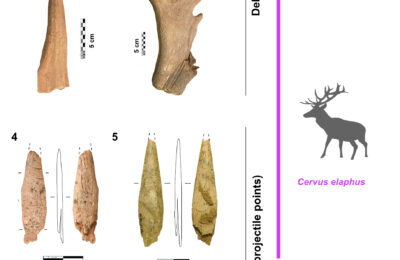
José-Miguel Tejero is an archaeologist specialising in Upper Palaeolithic hunter-gatherer societies and their osseous raw material exploitation. He is currently Ramón Y Cajal Program Senior Researcher at the University of Barcelona (Spain) and Senior Research Fellow at the Department of Evolutionary Anthropology of the University of Vienna. His current research, funded by the FWF, focuses on bone and antler hunting weapons and their significance in adaptative environmental strategies of the first anatomically modern humans colonising Eurasia by combining archaeological, palaeogenetic, palaeoproteomics, and radiodating methods. His work also involves the bone equipment of the Western-European societies at the late Upper Palaeolithic (Magdalenian) and the last Levantine hunter-gatherer groups, beginning to practice the sedentarism (Natufian). He is the research leader of the interdisciplinary and international team for the study and publication of one of the most critical Near East Natufian sites: Einan–Ain-Mallaha (Jordan Valley, Israel), funded by the Shelby White and Leon Levy Foundation.

Read More
Department of Evolutionary Anthropology (DEA) Members

Josef HACKL

I am currently a PhD student in the Computational Admixture Genomics group at the Department of Evolutionary Anthropology at the University of Vienna. Among others, I completed a Bachelor’s degree in Biology and a Master’s degree in Genetics and Developmental Biology at the University of Vienna. My PhD project primarily deals with the application of Machine Learning techniques in population genetics, focusing on Deep Learning Architectures for detecting Ghost Admixture and Adaptive Introgression.    

Read More
Read More
Natural History Museum Vienna (NHM) Team Leaders

Karina GRÖMER

I am the  head of the Department of Prehistory, Natural History Museum Vienna. As an archaeologist, I study the material culture of the Neolithic, Bronze and Iron Age in Central Europe, including theoretical aspects like identity, innovation and creativity, functional design theory, visual coding, design concepts, sociological and semiotic studies.  My focus research is on technological, economic and social aspects of  textiles with interdisciplinary research on artefacts from graves, settlements and saltmines, covering a timespan from 2500 BC till 1000 AD and a geographical area from Central Europe to Iran.. I have also the aim  to bridge gaps between research institutions (Universities, Academies) and cultural heritage institutions and am active in various dissemination activities.

Read More
The Austrian Academy of Sciences (ÖAW) Department of Prehistoric and Historical Archaeology (IUHA) Team Leaders

Katharina REBAY-SALISBURY

Deputy Head

Katharina Rebay-Salisbury is professor of Prehistory of Humanity at the University of Vienna and directs the research group ‘Prehistoric Identities’ at the Austrian Academy of Sciences. Enthusiastic about the European Bronze and Iron Ages, her research focusses on combining interdisciplinary approaches for insights into people’s lives, identities and social relations in prehistory. Her current research explores themes such as sex and gender, motherhood, kinship, mobility and migration through ERC and FWF-funded projects analyzing burial contexts and human remains from Central Europe.

Read More
Natural History Museum Vienna (NHM) Team Leaders

Katrin VOHLAND

Management Board

Dr. Katrin Vohland is Director General of the Naturhistorisches Museum Wien (NHM Vienna), Austria. Her main research interest is in the interface between science and different public audiences including policy. She develops Open Science strategically for the museum and beyond, including Citizen Science where she is active to employ integrative and reflective approaches.

Read More
Natural History Museum Vienna (NHM) Members

Kayleigh SAUNDERSON

I am a textile archaeologist primarily conducting research at the Archaeological Textiles Lab at the Natural History Museum Vienna from a wide variety of periods and regions. My focus ranges from fibres to reconstructions, meaning that I investigate raw materials of fibres and using scanning electron microscopy as well as possible trace elements of mordants for dyes. By researching thousands of textiles up to now in the Lab, we have been able to create massive datasets on the technological data of textiles, which allow for relevant statistical analyses. Furthermore, I work with experimental and public archaeology, reconstructing textiles/clothing and presenting our research and our knowledge of past identities to the public, whereby communicating current topics of the textile industry with its environmental and social impacts are of importance.

Read More
The Austrian Academy of Sciences (ÖAW) Team Leaders

Kerstin KOWARIK

I am a prehistoric archaeologist and coordinator of the research group Prehistoric Identities at the Department of Prehistory & West Asian/Northeast African Archaeology at Austrian Archaeological Institute of the ÖAW. My research focuses on human-environment interaction, prehistoric dietary patterns, risk management and crisis and coping (natural hazards, physical stress), and Alpine archaeology. I enjoy working in interdisciplinary networks and am especially interested in and developing new innovative research frameworks using bioarchaeological and geoarchaeological approaches to gain new insights the living conditions of Europe’s Metal Ages communities.     Kerstin Kowarik Publications

Read More
Department of Evolutionary Anthropology (DEA) Members

Konstantina CHESHMEDZHIEVA

I am currently a PhD student in the Department of Evolutionary Anthropology at the University of Vienna. I hold a Bachelor's degree in Biotechnology Engineering from the University of Food Technologies in Plovdiv, Bulgaria. Driven by my interests in anthropology and genetics, I earned my MSc in Molecular Biology (Bioinformatics track) from the University of Padua in 2023. My master’s thesis centered on developing a novel method for estimating and detecting statistically significant levels of genetic assortative mating in contemporary European populations, utilizing large-scale data from the UK and Estonian biobanks.   Under the supervision of Katerina Douka and Martin Kuhlwilm, my current research focuses on identifying Denisovan presence in Island Southeast Asia and Oceania, generating ancient DNA data from the region and conducting bioinformatic analyses.

Read More