Archive Events

HEAS Workshop

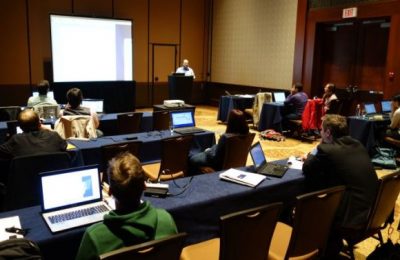
The HEAS Workshops are intended to introduce basics of techniques/methods in a concise format to other colleagues, no matter if they come from the same discipline or from completely different fields. The typical workshop is a one-day event (but can be longer) and includes a theoretical part (mostly to make participants familiar with terms and procedures), and importantly, much practical work. After a workshop one should have a good idea what can be achieved with a particular technique or method, what the main inputs and outputs are, and where it links to other fields.   HEAS Workshops can be organized in an online or hybrid format and are offered within our network without costs. For external participants we charge a fee of € 100/day. All workshops come with a maximum number of attendees. It is necessary to register in advance.     One example for a HEAS workshop would be:   Title                                                                                             Location              Max. no. of participants 3D shape and form analysis (EVAN Toolbox)                          Online                     15    

Read More
Research

HEAS Seed Grants

Our HEAS Seed Grant initiative offers up to €5,000 to support interdisciplinary pilot projects that promote the HEAS network. We want to keep it simple and unbureaucratic. All HEAS PhDs, Postdocs, and PIs are eligible to apply. There are three calls for applications each year, and at least three grants are awarded each call. The 2026 submission deadlines are: 28th February, 30th June, 31st October   Application Guidelines - Proposals must bring together researchers and or facilities from at least two of the seven HEAS research units - You may lead only one HEAS Seed Grant at a time but may participate in up to two concurrent grants (i.e. as lead on one and collaborator on another). Applications should contain: Project title 50-75 word abstract 1-2 page proposal including: — Project aims (e.g., proof of concept, preparation for larger grant applications, etc.) — HEAS researchers and research units involved — How the project advances HEAS’s interdisciplinary mission — Future implications — Plans for applying to larger-scale funding programs — Basic budget (e.g. 110 samples sequencing @ € 15.00 = €1650.00, or 67.5h lab technician @ € 20.00 = €1350.00,” no quotes required) 1 page bibliography 1-3 page CV Complete applications of no more than 6 pages should be submitted as a single PDF document on the internal registrations link. Evaluation, Approval,…

Read More
The Austrian Academy of Sciences (ÖAW) Vienna Institute for Archaeological Science (VIAS) Members

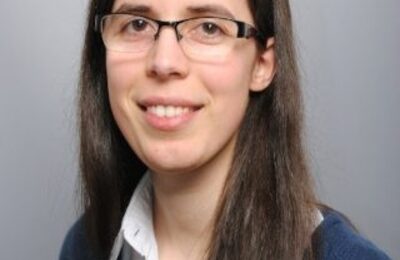
Magdalena BLANZ

I am a postdoctoral researcher at the Vienna Institute for Archaeological Science (VIAS) and the Austrian Archaeological Institute, where I work on stable isotope ratios of bioarchaeological remains. Originally trained as an environmental analytical chemist, my interests have always been in analysing archaeological remains. For my PhD I focussed on the identification and interpretation of seaweed consumption by terrestrial mammals in archaeological contexts. During my postdoc, I am researching the first introductions of domesticated animals and plants into Europe, focussing on dietary patterns and plant growth conditions. I am particularly interested in method development and acquiring modern reference data for stable isotope ratio studies.

Read More
Department of Evolutionary Anthropology (DEA) Vienna Institute for Archaeological Science (VIAS) Members

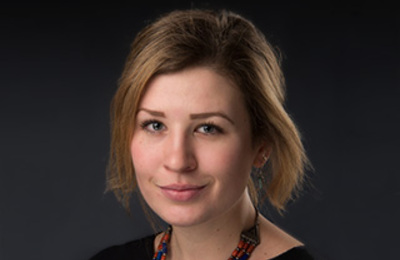
Brina ZAGORC

I am an archaeologist and currently a PhD student in Ron Pinhasi's Lab group. My research areas include studying relationships between and within past societies, and I am especially interested in the field of bioarchaeology of children. The main focus of my PhD project is to observe sex-specific variations in subadult health status during Antiquity and Early Medieval times. My work includes aDNA analysis and other bioarchaeological methods where I compare the occurrence of physiological stress indicators, and other paleopathological indicators of bad health, in relation to the biological sex of the studied individuals. This will help me address questions on upbringing, weaning patterns, and overall health of the subadult population in the past.

Read More
Department of Evolutionary Anthropology (DEA) Members

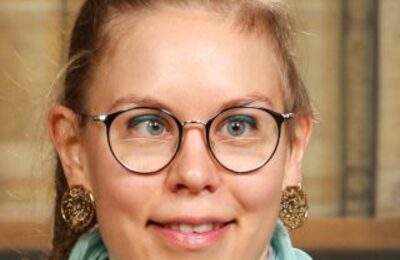
Petra ŠIMKOVÁ

I am an evolutionary anthropologist and trained morphometrician. I obtained my PhD in Evolutionary Anthropology from the Department of Evolutionary Anthropology at the University of Vienna, where I specialized in the use of 3D virtual imaging techniques combined with geometric morphometrics to study modern human dental variation. My research interests include hominin evolution, dental and functional morphology, and paleopathology. Currently, I am a postdoctoral researcher at the University of Vienna, continuing my research in dental anthropology. I focus on examining morphological variation within and between the dentitions of modern human populations, as well as those of prehistoric populations and other hominins.

Read More
Department of Evolutionary Anthropology (DEA) Members

Xin HUANG

I am an evolutionary biologist and has been working on method development for solving different problems with population genomic data, including detecting positive selection, estimating strength of natural selection, quantifying time-varying selective pressures, inferring the distribution of fitness effects, and detecting archaic admixture. I will continue to investigate many other interesting topics in the future.

Read More
Vienna Institute for Archaeological Science (VIAS) Members

Nisa Iduna KIRCHENGAST

Nisa Kirchengast studied Classical Archaeology, Prehistory and Historical Archaeology, and Biology at the University of Vienna. Since 2017 she has been working freelance on zooarchaeological material in Austria and Italy. Since 2021 she is a PraeDoc assistant and fellow at the Doctoral School of Historical and Cultural Studies at the University of Vienna. Her PhD project is about Roman food supply and distribution systems of animal products in the Danubian provinces. Nisa's research focuses on butchery studies, taphonomy, animal husbandry practices, foodways, Human-Animal interactions, trade and supply networks.

Read More
Department of Prehistoric and Historical Archaeology (IUHA) Members

Doris JETZINGER

I am a PhD candidate at the Department of Prehistoric and Historical Archaeology where I work as a PraeDoc University Assistant in Michael Doneus’s team. I am a landscape- and geoarchaeologist specialising in the interdisciplinary analysis of sediment archives as well as landscape analyses and reconstructions. My main research interests are the study of human-landscape interactions, formation processes, and chronostratigraphic landscape contexts by employing interdisciplinary methods and approaches. For my dissertation project “Life of a Landscape”, I am working on the creation of an archaeological landscape biography of the Kreuttal microregion in Lower Austria which focuses on the development of the landscape over the millennia and the formation processes involved. In the course of my dissertation project and associated research activities I am developing skills in (p)OSL profiling and dating, sedimentology, geochemistry, and Historic Landscape Characterisation (HLC) approaches.  

Read More
Department of Evolutionary Anthropology (DEA) Members

Victoria OBERREITER

I have completed my master’s program in Evolutionary Anthropology at the University of Vienna and I am currently a PhD student in Ron Pinhasi’s group. My research is part of the research platform MINERVA (Mineralogical Preservation of the Human Biome) which studies the interactions of ancient DNA (aDNA) with and protection by diverse mineral phases. I am currently specializing in extracting aDNA from archeological sediments with a specific focus on paleolithic cave sites. The obtained metagenomic data allow me to study human population history and occupations even at sites lacking human remains.  

Research Areas: ,
Read More
Department of Evolutionary Anthropology (DEA) Members

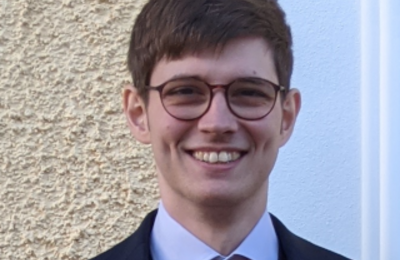
Tobias GÖLLNER

Tobias Göllner investigates the peopling of Asia via genetic ancestry, population structure, demography and selection. Currently he works together with the Maniq, a primary hunter-gatherer community of Southeast Asia to uncover their genetic history, admixture, and archaic introgression. Further topics of investigation will be selection and adaptation to a hunter-gatherer lifestyle in the rainforest. (PhD Supervisors: Martin Fieder and Helmut Schaschl)

Read More
Read More
Department of Evolutionary Anthropology (DEA) Members

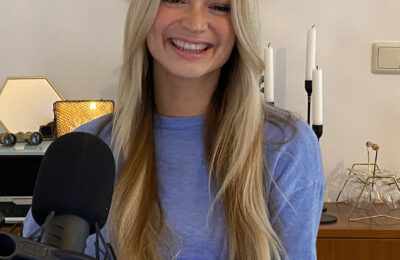
Magdalena T. SRIENC-ŚCIESIEK

I am a PhD candidate and the Anthropology Lab Manager at the Austrian Archaeological Institute- Austrian Academy of Sciences. My doctoral research focuses on the early medieval Eastern Alpine region and will look at how the transitional period influenced health and diet as well as mobility in southern Austria and northern Slovenia. I am interested in palaeopathology and recreating the life history of individuals and communities.

Read More
Department of Evolutionary Anthropology (DEA) Members

Dominik HAGMANN

Dominik Hagmann is currently working on several projects, primarily focusing on Roman archaeology in Austria, and is a lecturer at the Department of Evolutionary Anthropology (University of Vienna). Since 2023, Dominik has been a principal investigator in the ÖAW-funded Go!Digital 3.0 long-term-archiving project IUENNA at the kärnten.museum, together with his colleague Franziska Reiner (ÖAI). In 2022, he obtained a Ph.D. degree (with honors) from the University of Vienna (Doctoral School for Cultural and Historical Studies) on his thesis "Roman Rural Landscapes in Noricum. Archaeological Studies on Roman Settlements in the Hinterland of Northern Noricum." As an archaeologist, Dominik focuses on Roman studies in terms of settlement and landscape archaeology in the Danube Basin, implementing state-of-the-art digital and interdisciplinary methods in his research. He participated in numerous field campaigns in Central and Southern Europe and the Middle East during third-party-funded international and national research projects.

Read More
Read More
News

Last terrapins – first turkeys – humans out of place

500 years of building history mirrored by rubble layers, artefacts, bones and documents It started with a rescue excavation of a few weeks in 2004, when the centre of the Nationalpark Donauauen was established in one of the most unique of our Renaissance castles; 17 years later, and coordinated by Nikolaus Hofer from the  Federal Monuments Authority Austria, a team of historians, art historians, archaeologists, stratigraphers and osteologists together assemble a colourful picture, mutually benefitting from each others results; for the first time in Austria, the history of a monumental building could be traced over such a long period - inderdisciplinarity more than an out-dated phrase  

Read More
Department of Palaeontology (PAL) Team Leaders

Doris NAGEL

Management Board

My research focuses on mammal evolution and ecological niche development especially in carnivorous animals. The different aspects include food preference (microwear methods), locomotion adaption and population development (in co-operation with Michael Hofreiter, DNA-lab, Univ. Potsdam and the Radiocarbon lab in Mannheim). Current projects focus on niche development of Miocene carnivores and climate adaptions of mammals in the Upper Pleistocene (Teufelslucke).

Read More
Vienna Environmental Research Accelerator (VERA) Team Leaders

Peter STEIER  

Peter Steier is assistant professor at the Faculty of Physics and member of the research group Isotope Physics. Working with accelerator mass spectrometry (AMS) techniques he is interested in very heavy ions (actinides), time-of-flight detectors, energy loss and straggling, isobar identification, the 14C dating for archaeology, and application of Bayesian statistics to calibration.

Read More
Vienna Institute for Archaeological Science (VIAS) Team Leaders

Günther Karl KUNST

Trained as a palaeontologist working on Ice-Age mammals, I made a change for the “younger stuff” with the founding of VIAS/IDEA in 1994. Since then, I have been involved in various excavation projects in Central Europe, Egypt and Turkey. I prefer excavation projects comprising  complicated archaeological situations, like multiphase buildings or settlements. Here, I like to collaborate with colleagues studying archaeological features and other find groups, especially pottery. I have been a lecturer for archaeozoology for almost three decades on various departments of the University of Vienna (Prehistory and Historic archaeology, Palaeontology, Anthropology). Special interests: taphonomy of buildings and complex settlements; butchery studies; relationships between animal bones and pottery remains

Research Areas:
Read More
Read More