Read More
News

First Austrian-led expedition presents finds from the „Cradle of Humankind“

By Gerhard Weber   The fossils found from Ethiopia are in Vienna for the first time for examination at the Department of Evolutionary Anthropology at the University of Vienna.   An interdisciplinary and international research team led by the Department of Evolutionary Anthropology at the University of Vienna was on the road in the Somali region in eastern Ethiopia in the years 2000-2009 to search for the ancestors of mankind. For the first time in the history of Austria, it has been possible to make some finds of australopithecines and even earlier hominins. These date back to a time of over 5 million to 3 million years ago. Now an export permit has finally been obtained in order to be able to examine the finds in Vienna using state-of-the-art methods.   It is particularly interesting that the fossils all come from a locally narrowly defined area of less than 100 km2, but cover exactly the period in which our first truly identifiable precursors, the australopithecines, developed. Such sites from the early Pliocene are very rare and it is hoped that the detailed examination of the finds will provide further information about the beginnings of the incarnation. The project was initiated in 2000 by the anthropologist Univ. Prof. Horst Seidler and continued for ten years.   In the desert-like sediments around…

Research Areas:
Read More
Read More
Read More
Publications

Dawn of the Initial and Early Upper Paleolithic blade industries in the Levant: Mobility and interactions as reflected from Shualim Rockshelter, Israel.

Edeltin, L., Niespolo, E., Kracht, O.M., Alon, S., Amos, L., Friesem, D.E., Goder-Goldberger, M., Grono, E., Lavi, R., Porat, N., Schechter, H.C., Tejero, J.-M., Ujma, C., Wieler, N., Marder, O., 2026. Dawn of the Initial and Early Upper Paleolithic blade industries in the Levant: Mobility and interactions as reflected from Shualim Rockshelter, Israel. Journal of Human Evolution 215-216, 103846. read more

Research Areas:
Read More
Blog Posts

The MicroStratDNA Group visits the ESRF

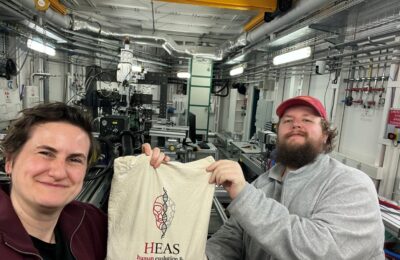
By Thomas Beard   What is the ESRF?: The European Synchrotron Radiation Facility (ESRF) is a circular particle accelerator that is capable of a varied range of radiation-based analyses, which in the ESRF’s own words makes it a “giant microscope”. A famous example of a synchrotron-like particle accelerator is that of the CERN Large Hadron Collider in Geneva, Switzerland. The ESRF works on the same principles as CERN but it is only speeding up the particles not trying to collide them. All synchrotrons use electromagnetic fields to propel ions to very high speeds with recent renovations at the ESRF giving it the brightest beam of any synchrotron facility in the world. Researchers based at a university in a country contributing to the ESRF project can use the facility for free, if their grant proposal is successful. If you are interested, I would suggest checking out the ESRF’s website, which has a lot of useful information and you can even see if your research would be possible at the facility. Who and Why?: One of the main aims of the MicroStratDNA group is to understand how ancient DNA (aDNA) preserves in archaeological cave sediments. Within current literature there are many theories about what the source of the aDNA could be including; bones, faecal matter or even DNA bound to minerals found…

Research Areas:
Read More
Department of Evolutionary Anthropology (DEA) Members

Larissa BARTSCH

I am a PhD candidate in the Department of Evolutionary Anthropology at the University of Vienna. In my current project, I use ancient DNA from sediments to investigate human and animal presence beyond the visible (zoo-)archaeological record. In particular, I am interested in applying biomolecular methods to archaeological and evolutionary questions. By combining sedaDNA with microarchaeological data, I look for patterns of co-occupation and interaction between humans and other animals, such as large carnivores. I hold a BSc in Biomedicine and an MSc in Evolutionary Anthropology and am currently co-supervised by Pere Gelabert and Mareike Stahlschmidt, with affiliations to the BEAM lab and the Microarchaeology group.  

Read More
Blog Posts

Lange Nacht der Forschung 2026

By Dr Emese Végh As a postdoc at the Department of Evolutionary Anthropology, I usually spend my days in relatively quiet labs or in front of the computer trying to decipher questions in human evolution and archaeological science. But last Friday, I traded my lab coat for a microphone (or rather a voice recorder on my phone) and headed out into the vibrant chaos of the Lange Nacht der Forschung (Long Night of Research) in Vienna. There were many stations representing researchers and themes from HEAS, and I wanted to see what type of outreach and attention they get. From the modern halls of the University Biology Building (UBB), to the historic buildings of the Academy of Sciences and the University Main Building, I caught up with colleagues who were busy translating complex science into hands-on puzzles, and explanations for thousands of curious visitors.   My first stop was visiting Dr Nicole Grunstra’s station at the UBB. Her research tackles a classic ‘human’ problem: why is birth so difficult for us? The traditional view is that humans are uniquely cursed with difficult births because of our big brains and narrow pelvises. But Nicole’s station, complete with 3D-printed pelvises and tiny animal skulls, tells a different story. Many precocial species (i.e., animals whose young stand up shortly after birth, like cows,…

Research Areas:
Read More
News

LEGION Project Led by HEAS Member Dominik Hagmann Approved Within the Heritage Science Austria 2.0 Programme

The project LEGION – machine LEarninG-enabled Identification of archaeological Objects in the middle daNube river basin, led by HEAS member Dominik Hagmann as a researcher at the OeAI/OeAW in collaboration with colleagues from the TU Wien Computer Vision Lab, has been recently approved within the Heritage Science Austria 2.0 programme. The project integrates machine learning and archaeological expertise to establish a unified, AI-supported typochronology for Roman common ware from the ancient metropolis of Carnuntum (Austria). Based on a corpus of c. 70,000 digitized profile drawings, LEGION develops a scalable and reproducible framework for the classification, dating, and interpretation of archaeological mass finds, combining eXplainable AI (XAI) and human-in-the-loop (HITL) approaches. By linking morphological and contextual data, the project generates new insights into production, distribution, and settlement dynamics along the UNESCO World Heritage Site “Danube Limes,” while providing an open, FAIR- and CARE-compliant digital research infrastructure for future applications in Heritage Science.   Funding   ÖAW – Heritage Science Austria 2.0 (Heritage_2024-12_LEGION): https://www.oeaw.ac.at/foerderungen/foerderprogramme/heritage-science-austria   Project webpage: https://www.oeaw.ac.at/en/oeai/research/historical-archaeology/archaeology-of-the-roman-provinces-in-the-latin-west/legion

Research Areas:
Read More
Read More
Read More
Read More
News

HEAS Member awarded Spanish Consolidator Research Grant for project “PHUMA”

HEAS Network Associate José-Miguel Tejero is the Principal Investigator of the Spanish Consolidator Research Grant PHUMA (First Human Population of the Peruvian Andean Plateau), developed under the scientific co-direction of Leslye Valenzuela (French National Centre for Scientific Research, CNRS, and Pontificia Universidad Católica del Perú, PUCP). The project brings together several HEAS members, including Pere Gelabert, Olivia Cheronet, Tom Higham, Katerina Douka, and Mareike C. Stahlschmidt, alongside researchers from partner institutions: Xavier Mangado, Julien Le Guirriec, and Santiago Riera (University of Barcelona), Dagmara Socha (University of Warsaw), Ximena Suárez (University of São Paulo), Alessandra Caballero and Gerardo Vega Toscano (PUCP, Peru), Nick Taylor (Stony Brook University), and Lola Larssonneur (Paris 1 Panthéon Sorbonne University).   PHUMA is a pioneering project combining archaeological and biomolecular approaches, including ancient DNA (aDNA), sedimentary ancient DNA (sedaDNA), and paleoproteomics, to investigate the cultural and biological adaptations of the first human populations to settle permanently on the Peruvian Andean Plateau at altitudes exceeding 3,500 metres above sea level. The project addresses the formidable environmental pressures these populations faced, including hypoxia, extreme cold, intense solar radiation, and scarce food resources, during the transition between the Late Pleistocene and the Early Holocene. PHUMA will generate extensive genomic and archaeological datasets from some of the oldest known Pleistocene sites in the region, contributing to a more comprehensive understanding…

Research Areas:
Read More
News

HEAS Congratulates Dr Emily Pigott

Congratulations to PhD Emily Pigott, who defended her doctoral thesis on Monday 30th March. Emily published two papers during her PhD research and has two more in review/submission. Her main paper was in PNAS and was about a small Neanderthal bone that she found using ZooMS from a site in the Crimea called Starosele. Her other paper was in the Journal of Palaeolithic Archaeology. She worked incredibly hard to finish in just under 3 years. An hour after the defence she found that she had been successful in her application for a 2 year post doc position working in Tubingen, Germany on Palaeolithic sites in Armenia. Congrats Dr Emily Pigott from everyone in HEAS!  

Research Areas:
Read More
News

Alejandra Sánchez-Polo Awarded Prestigious Marie Skłodowska-Curie Postdoctoral Fellowship (MSCA)

We are pleased to announce that Dr. Alejandra Sánchez-Polo has been awarded a prestigious Marie Skłodowska-Curie Postdoctoral Fellowship (MSCA). Starting in early 2027, she will carry out her project under the joint supervision of two HEAS team leaders, Pamela Fragnoli (OEAI–OEAW) and Mareike Stahlschmidt (Department of Evolutionary Anthropology, University of Vienna). Her project, “Architectures of Earth during the Transition to the Iron Age in Iberia (2nd–1st Millennium BC): Technologies, Traditions and Knowledge Transmission” (IBEARTH), investigates how earthen architecture—particularly mudbrick construction—both shaped and reflected social transformations between the Late Bronze Age and the Early Iron Age (c. 1200–400 BC) in inland Iberia. Adopting an integrated approach that combines petrographic, micromorphological, microbotanical, and biomolecular analyses with ethnographic perspectives, the project examines the transmission of construction knowledge, the organisation of labour, and the social meanings embedded in building practices. In doing so, it offers new insights into often-overlooked dimensions of past societies, including gender roles and the diversity of labour contributions.

Research Areas:
Read More
Department of Evolutionary Anthropology (DEA) Members

Nicolás GONZÁLEZ RAPOSO

I am a psychologist, a PhD candidate in Social Complexity Sciences at Universidad del Desarrollo (Chile), and a Visiting PhD Candidate at the Vienna Doctoral School of Cognition, Behavior and Neuroscience (VDS CoBeNe) – Cognitive Biology, University of Vienna. My research focuses on the behavioral foundations of interpersonal conflict, integrating evolutionary game theory, causal inference, and computational social science methods. My PhD dissertation consists of two empirical articles. Drawing on sexual selection theory, the first examines how sex differences and socially aversive personality traits (the Dark Triad) shape aggressive dispositions, using latent variable models to analyze how individual differences relate to conflict escalation. The second examines how interpersonal conflict is dynamically inferred and regulated during real-time bargaining interactions, focusing on how emergent patterns of emotional coordination—such as affiliative signaling and mimicry—influence perceptions of conflict and negotiation outcomes.    

Read More
Read More
Read More
Department of Evolutionary Anthropology (DEA) Members

Chen DUAN

I am a PhD student in paleogenomics focusing on the study of medical genetics and ancient genomic data. I am primarily interested in analyzing pathogenic variants from past populations to answer questions linked to health status assessment and the evolutionary history of cancer predisposition. I am currently working on projects related to ancient oncogenetics, specifically the identification of both germline and somatic mutations and investigating how population dynamics shaped the oncogenetic landscape in antiquity.  

Read More
Department of Evolutionary Anthropology (DEA) Members

Audrey LIN

I am an APART-USA Fellow in the Department of Evolutionary Anthropology at the University of Vienna. My research utilizes recovering ancient biomolecules from archaeological and museum specimens and objects to answer diverse questions on human-mediated evolutionary processes, including domestication, extinction, and mechanisms of zoonoses. My multidisciplinary approach integrates tools and theories from the life sciences (palaeogenomics, biology, zoology), the humanities (history), and social sciences (archaeology and cultural anthropology).    

Read More
News

HEAS Members Publish GENOVIS: a Python package for the visualization of population genetic analyses

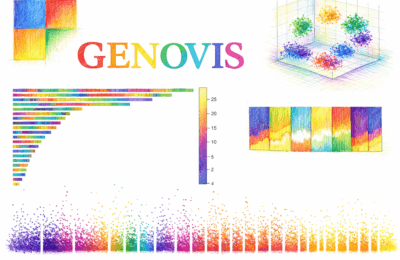
We are proud to announce that our HEAS member Dr. Elmira Mohandesan and her postDoc (Siavash Salek Ardestani) have published a new open-access paper in BMC Genomics introducing GENOVIS, a user-friendly Python tool for population genomics visualization.GENOVIS integrates six key analysis modules into one flexible framework, available via both command-line and graphical interfaces.Developed at the University of Veterinary Medicine Vienna and the University of Vienna, it enables fast, reproducible, publication-ready figures for researchers worldwide.   https://www.heas.at/research/publications/genovis-a-python-package-for-the-visualization-of-population-genetic-analyses/

Research Areas:
Read More
Read More
Read More
Department of Evolutionary Anthropology (DEA) Members

Francesc MARGINEDAS MIRÓ

I am an anthropologist and archaeologist specialising in the study of human remains from archaeological contexts. I am currently a postdoctoral researcher at the University of Vienna, in the Department of Evolutionary Anthropology. I hold a PhD in Quaternary and Prehistory from Rovira and Virgili University (Tarragona, Spain), as well as a Master’s degree in Quaternary Archaeology jointly awarded by the same institution and the Muséum national d’Histoire naturelle (Paris, France). My research focuses on mortuary practices involving the manipulation of human remains, alongside evidence for interpersonal violence and cannibalism in past societies. I work across a broad range of chrono-cultural contexts, from the Upper Palaeolithic to the Bronze Age. This includes the analysis of human bone assemblages from sites such as Maszycka Cave (Kraków, Poland), Txispiri Cave (Gipuzkoa, Spain) and El Mirador Cave (Atapuerca, Spain), among others. I am also an active member of the Atapuerca Project, contributing both in the field and in the laboratory. My work combines a range of taphonomic and analytical approaches, including classical osteological methods, residue analysis, and detailed studies of bone surface modifications.  

Read More
Department of Evolutionary Anthropology (DEA) Team Leaders

Benjamin VERNOT

I am a population geneticist who specializes in the study of ancient human DNA, using this DNA to reconstruct the lives of people in the past. My current focus is on ancient DNA extracted from sediments, and we use these sediments to trace the presence of ancient people where they lived and worked, and in the absence of skeletal remains. My group is also heavily involved in the development of computational methods for the analysis of challenging aDNA datasets.  

Read More
News

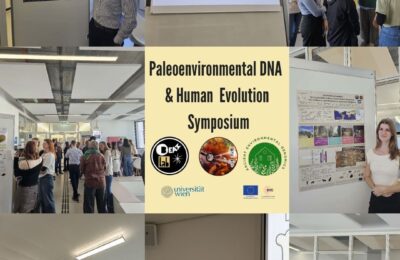
 Paleoenvironmental DNA and Human Evolution Symposium

In November 2025, Pere Gelabert, Mareike Stahlschmidt, and Benjamin Vernot from the DEA, organized a symposium on integrating the new field of Paleoenvironmental DNA within Human Evolution studies, bringing together leading international researchers to exchange perspectives on current challenges and future directions in sedaDNA. [caption id="attachment_5544" align="alignnone" width="300"] Photo Credit Carla Gomez[/caption] You can see a talk from one of the speakers, Karina Sand, on the HEAS YouTube channel. [yotuwp type="videos" id="PX49CBUIQF4" ]

Research Areas:
Read More
Department of Evolutionary Anthropology (DEA) Members

Josef HACKL

I am currently a PhD student in the Computational Admixture Genomics group at the Department of Evolutionary Anthropology at the University of Vienna. Among others, I completed a Bachelor’s degree in Biology and a Master’s degree in Genetics and Developmental Biology at the University of Vienna. My PhD project primarily deals with the application of Machine Learning techniques in population genetics, focusing on Deep Learning Architectures for detecting Ghost Admixture and Adaptive Introgression.    

Read More
Department of Evolutionary Anthropology (DEA) Members

Corentin DEPPE

I am currently a PhD student in the Department of Evolutionary Anthropology at the University of Vienna. My academic background is in Ecology and Evolution, with a focus on palaeoecology. For my master’s thesis, I applied ancient DNA approaches to study population genomics in mussels. As a member of Pere Gelabert’s team within the ERC project, SHADOWS, which investigates human-carnivore interactions during the Upper Palaeolithic in several sites across Cantabria. My research focuses on the paleogenomics of the last megafaunal carnivore populations of the region, aiming to better understand their genetic diversity, evolutionary history, and relationship with humans.

Read More
Department of Evolutionary Anthropology (DEA) Members

Ginevra DI BERNARDO

I am a PhD candidate at the Department of Evolutionary Anthropology, with an interest in the study of human remains through Virtual Anthropology and Geometric Morphometrics. Presently, my research focuses in particular on dental anthropology, combining 3D virtual imaging techniques with geometric morphometrics. I hold a Master’s degree in Archaeology, Art and Landscape Heritage from the University of Bologna and I am currently completing an MSc in Geoarchaeological, Anthropological and Forensic Sciences at the University of Ferrara.

Read More
Department of Evolutionary Anthropology (DEA) Members

Florian EXLER

I am a PhD student working on a cooperative project between the Department of Environmental Geosciences and the Department of Evolutionary Anthropology. With a background in chemistry, my research focuses on enhancing lab methods to refine and improve the recovery rates and quality of ancient DNA (aDNA) data. In this context, I also investigate the sources of aDNA and the factors that may influence its preservation. While my work is primarily focused on sedimentary ancient DNA (sedaDNA), my approach also contributes to the study of aDNA from a variety of sources, broadening its potential applications in environmental and archaeological research.  

Research Areas: ,
Read More
Department of Evolutionary Anthropology (DEA) Members

Anastasia PAPADOGIANNI

I am a PhD candidate in the Department of Evolutionary Anthropology at the University of Vienna, working under the supervision of Katerina Douka (University of Vienna) and Barbara Horejs (Austrian Academy of Sciences). I received my BA in Archaeology and Art History from the National and Kapodistrian University of Athens, Greece and my MSc in Archaeological Science from the University of Oxford, UK. My research interests lie in bioarchaeology and biomolecular archaeology (especially palaeoproteomics), for the study of palaeodiet, disease prevalence, and population mobility, mostly in prehistoric contexts. Throughout my studies, I have gained experience both in field and laboratory settings, which I enjoy equally, and I have been trained in the application of various analytical techniques applied on archaeological remains. For my PhD, my research focuses on the study of the emergence of the Neolithic way of life in the Greek peninsula and the Aegean, as well as the broader region of the Balkans. With the application of a multimethod approach on skeletal remains, combining traditional (14C dating, isotopic analyses) and cutting-edge biomolecular methods (palaeoproteomics on dental calculus, ZooMS), my PhD will contribute to the investigation of questions concerning the timing, processes and impact of the Neolithisation processes and the different models of diffusion of the Neolithic across Greece and further afield.    

Read More
Department of Evolutionary Anthropology (DEA) Members

Heather CHAMBERLAIN IRWIN

I am a PhD candidate at the University of Vienna and an ancient DNA bioinformatician specializing in the study of ancient plants, particularly maize, and their role in human history. My work focuses on maize varieties from the Andes, where I collaborate with local communities to learn about their unique agricultural traditions and crop diversity. Combining advanced computational genomics with hands-on ancient DNA laboratory techniques, I uncover the genetic secrets of ancient crops. I am passionate about exploring ancient food systems, investigating how plants like maize were domesticated, diversified, and adapted to different environments. My research also delves into the co-evolution of plants and animals, examining the complex interplay between human societies, agriculture, and the ecosystems they shaped. Collaborating with Iowa State University in the United States and the Universidad Nacional Agraria La Molina in Peru, I integrate bioinformatics with a deep appreciation for the cultural and ecological significance of ancient food systems. Through my work, I aim to illuminate the intricate relationships that have sustained human and non-human life for millennia.    

Read More
Department of Evolutionary Anthropology (DEA) Members

Constanze SCHATTKE

Constanze Schattke is a bioarchaeologist who studied biology and evolutionary anthropology in Kiel, Mainz, and Vienna. Her professional expertise includes ancient DNA and paleopathologies as well as the history of anthropology. Her current research focus is on the interconnection of different fields such as history and bioarchaeology to study the provenance of human remains in osteological collections. Here, she has worked together closely with communities from New Zealand and Tierra del Fuego, Chile. One of her main objectives is to help strengthen Indigenous’ identities through the careful study and analysis of ancestral human remains. Since 2021, Constanze is a PhD student in the Vienna Doctoral School of Ecology and Evolution. Her interdisciplinary dissertation focuses on different contexts of violence found in osteological museum collections at the Natural History Museum Vienna, Department of Anthropology. Here she will combine bioarchaeological and forensic methods with historical approaches to create a comprehensive picture of collections with diverse provenance. To that end, she also looks at what constitutes a museum object, how human remains fall into that category, and how to deal with such legacies in a conscious and responsible manner.    

Read More
Department of Evolutionary Anthropology (DEA) Members

Jana Naomi VOGLMAYR

I am currently a PhD student at the Department of Evolutionary Anthropology at the University of Vienna. After completing my bachelor’s degree in biology with focus on physical anthropology, I obtained my master’s degree at the University of Vienna, specializing in dental anthropology combined with 3D imaging and geometric morphometrics. During my master’s studies, I spent four years working for an excavation company and took part in various archaeological excavations across multiple time periods. In my PhD project, I am focusing on dental morphology using virtual anthropology techniques and geometric morphometric methods, with a particular emphasis on tooth shape types and their relationship to sex and origin.

Read More
Department of Evolutionary Anthropology (DEA) Members

Konstantina CHESHMEDZHIEVA

I am currently a PhD student in the Department of Evolutionary Anthropology at the University of Vienna. I hold a Bachelor's degree in Biotechnology Engineering from the University of Food Technologies in Plovdiv, Bulgaria. Driven by my interests in anthropology and genetics, I earned my MSc in Molecular Biology (Bioinformatics track) from the University of Padua in 2023. My master’s thesis centered on developing a novel method for estimating and detecting statistically significant levels of genetic assortative mating in contemporary European populations, utilizing large-scale data from the UK and Estonian biobanks.   Under the supervision of Katerina Douka and Martin Kuhlwilm, my current research focuses on identifying Denisovan presence in Island Southeast Asia and Oceania, generating ancient DNA data from the region and conducting bioinformatic analyses.

Read More
Department of Evolutionary Anthropology (DEA) Members Allgemein

Arne BIELKE

After I started studying biology at Leibniz University Hannover, I developed an interest in population genetics, conservation genetics, and ecology. Driven this passion, I pursued my education in evolutionary systems biology at the University of Vienna. For my master's thesis, I focused on recurrent ecotype formation of an alpine plant. I conducted a comprehensive analysis of smRNA profiles from reciprocally transplanted individuals and those grown in a common garden. Currently, for my PhD, my research focuses on New Zealand feral horses. Through bioinformatic and comparative population genomics, my goal is to provide science- based insights for future conservation management plans. This endeavor aims to preserve the historical and cultural heritage of New Zealand's European settlers through studying their horses, as human history has always shaped and been shaped by the history of our livestock’s.

Read More
Department of Evolutionary Anthropology (DEA) Team Leaders

Philipp MITTEROECKER

I am a theoretical biologist, anthropologist, and biostatistician in the Department of Evolutionary Biology at the University of Vienna. I have studied the development and evolution of human and primate anatomy, with medical applications to orthodontics and gynecology. I am particularly interested in the interaction of developmental, environmental, and evolutionary processes. Another current research focus is on human childbirth: an evolutionary conundrum involving biological, environmental, and sociocultural dynamics. My methodological work comprises contributions to geometric morphometrics, multivariate biostatistics, and quantitative genetics.    

Read More
Department of Evolutionary Anthropology (DEA) Members Allgemein

Susanna SAWYER

Susanna is a Lise Meitner Postdoctoral Researcher at the Department of Evolutionary Anthropology at the University of Vienna. She completed her PhD under Svante Pääbo on genomic insights into Denisovans and Neandertals of Denisova Cave. She joined the department in 2018 and has focused on a wide range of ancient DNA questions. She is particularly interested in ancient epigenetics and the effect of maternal behavior on methylation signals during gestation in ancient human populations. In 2023 she will begin a new project on human ancient DNA analyses from sediments.

Read More
Department of Evolutionary Anthropology (DEA) Members

Michelle HÄMMERLE

I am a PhD student at the Department of Evolutionary Anthropology at the University of Vienna. After a bachelor’s degree in Molecular Medicine, I completed the master's program in Evolutionary Anthropology here in Vienna. My research interests focus on ancient host and pathogen DNA and I work with both great apes and humans. For my master’s thesis, I investigated DNA viruses in great apes, where I am still doing more research. My PhD project deals with social genomics in underprivileged individuals from Northern Italy, where I will incorporate different datasets, including archaeological and osteological data, to get an insight into the living conditions of the populations studied.

Read More
Department of Evolutionary Anthropology (DEA) Members

Thomas BEARD

I am a PhD candidate in the Department of Evolutionary Anthropology as part of Mareike Stahlschmidt’s team. I received my Masters degree from the University of the Witwatersrand, South Africa. For my MSc I worked at the site of Border Cave, South Africa, using the geoarchaeological techniques of fabric and facies analyses to understand the formation of the upper portion of the archaeological sequence. I am a geoarchaeologist, with a specific interest in investigating micro- to macroscale cave/rockshelter site formation processes and employing a multiproxy approach, using methods such as XRF, particle size analysis, and fabric analysis. I am also a multidisciplinary archaeologist and have a generalised knowledge of other archaeological fields. For my PhD I am pivoting into microarchaeology by using the technique of micromorphology to understand and contextualize the preservation of ancient DNA at the microscale at Upper Palaeolithic cave sites in Georgia.

Read More